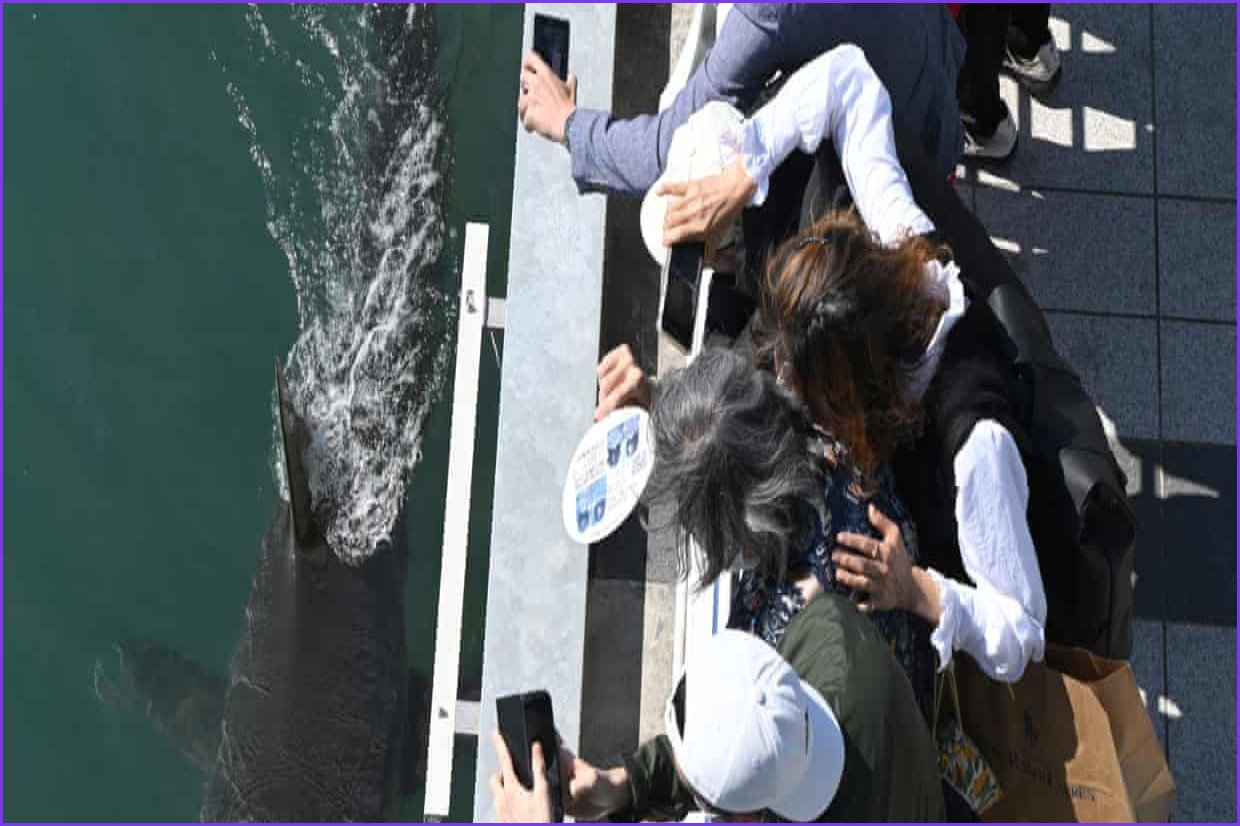
In Busan, South Korea, a group of self-appointed guardians known as jagyeongdan—a term blending the concepts of vigilantes and neighbourhood watch—has taken up an unusual nightly mission. They gather at a city canal to protect a 3-metre female dusky shark, affectionately named Bukang-i, who has been trapped in the waterway since 18 September and is one of a species classed as endangered worldwide.
Many of these protectors are local YouTubers who livestream the canal, turning the shark into a national celebrity. They patrol the waterfront, particularly at night, to deter visitors from shining torches or lasers into the water. Choi Won-jin, one of the primary protectors, notes that visitors often arrive with fishing or camping lights, which he and others refer to as “lantern villains.” These lights disturb the shark, causing her to thrash about; footage captured by YouTuber Na Tae-soo at 2am showed the shark twisting sharply to avoid a light beam and striking the canal wall. The national institute of fisheries science later confirmed an abrasion on her snout, likely caused by such a reaction.
The shark’s presence has drawn significant public interest, with the city reporting more than 1.6 million visitors to the site, a park that typically sees only about 2,000 people on a busy Saturday. The affection for Bukang-i has even spawned a small industry, including commemorative soju, a mascot wearing a shark cape, and an honorary city ambassadorship. South Korean President Lee Jae Myung visited the location in mid-October.
While Korean media reports that 105 officials from seven agencies are monitoring the shark, with a team capable of reaching the water in three minutes, Choi disputes this, claiming that after dark, the responsibility falls almost entirely on the group of volunteers. Despite the park being closed from midnight until 5am, enforcement remains difficult. Volunteers have even filmed individuals dumping food waste into the canal.
Authorities have already attempted to guide the shark back to sea twice, with a third attempt scheduled for Wednesday afternoon. However, further efforts have been paused out of concern that excessive force might cause the animal distress. Experts suggest that the shark may eventually leave on its own as the water cools. Dusky sharks typically prefer temperatures between 18C and 26C; experts put 15C as the point below which her physiological functions would start to decline, and survival becomes precarious once the water dips to 11C. Busan officials expect the canal to reach that threshold after mid-November. The fisheries institute recorded 46 large sharks off the east coast in the first half of this year, nearly four times as many as a year earlier, attributing the trend to warmer seas and increased prey availability.
Some guardians, such as local business owner Kim Jong-hwan, believe the shark should be left alone to leave voluntarily. Kim, who has livestreamed the shark daily, argues that she entered the canal by choice and should be allowed to rest until she is ready to depart. Choi agrees, suggesting the city should focus on protecting her in place rather than forcing her out.
“They bring fishing lamps, or the kind of lights people use at a campsite,” says Choi Won-jin, one of the shark’s protectors. He arrives as the lights go out along the canal and waits for the offenders Koreans online call “lantern villains”.
Nobody has seen her feed, though experts say that feeding can happen in an instant and sharks her size need not eat often.