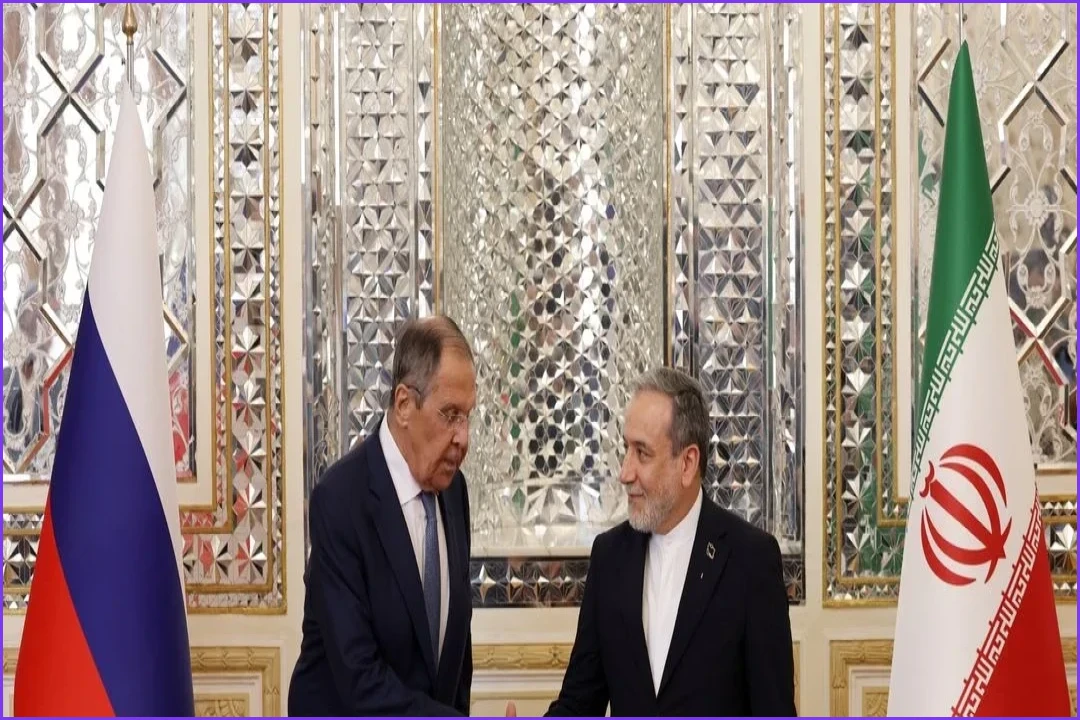
Russian Foreign Minister Sergey Lavrov visited Tehran on Monday for high-level talks with Iranian President Masoud Pezeshkian, focusing on the expansion of bilateral cooperation and regional developments. During the meeting, President Pezeshkian emphasized the importance of accelerating existing agreements between the two nations, specifically highlighting energy, transport, and trade as core priorities. He expressed optimism that his forthcoming trip to Moscow would serve to further these bilateral agreements, aiming for tangible outcomes in infrastructure and energy sectors.
The Iranian president also voiced strong criticism regarding the ongoing US-Israeli war on Iran. He condemned attacks on Iranian infrastructure and the targeting of senior officials, scientists, and schoolchildren, describing these actions as violations of international norms. Pezeshkian expressed gratitude for Russia’s support throughout the conflict and advocated for a regional security framework rooted in dialogue, mutual respect, and cooperation. He further contended that the presence of US military bases in the region continues to incite instability and tension.
The Russian Foreign Ministry noted that the visit was part of an ongoing political dialogue intended to identify practical steps for advancing foreign policy cooperation and bilateral relations. In addition to his meeting with the president, Lavrov held discussions with Iranian Foreign Minister Abbas Araghchi and Mohsen Rezaei, the secretary of Iran’s Supreme National Security Council. Lavrov confirmed Russia's readiness to assist in resolving the situation surrounding Iran and provided a briefing on his recent discussions in Bahrain with representatives from Arabian Peninsula nations.
Both sides underscored the necessity for close coordination regarding events in the Middle East, the Gulf, the South Caucasus, and the Caspian Sea. The two countries plan to continue expanding their political, economic, and investment ties through various channels, including government agencies, regional authorities, parliaments, and business entities, with a focus on joint logistics, energy, and transport projects.