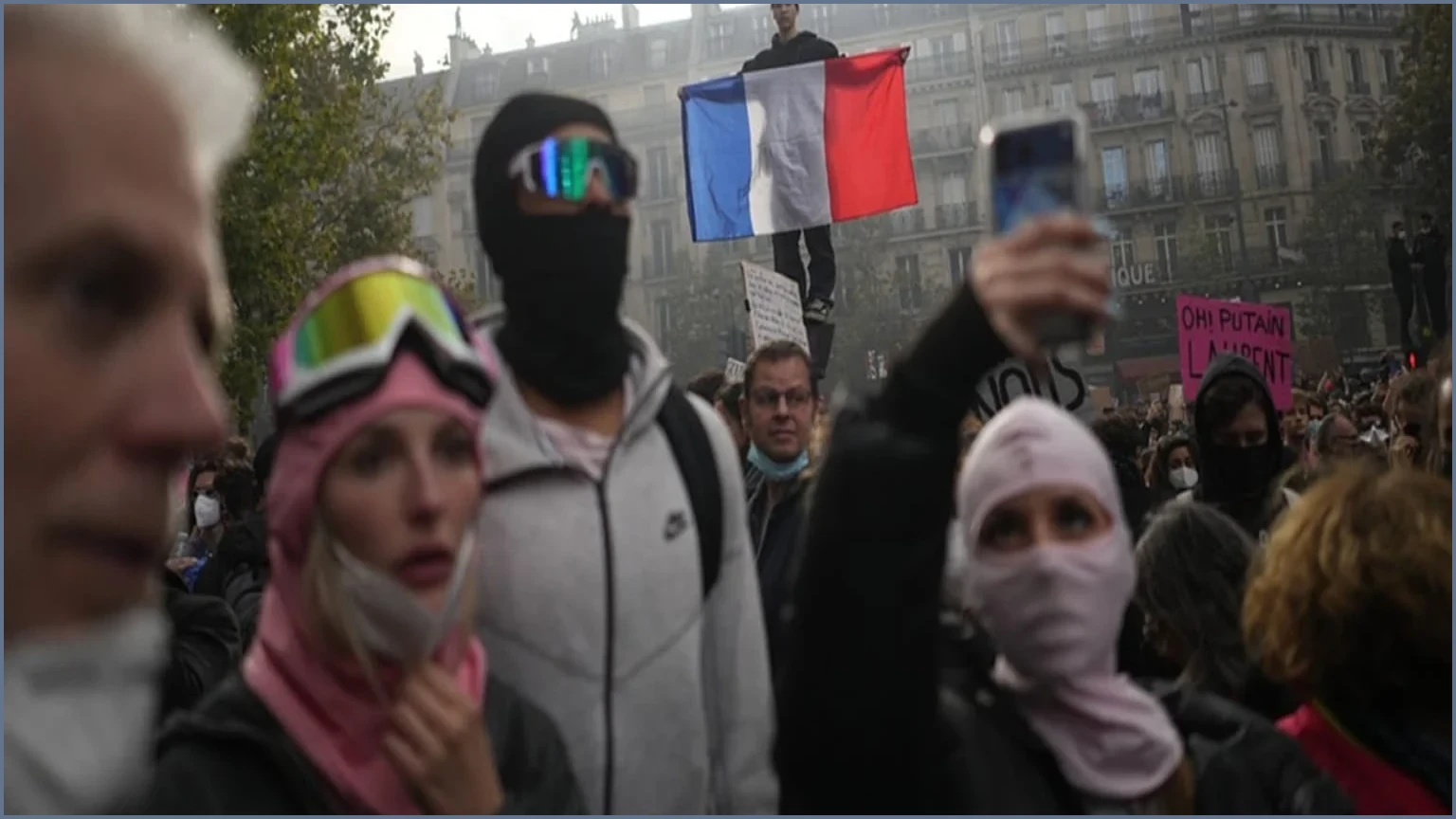
French trade unions and citizen demonstrators belonging to the "Yellow Vest" movement took to the streets in a major nationwide demonstration on Saturday, aligning with student-led rallies to protest against a severe cost-of-living crisis and surging fuel prices across the country.
The alignment between the Yellow Vests and students was intended in part to amplify student-led mass actions that have shaken France in recent weeks. Student organizers have been calling on the government to overhaul the national education system, increase funding for schools, improve access to educational resources, and modernize institutions and classrooms. Explaining the joint mobilization, a Yellow Vest representative noted that the movement sought to assist younger demonstrators, stating, "We are here to help them, because we have more experience. We can keep things calm if there are issues with police or such."
In Paris, the Yellow Vest contingent planned its demonstration route starting from Place de la Republique and heading toward Place de Clichy as its final destination. Concurrently, student marchers sharing the same starting point at Place de la Republique split into separate groups, with one marching toward Nation and another moving toward Place de la Concorde.
Demonstrators emphasized shared grievances spanning multiple sectors of society. Karl, a participant speaking in Paris, highlighted that students, high schoolers, Yellow Vests, and labor unions share unified demands, stating, "We all have common demands, whether it’s students, high schoolers, the 'Yellow Vests,' or the trade unions — we are fighting for better public services, more resources, a better quality of life, better wages, and so on." Highlighting practical impacts on public infrastructure, Damien, a 22-year-old construction worker who traveled from Troyes to join the Paris demonstration, described deteriorating public facilities. "There is less and less money in the public coffers. I don’t know exactly what they should be doing at the Élysée, or which laws they ought to be pushing, but I do know that when I go to the hospital, the resources just aren’t there anymore," Damien said.
Jessica, another Yellow Vest protester, urged the government to implement economic reforms to support working families. "We need to redistribute wealth, so that we can ensure everyone can make it to the end of the month without struggling. We need to ensure our children have access to a decent education. We need to hear the demands of 80% of the population, rather than dismissing them as isolated movements," she said. She added that rather than viewing these actions as isolated incidents, citizens are taking to the streets because they observed earlier movements grow exhausted.
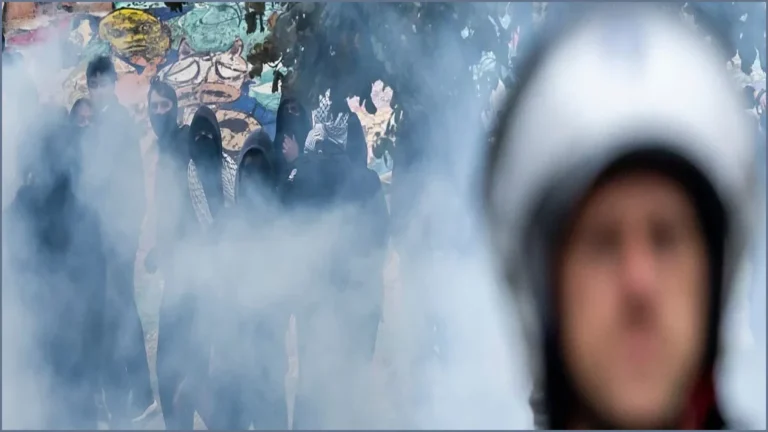
While eyewitnesses reported that the demonstrations were initially peaceful, featuring musical instruments and chanting in many areas, the situation degraded as masked individuals engaged in scuffles with riot control units. Heavy clashes erupted at Place de la Republique between law enforcement and demonstrators. Police deployed water cannons and tear gas to disperse crowds, resulting in dozens of arrests.
The violence drew swift political reactions, notably from far-right presidential hopeful Marine Le Pen, who accused far-left groups of hijacking the demonstrations. In a post published on X, Le Pen wrote, "Loot, ransack, destroy, attack law enforcement: the rioters have once again poisoned the October 17 demonstrations in defence of purchasing power." She claimed that "legitimate social demands have once again been held hostage by the far left and the speeches of Jean-Luc Mélenchon's deputies, who, by legitimizing violence, viewing order as oppression and disorder as a right, seek to plunge the country into chaos." Le Pen added, "We will free them from Macronist toxic policies and protect them from the violence of the far left."
The unrest extended beyond the capital to several major regional cities, including Marseille and Lyon. In Marseille, France's second-largest city, local officials reported that several individuals were detained after protesters breached the town hall by ramming security barriers into the doors. Similar incidents occurred at the town hall in Grenoble, where demonstrators briefly broke into the building and caused structural damage before police contained the situation.
In Lyon, masked and hooded youths threw projectiles and fireworks mortars at police forces in a central square before setting fire to a local tourism office. Riot police responded using water cannons, dispersal grenades, and tear gas. The nationwide mobilization follows four weeks of ongoing student protests over issues including overcrowded classrooms, missing teachers, and outdated facilities. Underlying the economic frustration is a sharp rise in fuel costs triggered by the US-Israeli war on Iran and the resulting closure of the strategic Strait of Hormuz—a maritime choke point through which one-fifth of global oil normally flows. Accusing the government of public fund mismanagement and inaction during the escalating crises, demonstrators have pledged to maintain protests until their demands are fully met.