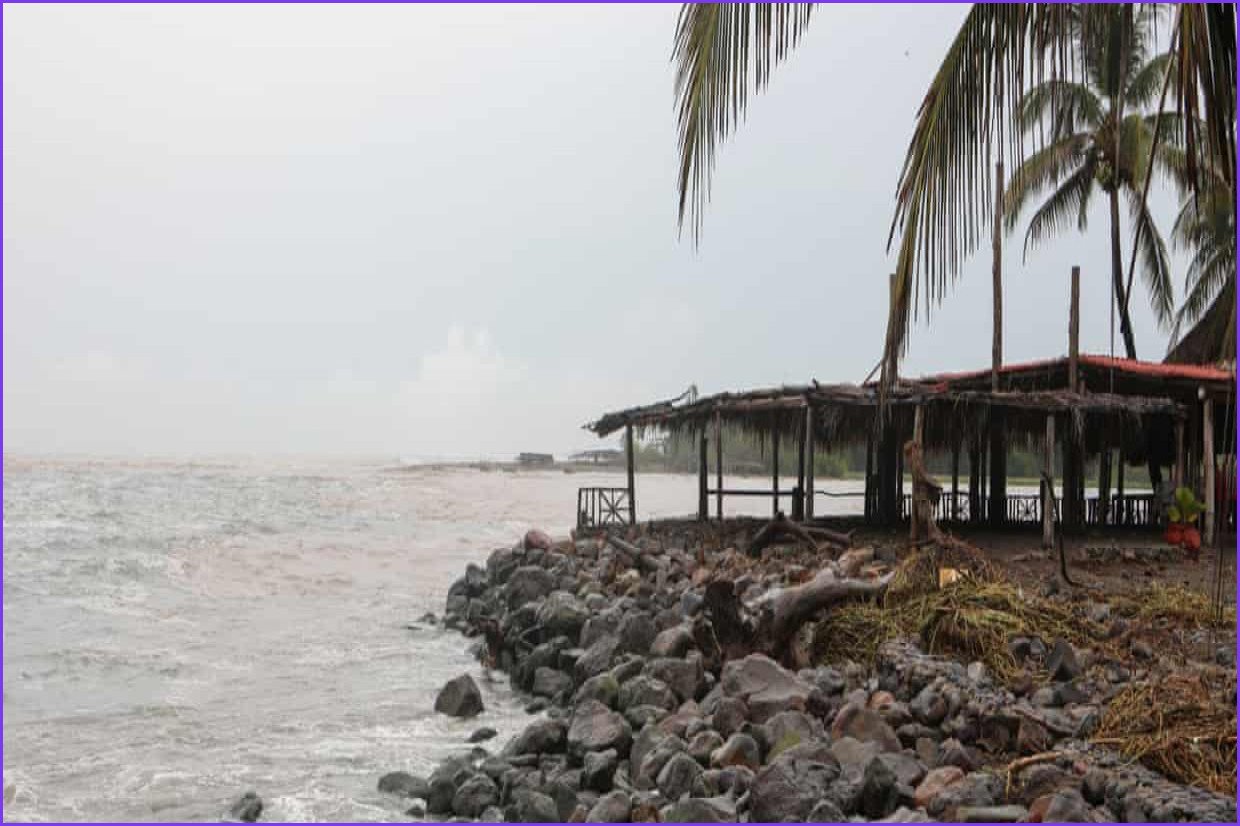
Hurricane Trudy has strengthened into a category 2 hurricane as it tracks toward the south-western and west-central Pacific coast of Mexico, according to the US National Hurricane Center. A hurricane warning is currently in effect for the coastal region stretching from Manzanillo to Cabo Corrientes.
Mexican naval authorities have urged mariners and residents along the coast to exercise extreme caution, citing the risks of high waves, heavy rainfall, and potential landslides or river flooding in vulnerable areas. While officials in Colima stated that the risks currently remain low, they warned that heavy rain could lead to significant damage because the ground is already saturated from previous storms along the Pacific coast. Forecasts suggest Trudy will bring 4-8in (10-20cm) of rain through the weekend, with isolated totals reaching approximately 15in (38cm).
Simultaneously, Typhoon Champi has strengthened into a category 4 weather system as it moves west toward Guam at 15mph (24km/h). By Saturday night local time, the storm was located about 25 miles (40km) south-east of Guam with maximum sustained winds of 140mph (225km/h), as reported by the US National Weather Service. The storm is forecast to pass south of Guam early Sunday and continue to intensify throughout the day.
Guam and Rota remain under a typhoon warning, while Tinian and Saipan are under a tropical storm warning and typhoon watch. The governors of Guam and the Northern Mariana Islands requested emergency disaster declarations on Friday. Approval by Donald Trump would authorize federal funding and support for emergency protective measures. Airports, harbors, and some health facilities in the territories have been closed. According to Saturday updates from the Federal Emergency Management Agency, resources are unlikely to reach the islands for three to five days. The territories are still in the process of recovering from Super Typhoons Sinlaku and Bavi, which struck in April and July, respectively.