SAO PAULO – Brazil’s government announced Friday that annual deforestation in the Amazon rainforest has fallen to its lowest level since records began in 1988. Official satellite data revealed that the Amazon lost 3,335 square kilometers (1,300 square miles) between August 2025 and July 2026, the period used for calculating the annual rate.
This significant reduction underscores the success of Brazil’s renewed environmental efforts under President Luiz Inácio Lula da Silva, effectively reversing a surge in forest clearing that occurred during the presidency of his predecessor, far-right President Jair Bolsonaro.
During Jair Bolsonaro’s administration, from 2019 to 2022, Amazon deforestation escalated by approximately 60%, resulting in more than 45,000 square kilometers (17,400 square miles) being cleared, according to official figures. Under President Lula, deforestation has seen a 71% decrease since 2023, the government reported.
Upon taking office in January 2023 for his third, non-consecutive term, one of President Lula’s initial actions was to reactivate the Action Plan for the Prevention and Control of Deforestation in the Legal Amazon (PPCDAm). This plan, originally launched in 2004 during his first administration, had been shelved under Bolsonaro. Lula reinstated the environmental officials who developed the blueprint two decades prior, including environmental advocate Marina Silva, who served as Environment Minister until her resignation in April to run for Congress, and João Paulo Capobianco, her former deputy and the current minister, to oversee its implementation.
The PPCDAm is structured around four key pillars: strengthening monitoring and enforcement; promoting a sustainable economy; managing protected areas and determining the appropriate use of undesignated public forests; and utilizing regulations and financial incentives to curb deforestation. Specific measures implemented included the restoration of sanctions for illegal forest clearing detected by satellites, a tool widely regarded as highly effective in combating deforestation but which had been halted under Bolsonaro. The government also proposed denying bank loans to properties involved in illegal deforestation, increased funding for priority Amazon municipalities that demonstrated reductions in forest loss, and supported initiatives to combat environmental crime while developing subsidized credit for sustainable businesses within the Amazon region.
Márcio Astrini, executive director of the Climate Observatory, a Brazilian network of environmental groups, commented on the success. “The formula is always the same, and it works. We saw it work in Brazil years ago and we’re seeing it again now: determination, enforcement on the ground, fighting crime and enforcing the law,” Astrini stated. He added that the newly announced deforestation rates demonstrate that Brazil’s commitment to achieving zero deforestation by 2030 is attainable without hindering the nation’s economy. “Agriculture has been setting production and export records while deforestation has fallen. Today’s figures disprove the false narrative that protecting the environment holds back Brazil’s development,” he affirmed.
Deforestation and other land-use changes are the primary contributors to Brazil’s greenhouse gas emissions, which exacerbate global warming. The Amazon holds immense importance, storing vast quantities of carbon dioxide and generating atmospheric moisture crucial for regulating weather patterns far beyond South America.
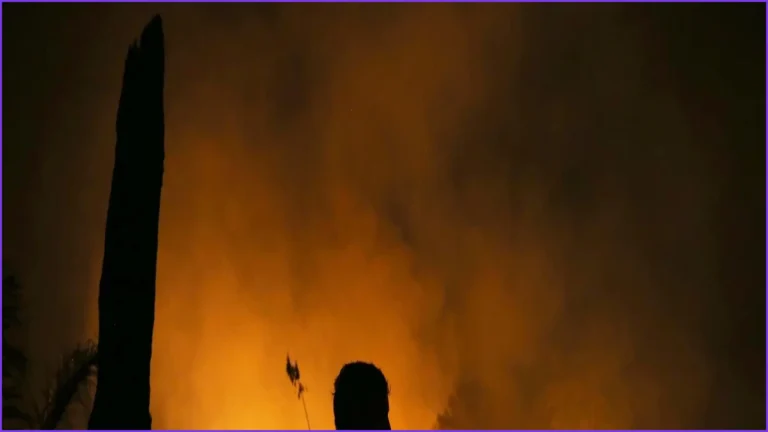
Despite the recent progress in reducing deforestation, the Amazon continues to face significant threats from climate change, proposed legislation, and the potential outcome of Brazil’s upcoming presidential election. Degradation caused by wildfires, logging, and drought currently impacts approximately 40% of the Amazon and has surpassed clear-cutting in recent years. A strong El Niño, characterized by a periodic warming of the equatorial Pacific, could intensify these threats in 2026 and 2027 by bringing hotter, drier conditions that fuel wildfires. Fire counts across the biome, although near historic lows earlier this year, have tripled since October 4, following the first round of national elections. Authorities are investigating whether these fires were deliberately set for political motives ahead of this month’s presidential runoff.
The political landscape remains tense, with Sen. Flávio Bolsonaro, son of former President Jair Bolsonaro, having secured 47% of the vote, while President Luiz Inácio Lula da Silva received 45%. The two candidates are set to face each other in an October 25 runoff election. Former Minister Silva, in a statement released Friday, hailed the deforestation reduction as a “historic achievement” for the Brazilian people, emphasizing that the election outcome would be critical to sustaining this progress. “Jair Bolsonaro’s administration approached environmental protection and climate change with denial and a sweeping dismantling of environmental policies. Flávio has inherited those views and practices and intends to perpetuate them, as he has indicated on several occasions,” she said, adding, “Those who deny the problem exists will certainly do nothing to address it.”
Jair Bolsonaro has previously denied climate change while presenting himself as an environmental defender, without detailing specific plans to protect the Amazon or support forest financing. He has advocated for modernizing environmental laws, a stance many environmentalists interpret as an attempt to weaken them. In response, Flávio Bolsonaro’s campaign stated, “Flávio Bolsonaro is a defender of the environment and of those who preserve standing forests and clean rivers.”