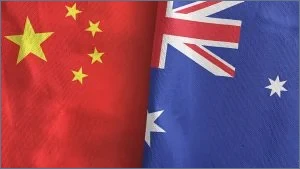
Beijing’s diplomatic officials have adopted a new, quieter approach to subnational diplomacy in Australia, leveraging the language of the Albanese government to press demands on local governments and communities. This shift marks a departure from the more confrontational “wolf warrior diplomacy” that characterized China’s approach during Xi Jinping’s first decade as CCP general secretary.
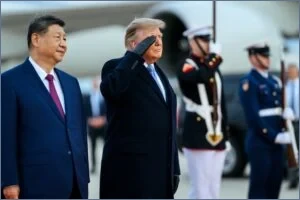
This new strategy, dubbed “wolf warrior in sheep’s clothing diplomacy,” has become more evident since Prime Minister Anthony Albanese’s week-long visit to China in July 2025. His visit aimed to stabilize relations through renewed business, trade, educational, cultural, and inter-governmental initiatives, following an icy bilateral relationship under the preceding Coalition governments of Malcolm Turnbull (2015-18) and Scott Morrison (2018-22).
Following Albanese’s trip, Chinese consular staff across Australia, including in Brisbane, Sydney, Melbourne, Adelaide, and Perth, began to openly assume they were licensed to seek local compliance with their demands. Their message to local governments and community bodies was clear: tolerating comments or events displeasing to the Chinese state or the Chinese Communist Party (CCP) would not only embarrass China but also the Australian government.
This method has shown relative effectiveness but carries risks for all parties. An example occurred in August 2025, shortly after Albanese’s China visit, when China’s consul general in Melbourne requested a meeting with an unnamed independent non-profit organization. During a formal presentation, the consul general reviewed Australia-China ties since 1972 and Melbourne’s consular opening in 1986, stating that the Albanese government had corrected past errors and was restoring stability while recognizing China’s core interests, which include CCP rule and claims over Taiwan, Tibet, Xinjiang, and the South China Sea.
The consul general then urged the board to read an article by iron-ore tycoon Andrew (Twiggy) Forrest, which predicted a bright future with China but warned, “Treat a friend like an enemy, and one day they may well become one.” This echoed a similar warning from November 2020, when a Chinese diplomat presented a Canberra journalist with 14 grievances, stating, “If you make China the enemy, China will be the enemy.” Those grievances largely concerned Canberra’s efforts to limit Chinese government engagement with subnational entities and its failure to restrict independent Australian institutions critical of China.
Following this, consular officials pointedly requested the Melbourne board cancel an event featuring Australian journalist Cheng Lei, who had recently been repatriated after three years in a Chinese jail for alleged spying. They implied that providing Cheng Lei a platform to discuss her imprisonment would undermine the positive work of Albanese and his team. Despite the request, Cheng’s talk proceeded.
However, coercive interventions around Cheng Lei’s activities continued. Six months later, her play “1154 Days,” recounting her solitary confinement, was dropped from Melbourne’s premier RISING arts festival. Cheng Lei told The Age, “I feel like I’m back in China.” The play had received a provisional place, but the festival’s board, not its creative staff, ruled against it. The RISING festival is funded by Creative Victoria and managed by the City of Melbourne’s Arts House, placing it in a vulnerable position under consular pressure.
City of Melbourne officials confirmed receiving several consular calls and a personal visit urging them to avoid Cheng Lei’s play. While some resisted, the problem was not costs but the perceived risks to city and state governments’ relations with the local consulate. Cheng’s play was ultimately performed off-festival with support from a venue outside the City of Melbourne’s jurisdiction. This incident drew a historical parallel to 1936, when an anti-Nazi play was banned from Sydney and Melbourne city theaters following representations from the German consulate.
This nationwide consular outreach extended beyond Melbourne. Victorian consular teams sought meetings in Bendigo, Ballarat, Frankston, Geelong, and Hobart, as well as with university executives and cultural institutions like Melbourne’s Museum of Chinese Australian History. Consular officials in Western Australia met with local government officers in Perth, Joondalup, Cockburn, Gosnells, Geraldton, and Swan, while Queensland-based officials visited Brisbane, Rockhampton, Mackay, Toowoomba, the Sunshine Coast, Gold Coast, and Southern Downs. The South Australian consulate visited local governments in Adelaide, Murray Bridge, and Clare Valley, all meeting with civic and community bodies.
Unlike earlier tours that sometimes drew public embarrassment, such as when the Sydney consul general warned the Mayor of Newcastle against an AUKUS nuclear-submarine squadron, this post-Albanese outreach largely avoided public attention. Consular teams adopted a quieter style, aligning with Canberra’s “calm and measured” international diplomacy, which contrasts with the former Coalition’s “bellicose megaphone diplomacy.” This restraint, however, has been repurposed by Beijing to serve its coercive subnational diplomacy, giving China’s representatives license to pressure local bodies.
While China’s diplomats recognize that the Albanese government’s measured diplomacy has not altered Australia’s broader geopolitical strategy, they continue to cajole local entities to silence discussions of threats, ostensibly to stabilize bilateral relations. In May 2026, Melbourne’s consul general warned a local city newspaper that claims of “so-called” threats would “backfire” and rebound “just like a boomerang.”
Most consular interventions have remained below Canberra’s awareness, but this is changing. In July 2026, Melbourne’s Museum of Chinese Australian History appeared to breach a federal funding agreement by hosting a consular speaker at its annual high-achievers program without notifying the government funding body. The City of Melbourne’s Lord Mayor Nicholas Reece, who customarily invites Chinese consular officials to community events, hosted the 2026 Chinese Australian Achievers Awards. Canberra signaled its concern by withdrawing funding, indicating that consular officials were piggybacking on local events at federal expense.
A more serious incident occurred later that month when the Museum first invited, then disinvited, Foreign Minister Penny Wong to launch journalist Emilia Tagaza’s book, “Behind a Million Faces.” Wong accepted the invitation, and her office nominated September 1, 2026, requesting an advance copy. However, after reviewing advance copies, Museum board members objected to the book’s contents, citing concerns about its portrayal of the U.S. factor in Australia-China relations, emphasis on communism, exaggeration of China’s “assertiveness,” and suggestion that Chinese migrants sought to escape CCP control.
The board directed the CEO to forward Tagaza 17 pages of corrections, none factual, mostly reframing facts to minimize offense to China. When Tagaza rejected these amendments, the CEO was directed to cancel the launch and withdraw Wong’s invitation. The CEO later reinstated the launch and invitation after receiving advice that the board’s decision might infringe on the author’s free speech. Yet, weeks before the event, the board reversed course again, canceling both. September passed without the book launch, leaving the foreign minister perplexed.
This incident highlighted a pattern of “anticipatory obedience” toward the local consulate among Melbourne’s state and city governments, elite cultural institutions, and peak organizations. Self-censorship is commonplace, with institutions adapting their behavior to what they imagine local consuls want, often without explicit requests. The Museum itself has a history of silencing voices, such as eliding the context of the 1989 Beijing/Tiananmen Massacre in a display on Chinese immigration, which led to Prime Minister Bob Hawke offering permanent residence to 40,000 Chinese students.
The Museum, however, raised no concerns over the August 2026 launch of a book on the Victorian branch of the Australia-China Friendship Society (ACFS), an organization whose relationship with China is mediated by the Chinese People’s Association for Friendship with Foreign Countries under the CCP’s United Front Work Department. The consul general spoke at this commemoration alongside Lord Mayor Nicholas Reece.
The novelty of Tagaza’s aborted book launch was the censorship occurring directly in the gaze of the Australian foreign minister, embarrassing a senior member of Albanese’s Cabinet. The Museum’s decision was shaped by concerns about the text being problematic for sections of the “Chinese community,” growing community opposition on unrelated matters, and, most importantly, anticipating the local consul general’s likely response to a high-profile ministerial launch of a book that did not reflect the CCP’s perspectives. Faced with a choice between embarrassing Australia’s foreign minister and disappointing the local consulate, the Museum board chose to embarrass the minister.
Beijing’s diplomacy is fundamentally about advancing China’s national interests, with securing the ruling CCP in power being paramount. This collapses the conventional separation of domestic and foreign policy, as preserving the CCP’s status is crucial both within and outside China. Chinese consular staff apply “stability maintenance” (weiwen) techniques, similar to those used domestically in China, to undermine initiatives and silence dissent in Australia’s local governments and communities. As Cheng Lei told the Melbourne Age, Australia is starting to feel like China.
The domestic risks include impacts on freedoms of expression, association, and religion. Internationally, states like Victoria risk missing out on Taiwan’s economic growth for fear of offending a local PRC consul. The broader geopolitical risk is that this “wolf-in-sheep’s-clothing” strategy could be applied to Pacific Island communities, potentially undermining Australia’s significant investments in the region by demonstrating Australian compliance with China.
You have reached the limit of 2 free articles this month.
The election of the Albanese government in 2022 early signaled a thaw in what had been an icy bilateral relationship between Australia and China under the preceding Coalition governments of Malcolm Turnbull (2015-18) and Scott Morrison (2018-22). On his second visit to China as prime minister, Albanese spent a week “st