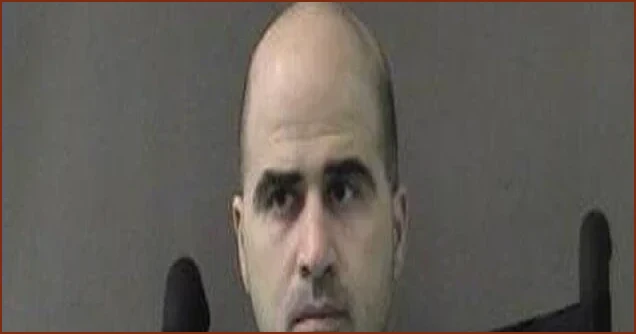
A decision by the Pentagon to publicly broadcast the military execution of Nidal Hasan, the former Army major convicted of killing 13 people during the 2009 shooting at Fort Hood, has provoked intense backlash from members of Congress, religious leaders, and a survivor of the attack. Critics warned that live-broadcasting the execution by military firing squad risks serving as entertainment, undermining public support for the death penalty, and offering a propaganda platform for extremist groups.
Defense Secretary Pete Hegseth confirmed that the execution scheduled for Dec. 3 will be livestreamed, explaining during an appearance on Real America's Voice that the broadcast would be public because people need to understand that there are serious consequences for such actions. Chief Pentagon spokesman Sean Parnell stated that Hegseth made the recommendation for an Army firing squad and President Donald Trump formally approved the plan.
Speaking at an unrelated White House event on Friday, President Trump expressed his approval of the execution method, remarking that Hasan deserves the death penalty through firing squad. In a subsequent interview Friday night with WSTM-TV in Syracuse, New York, Trump stated he was not directly involved in the decision to stream the event, but noted he understood the rationale, suggesting officials wish to make an example of the convicted shooter.
The announcement triggered swift condemnation from Republican lawmakers. Retiring Republican Sen. Thom Tillis, who previously voted to confirm Hegseth as Defense Secretary, publicly expressed regret over his vote and called the plan beyond disgusting. Writing on X, Tillis argued that while Hasan should face capital punishment, public executions resemble practices seen in oppressive dictatorships like Iran and Afghanistan rather than the United States. Georgia Republican Rep. Austin Scott voiced similar disapproval on social media, asserting that live-streaming executions reflects tactics used by jihadists and stating that America is better than that.
Utah Republican Sen. John Curtis urged Hegseth to reconsider the plan, referencing ancient warnings against public violence. Curtis posted on X that Roman thinker Seneca once warned that bloody spectacles corrupted spectators, adding that society erodes when it treats executions as entertainment. Curtis noted that victims deserve justice administered with solemnity and argued that broadcasting a death diminishes the nation without acting as a deterrent.
Democratic Sen. Chris Murphy characterized the plan as medieval during a CNN interview, comparing the prospect of a broadcasted execution to terrorist tactics like ISIS killings. Murphy questioned whether public hangings and executions represent what the country has become, calling the decision galling regardless of an individual's stance on capital punishment. Former Biden administration State Department spokesman Ned Price also warned that publicizing the execution would only create additional radicalized zealots.
Religious figures and conservative commentators also raised alarm. Archbishop Paul S. Coakley, president of the U.S. Conference of Catholic Bishops, released a statement Friday morning urging the Defense Department to reverse course. Conservative talk show host Erick Erickson, who supports the death penalty, cautioned that broadcasting the execution would grant Hasan the platform for martyrdom he seeks. Erickson pointed out that Hasan is a wheelchair-bound paraplegic, arguing that public footage of a firing squad executing a man seated in a chair would erode domestic support for capital punishment while generating propaganda videos in the Middle East to inspire further attacks against Americans.
Former U.S. Army sergeant Alonzo Lunsford, who survived being shot seven times in the 2009 attack, stated that while he supports the firing squad sentence, he opposes uncensored public streaming. Speaking to BBC Radio, Lunsford emphasized that an execution should not be viewed for entertainment purposes. Despite Lunsford's concerns about the livestream, the former U.S. Army sergeant said he'll be there for the execution, stating he wants Hasan to look him in the eyes before the trigger is pulled so the gunman knows his attempt failed and Lunsford survived.
Legal experts and observers pointed out that standard execution protocol typically limits observers to immediate family members of victims and select media representatives. Corn said "turning the execution of such a penalty into some type of public spectacle echoes of the past we seem to have put behind us." The United States last carried out a public execution 90 years ago in 1936, when Rainey Bethea was hanged for rape in Kentucky before an estimated crowd of 20,000 people. The controversy arrives as Hegseth faces impeachment efforts led by House Democrats and Republican Rep. Thomas Massie, though a vote was postponed after House Speaker Mike Johnson concluded legislative business early ahead of the midterms.
"There's a certain protocol that is normally followed with executions limiting the gallery of observers, which usually includes people close to the victims and certain members of the media," he said.
"I'm going to be there [to watch in person] and before they pull the trigger, I want him to look at me in my eyes and I look at him in his eyes and I want him to know: 'Dude, you failed, I'm still here,'" he told the BBC.