In Kabul's Shar-e Naw neighborhood, guests at upscale restaurants are now greeted with more than just a menu. At the request of the Ministry of Interior, waiters distribute tracking forms requiring customers to provide their names, dates of birth, passport numbers, Kabul addresses, and arrival times. While presented as a security measure, the practice highlights the pervasive surveillance network that has taken root across Afghanistan.
Five years after the withdrawal of NATO troops and the return of the Taliban, the group’s control over the country has stabilized. Observers note that while the Taliban may lack advanced surveillance technology, their infiltration of local communities is remarkably high. According to a United Nations official, the group has learned critical lessons from its first period of rule, which ended with the U.S. invasion in 2001. "You can say that fundamentally, ideologically, they haven't really changed. But in terms of control, consolidation, management, messaging, they are far more sophisticated now," the official stated, describing the current administration as a highly calculated experiment.
In cities like Kabul, the streets remain bustling with street vendors, though the physical presence of the new regime is evident in the details. Fewer women walk the streets, city centers are visibly cleaner due to a reduction in rubbish compared to the Republic era, and the overall chaos has diminished. Many residents acknowledge that the country has become safer. Decades of conflict have ended, and the Taliban—formerly the primary perpetrators of violence and highway attacks—have established a brutal peace that makes travel between provinces possible again.
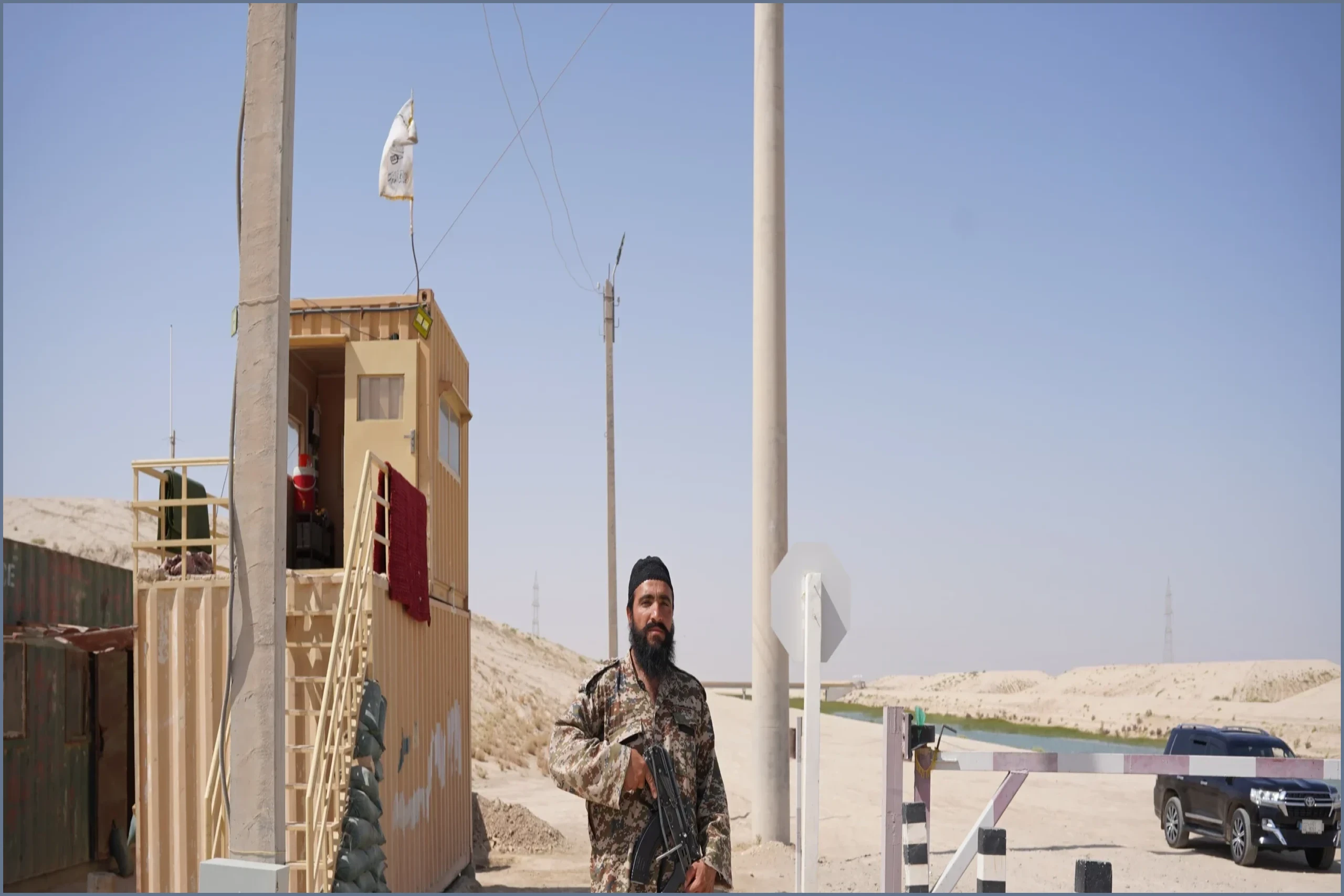
This peace is maintained by an extensive network of checkpoints spanning the entire country. At some checkpoints, soldiers standing under the white flag of the Shahada meticulously inspect travel permits, while others simply monitor passing vehicles. Movement is tightly regulated; both local drivers and tourists must obtain special permits. Travelers are required to secure a letter from "Afghan Tour," a government unit responsible for monitoring visitors, which often requires purchasing expensive tours in Kabul or paying smaller fees, sometimes functioning as bribes, in provinces like Bamyan.
Administratively, the Taliban government has established a functioning bureaucracy. Ministries are operational, and local courts resolve disputes without the widespread bribery that characterized the previous Republic. The administration has eradicated 96 percent of the country's poppy fields and forced hundreds of drug addicts off Kabul's streets into rehabilitation centers. However, this stability mirrors the relentless autocracies of neighboring Central Asia, where clean streets coexist with severe political repression.
A recent report from Human Rights Watch highlights that censorship of local media and restrictions on free expression have intensified. Journalists, academics, and critics face arbitrary arrests, torture, and systemic repression. "The Taliban always accuse us of being spies, it's hard to work these days," a local photojournalist explained.
The crackdown on human rights is particularly severe for women and religious minorities. Women are barred from receiving an education beyond the sixth grade. Under current laws, a woman who flees domestic violence and fails to return to her husband can be prosecuted as a criminal. Women face up to a year in prison for touching, shaking hands, or hugging a man who is not a "mahram" (a close male relative), while boys or girls caught dancing face two months of imprisonment. Additionally, a new "Preachers' law" defines Muslims strictly as followers of the Hanafi school of Islam, officially designating Hazara and Ismaili minority groups as heretics. One Ismaili man recounted losing his teaching job in Badakhshan province solely because of his faith.
Despite the cessation of major warfare—aside from minor skirmishes in Badakhshan and cross-border attacks from Pakistan—Afghanistan is not experiencing a post-war recovery. The withdrawal of Western forces and the establishment of a government recognized only by Russia has severely restricted the United Nations' mandate, limiting international cooperation to basic humanitarian needs. The departure of international non-governmental organizations and foreign media has decimated the local job market, leaving educated, English-speaking professionals without employment. One local photographer noted that unemployment has reached critical levels, with no clear government strategy to address its root causes.
The humanitarian crisis is worsening rapidly. The United Nations projects that more than 17 million people—representing 40 percent of Afghanistan’s population—face acute food insecurity. This strain is exacerbated by the forced repatriation of millions of Afghans from Iran, Pakistan, and European nations like Germany, which have begun deportations despite the risk of returnees facing torture or imprisonment. Afghanistan's population has grown from 20 million in 2001 to 40 million in 2021, and has since increased by another 5 million, totaling approximately 45 million. This 12.6 percent population surge over the last five years has placed triple the pressure on the country's fragile resources, infrastructure, and urban systems.
For the younger generation, the future remains bleak. Restricted from higher education and formal careers, many young women live their lives online, learning English or running small businesses selling handmade accessories on Instagram. The social restrictions are tightly enforced; one woman who hosted a female gathering at a Kabul restaurant was subsequently interrogated by the Taliban, a traumatic event she hid from her family to avoid being permanently confined to her home.
In contrast to this domestic struggle, a niche extreme tourism industry has emerged, with foreign backpackers taking selfies with Taliban fighters and posting them online. For those who lived through the war, the sight is jarring. The previous Republic was deeply flawed, characterized by rampant corruption, omnipresent violence, and a failed $2.3 trillion U.S. occupation that failed to build lasting infrastructure. As one resident remarked, "We still use roads built by the Soviet Union. All the Americans did was bring the Taliban back."
With Western nations unwilling to re-engage, and domestic armed resistance to the Taliban remaining limited and short-lived, regional powers have begun to adapt. China, Russia, and Central Asian states have accepted the new political reality, engaging with the Taliban government on regional infrastructure projects, with China actively pursuing investments in the country.
The Blue Mosque, the shrine of Imam Ali, in Mazar-i-Sharif. Photo by Agnieszka Pikulicka.
All that in the name of the “peaceful and clear sky above us,”as Uzbekistan’s late President Islam Karimov used to say in justifying his own repressive rule.