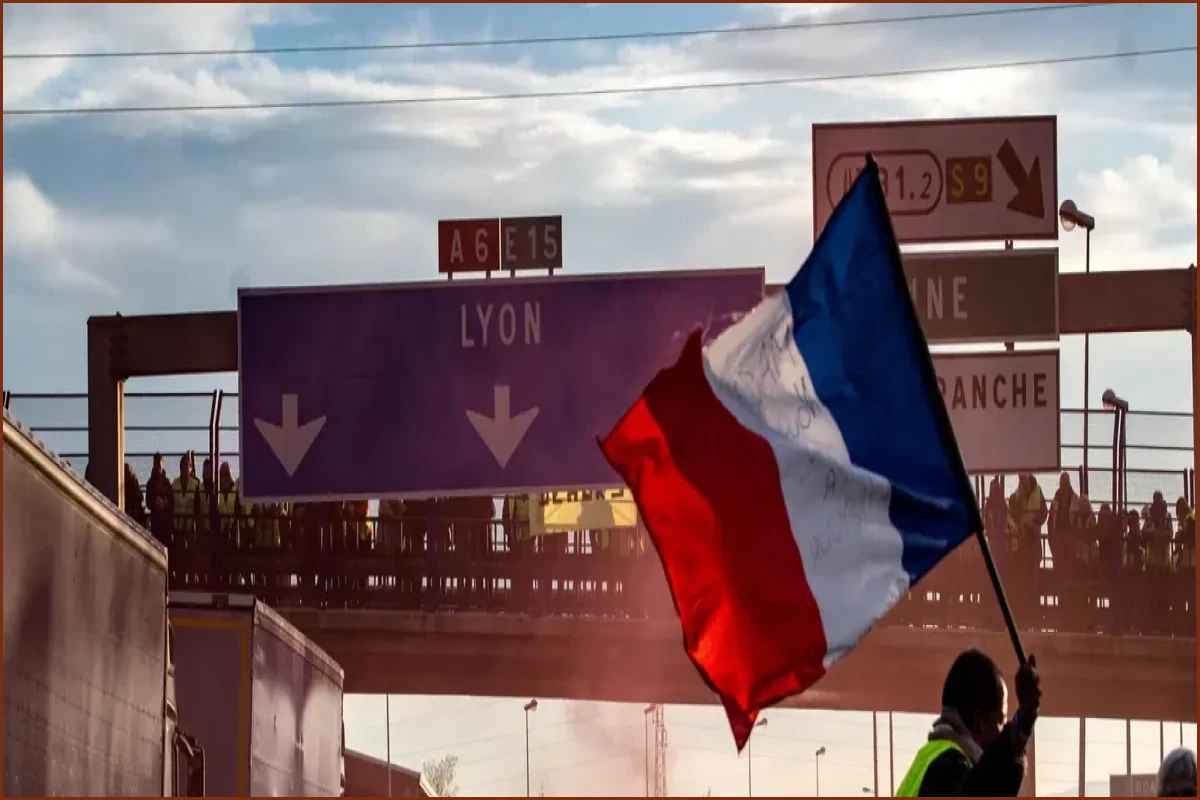
Fuel prices in France have surged well past the levels that originally triggered the historic Gilets Jaunes (Yellow Vests) protests, creating a volatile political landscape just seven months before the presidential election. With diesel hitting €2.40 a litre—up from €1.40 a litre eight years ago—the escalating cost of fuel is severely damaging the approval ratings of President Emmanuel Macron and Prime Minister Sébastien Lecornu.
The high cost of fuel is driving a deep resentment toward the political establishment, pushing far-right leader Marine Le Pen to historic highs in the polls, where she currently commands 35 percent of the vote in the first round of the presidential race. Meanwhile, centrist candidates, including former Prime Minister Edouard Philippe, are struggling to position themselves as viable alternatives to the far-right and far-left extremes.
Speculation is mounting over nationwide demonstrations planned for Saturday, October 17th. While political observers doubt a full-scale return of the Yellow Vests in their original form, the upcoming election offers rural and suburban voters an alternative outlet to express their anger rather than blockading roundabouts.
The soaring fuel costs are largely driven by global oil market factors beyond French control, specifically high oil prices resulting from conflicts in the Gulf and Ukraine. Observers note these conflicts were initiated by Donald Trump and Vladimir Putin, figures previously admired by Le Pen. Nonetheless, French motorists remain highly sensitive to the domestic tax structure, where taxes make up approximately 60 percent of the total price of petrol and diesel.
France levies three distinct taxes on fuel. These include an excise tax (known as TIPP) of €0.69 per litre on petrol and €0.61 per litre on diesel, a carbon tax (CEE) of €0.12 per litre, and a standard value-added tax (VAT) of 20 percent. While the excise and carbon taxes are fixed, the VAT increases alongside rising pump prices.
Under Prime Minister Lecornu's administration, a "golden rule" was established to return all extra VAT revenue generated by high fuel prices to the public through targeted subsidies. Recently, the government announced a €450 million relief package to cover the final three months of the year. This initiative expands the number of eligible low-income motorists from three million to five million, raising the maximum subsidy from €50 to €100 over three months.
However, critics argue that the subsidy program is overly complex and insufficient, translating to roughly €1 per day for recipients. During the previous quarter, laborious administrative procedures meant that only half of those eligible actually completed the claims process. Furthermore, such massive spending has severely strained France's national finances, leaving Macron and Lecornu with little fiscal room to repeat such measures.
The public's frustration is intensified by a broader decline in purchasing power. A study published in Le Monde revealed that the average French family has lost €1,200 in purchasing power over the past two years due to the economic fallout of the COVID-19 pandemic and the war in Ukraine.
Political opponents have proposed alternative solutions. The hard-left La France Insoumise has called for a freeze on pump prices, demanding that oil corporations absorb the market costs—a measure critics warn would lead to widespread fuel shortages. On the far right, the Rassemblement National has advocated for slashing the VAT on fuel from 20 percent to 5.5 percent, which would lower prices by 30 centimes per litre. However, this proposal would violate European Union law, cost the French treasury €12 billion annually, worsen the national deficit, and benefit wealthy motorists as much as low-income ones.
As global oil prices are projected to rise even higher, the French government's current measures remain widely misunderstood and deemed inadequate. While other European capitals discuss implementing windfall taxes on oil company profits, Macron and Lecornu have instead focused on lobbying the French energy giant Total to voluntarily cap prices at its filling stations. In a television interview last week addressing the Ukraine and Gulf crises, Macron acknowledged the difficulty of altering the 60 percent tax rate on fuel. Without a major breakthrough, the price boards at supermarket car parks will continue to act as a political thermometer, pointing toward a potential populist surge in the coming spring election.
Maybe not, say my car-dependent neighbours. But did you know that 60 percent of what you pay for diesel and petrol goes on taxes? Did you know that the government rakes in more in taxes when the prices are high?
That is a false good idea. Wherever it has been tried, it has led to petrol and diesel shortages.