Bosnia and Herzegovina went to the polls on Sunday to elect its multi-ethnic leadership amid deep ethnic divisions, a stalled European Union integration path, and the shadow of pro-Russian separatist politics. Around 3.4 million eligible voters are casting ballots to choose the three members of the country's multi-ethnic presidency, national lawmakers, and the leadership of its two highly autonomous entities: the Muslim-majority Federation of Bosnia and Herzegovina and the Serb-dominated Republika Srpska.
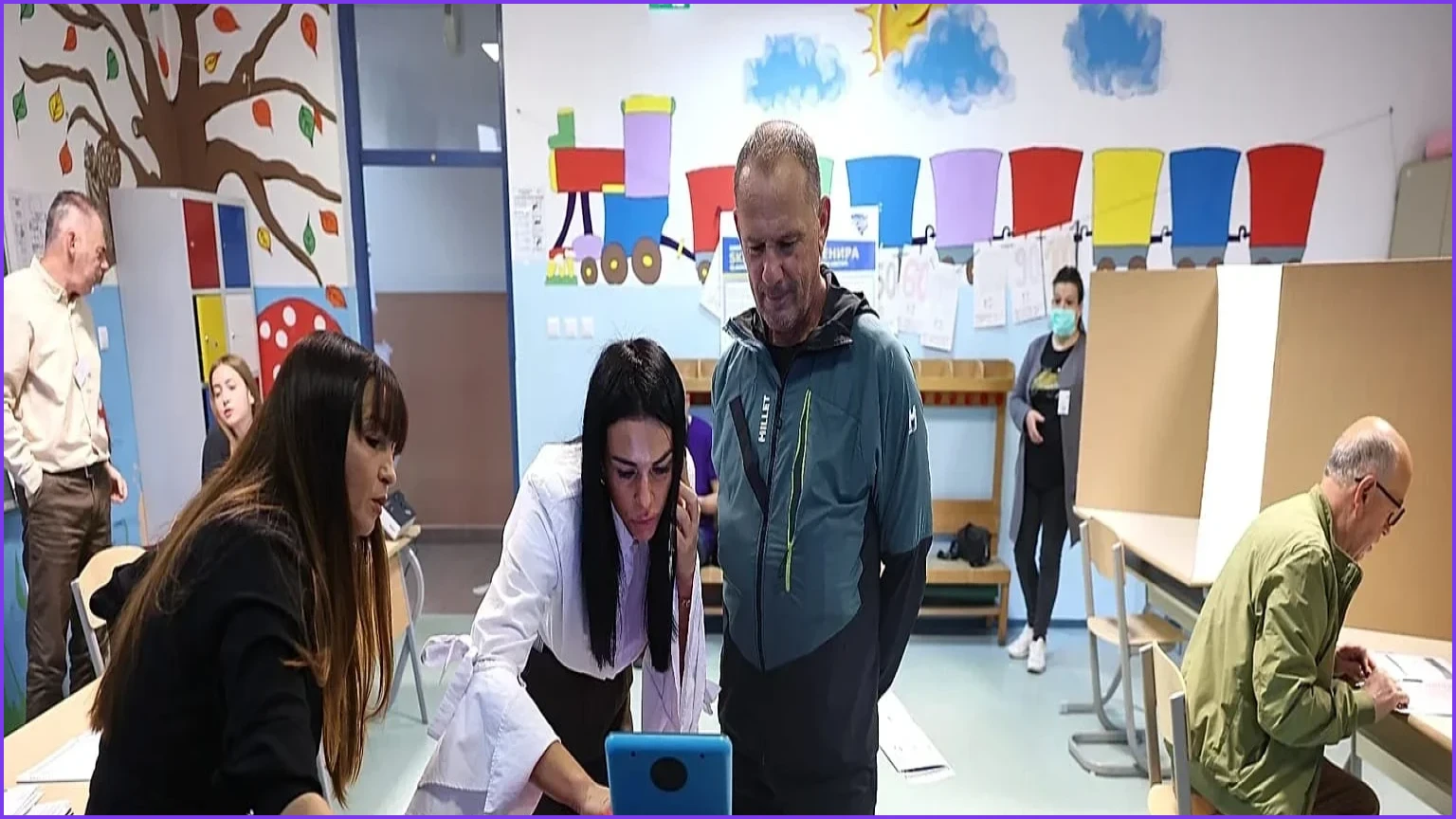
The election marked the first time authorities introduced electronic voter identification and ballot scanning, a measure aimed at curbing the systemic vote tampering and organized manipulation that plagued previous elections. However, the rollout of the new digital voting technology caused delays at several polling stations on Sunday morning. Polling stations across the country are scheduled to close at 7 p.m. local time.
Bosnia's complex governance system was established by a US-brokered peace agreement in 1995 to end the devastating 1992-95 war and manage power-sharing among Muslim Bosniaks, Orthodox Serbs, and Catholic Croats. Decades after the conflict, which claimed over 100,000 lives and displaced millions following the country’s independence from Serb-led Yugoslavia, Bosnia remains one of Europe's poorest nations. Many citizens express deep disillusionment, accusing nationalist politicians of exploiting war-era tensions to distract from low living standards and a massive youth exodus. Ivan Silic, a voter from Mostar, lamented that nothing has improved since he first voted, noting that politicians live well while ordinary citizens continue to struggle.
Although not officially on the ballot, the election campaign was heavily dominated by Milorad Dodik, the pro-Russian, separatist former president of Republika Srpska. Dodik is legally barred from holding public office following a conviction for defying the international envoy tasked with overseeing the 1995 peace agreement. Despite this ban, analyst Dragan Bursac observed that the restriction is ineffective, as Dodik remains highly visible across national media. Recently returning from a meeting with Russian President Vladimir Putin in Moscow, Dodik leads the Alliance of Independent Social Democrats, which is favored to win in the Serb entity. At a final campaign rally on Friday in Banja Luka, which was attended by Russian Ambassador Igor Khalabukov, Dodik declared Bosnia "dead" and "an impossible country," asserting that "it doesn't make any sense."
Most of the 75 political parties contesting the election are organized strictly along ethnic lines. The Bosniak nationalist Party of Democratic Action (SDA), the nation's largest Bosniak party, campaigned on a platform of maintaining national unity against Serb separatist threats. Its leader, Izetbegovic, who was defeated by Becirovic in 2022, is seeking a third term as president of the center-right party. Meanwhile, many Bosnian Croats are backing ethnic-focused parties, including the local branch of Croatia’s ruling Croatian Democratic Union.
Geopolitical interests and historical wounds continue to shape the region's political landscape. A $1.5 billion pipeline project designed to import US liquefied natural gas is currently being promoted by a corporation with ties to the Trump administration, representing Washington's efforts to expand its influence. Concurrently, wartime tensions were recently reignited by public tributes in Serbia and Republika Srpska to Ratko Mladic, the wartime Bosnian Serb army commander who died in late August while serving a life sentence for genocide and war crimes. Despite Mladic's conviction by a UN court for the 1995 Srebrenica massacre of over 8,000 Muslim men and boys, many Bosnian Serbs still view him as a hero. Senior Bosnian Serb officials attended Mladic’s funeral in Belgrade, triggering sharp condemnation from the European Union and sparking anger among Bosniak politicians.
Early reports show voting was delayed at several polling places due to problems with new digital voting technology, which was introduced to address earlier concerns about vote tampering. Polls close at 7 pm. local time.
The election comes as many citizens in the multiethnic Balkan state face everyday problems, while some leading politicians stoke the war-era tensions that have kept the country divided since the 1992-95 conflict.