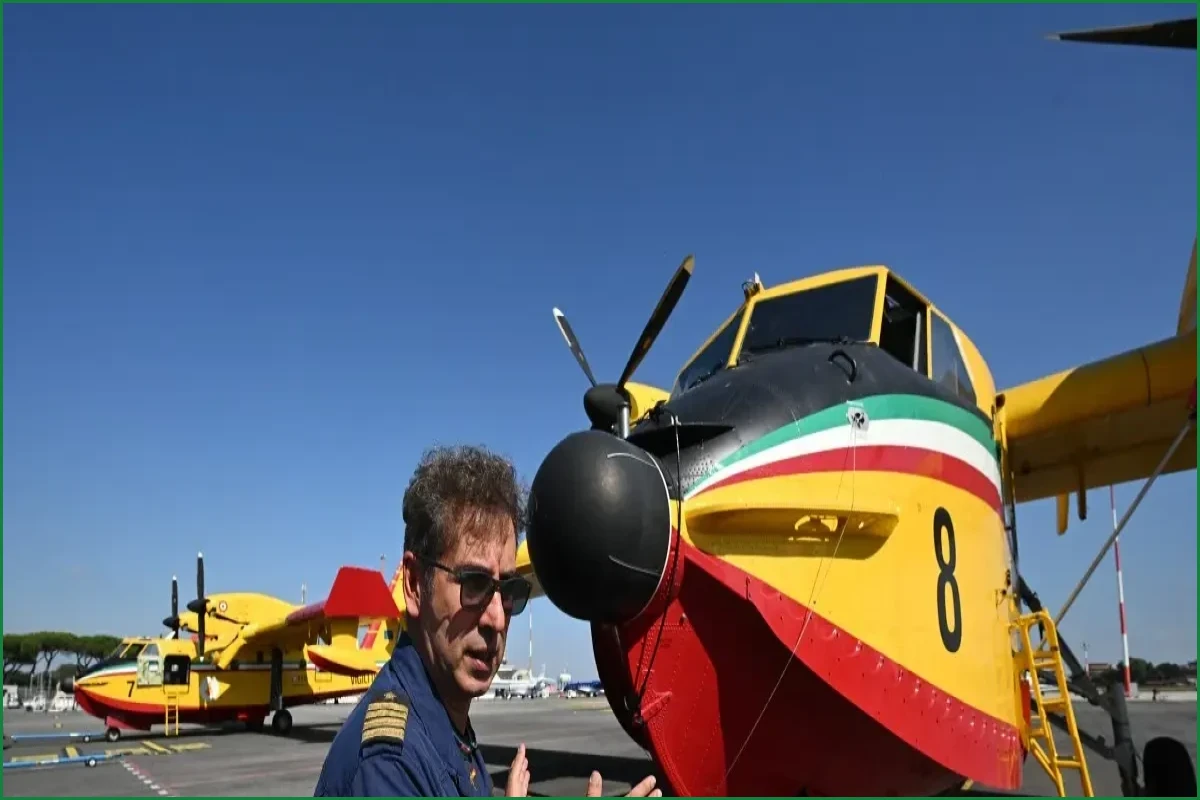
Italy’s fleet of bright yellow and red Canadair amphibious aircraft has returned to a base near Rome, marking the conclusion of a grueling summer spent fighting wildfires across a parched Europe. The country operates one of the world's largest fleets of these specialized planes, which are designed to act as both boat and plane.
Their ability to scoop water from lakes, reservoirs, or the sea without landing allows them to respond with significant speed to emerging fire threats.
The Canadair is capable of scooping over 6,000 litres of water in just 12 seconds through two intakes beneath the fuselage and dropping the load in three seconds, which pilot Francesco Morgante described as an ideal tool for firefighting.
Data from the European EFFIS system indicates that Italy experienced its fourth-largest fire season since 2006. The country’s 18 water bombers were kept busy throughout the season, tackling 645 fires that burned 113,800 hectares. Beyond national emergencies, these aircraft were deployed as part of the European Union’s shared firefighting resources to assist neighboring nations amid a historic continental fire season.
Western Europe recorded its hottest summer on record, with approximately 540,000 hectares burned across the European Union between mid-June and early September.
Francesco Morgante, a 58-year-old pilot with Avincis—the company that manages the fleet on behalf of Italy’s fire service—noted that the summer began with deployments to Portugal and Spain. Both nations faced difficult conditions that threatened urban centers and tourist destinations. Following those missions, Italy required the full attention of the fleet, particularly due to an unexpected and unusual emergency situation in the north of the country.
Morgante described the season as exceptional, noting that the typical weather break, where a summer storm might offer a brief respite, never occurred.
Alessandro Sette, the 50-year-old head of the operations room for the Italian Civil Protection agency, confirmed that the workload was intense, with planes taking off at first light and concluding operations at dusk. However, by late September, the flight path tracking screens were quiet, and the majority of the planes were grounded.
The official end of the summer season is scheduled for October 31st, coinciding with the closure of the last operational base in Calabria. Technical maintenance is now underway in a newly renovated hangar. Maurizio Tomassi, head of maintenance operations at Avincis, explained that each aircraft undergoes in-depth checks over several weeks, with the team aiming to complete the work by March.
The fleet currently uses the CL-415 model, but Italy, like many European nations, is awaiting the delivery of the new-generation DHC-515 aircraft, which costs approximately 100 million euros, or $113 million, per unit.
These planes are manufactured by the Calgary-based firm De Havilland. As the need for such resources continues to show a slow, gradual increase, Morgante emphasized that maintaining a fleet capable of meeting both national and European requirements remains essential.
READ ALSO: Will the European Union take up the climate fight after brutal heatwaves?
"Having a fleet that meets our needs at both national and European levels… is essential," he said.