Sami Abu Shehadeh, the leader of Israel’s Arab Balad party, has agreed to withdraw his candidacy from the upcoming October 27 general elections following intense pressure from the country's Supreme Court.
The decision, made on Thursday evening, came after the Supreme Court indicated that a majority of its panel judges supported his exclusion from the race. Balad—formally known as the National Democratic Assembly and running as part of the Joint List coalition—confirmed that Abu Shehadeh would accept the court’s proposal to step down voluntarily.
During a court hearing earlier on Thursday, Supreme Court President Yitzhak Amit explicitly informed Abu Shehadeh that most judges on the panel favored upholding his disqualification. The court gave the politician until Friday to withdraw on his own terms, warning that it would otherwise issue a formal ruling to bar his candidacy.
The legal battle stems from a September 23 vote by Israel’s Central Elections Committee, which moved to disqualify both Abu Shehadeh and Joint List lawmaker Ofer Cassif. The committee also voted to exclude the entire Joint List, led by Yousef Jabareen, as well as the United Arab List, led by Mansour Abbas, from participating in the elections.
The specific case against Abu Shehadeh focuses on an article he published on October 8, 2023, just one day after a Hamas-led attack on Israeli communities near Gaza. Right-wing Israeli factions, including the Jewish Power party led by National Security Minister Itamar Ben-Gvir, spearheaded the disqualification effort by alleging that the piece expressed support for the attack. Abu Shehadeh has strongly denied these accusations.
Addressing the court on Thursday, Abu Shehadeh clarified that he does not support "armed struggle." He acknowledged that a specific paragraph in the published article had been "incorrectly worded," explaining that his actual intention was to advocate for transitioning the conflict toward a political resolution. However, judges viewed certain passages in the article as provoking "displeasure and revulsion."
Adalah, the human rights organization representing Abu Shehadeh, defended him by arguing that the petition to bar his candidacy relied entirely on a single article that lacked any explicit call to back armed violence. Despite this defense, Israel's attorney general supported the disqualification.
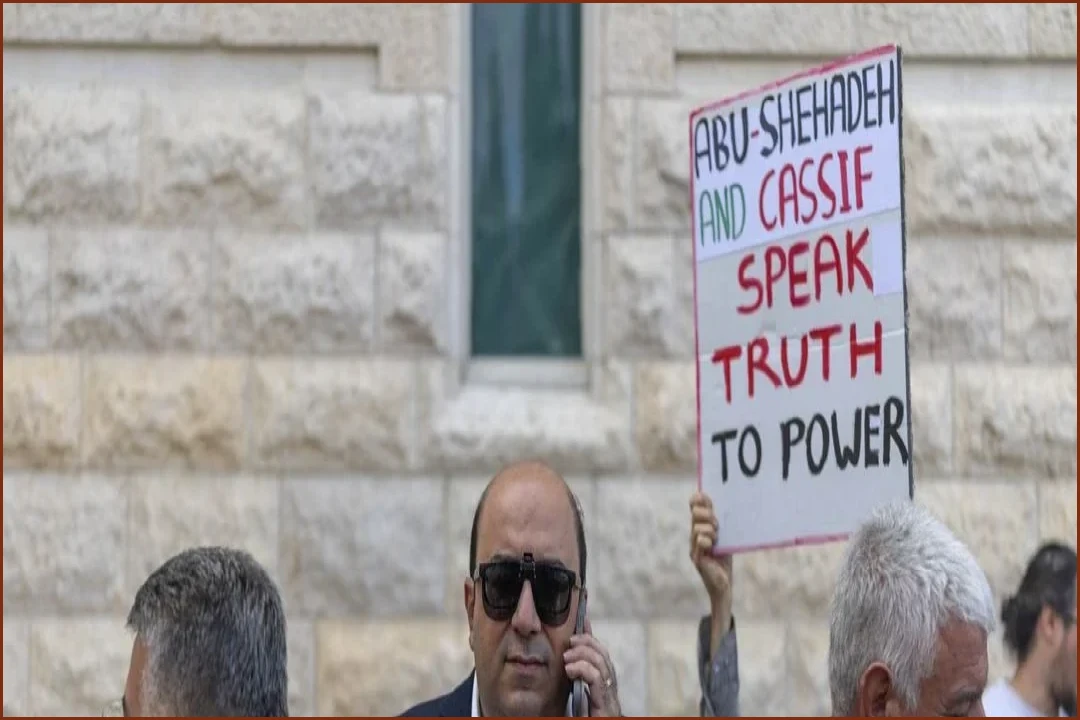
The court hearings sparked immediate tension. Arab lawmakers and their supporters gathered to demonstrate outside the Supreme Court in West Jerusalem. During the protest, Ben-Gvir arrived at the scene and waved an Israeli flag in front of the demonstrators.
Under Israeli electoral laws, any decision by the Central Elections Committee to disqualify an individual candidate only becomes effective if it is approved by the High Court. Decisions to bar entire electoral lists can also be appealed before the court. Historically, the High Court has overturned several committee decisions aimed at excluding Arab candidates and political parties. Palestinian citizens of Israel comprise approximately 20 percent of the country’s population, and voters are set to elect members to the 120-seat Knesset on October 27.