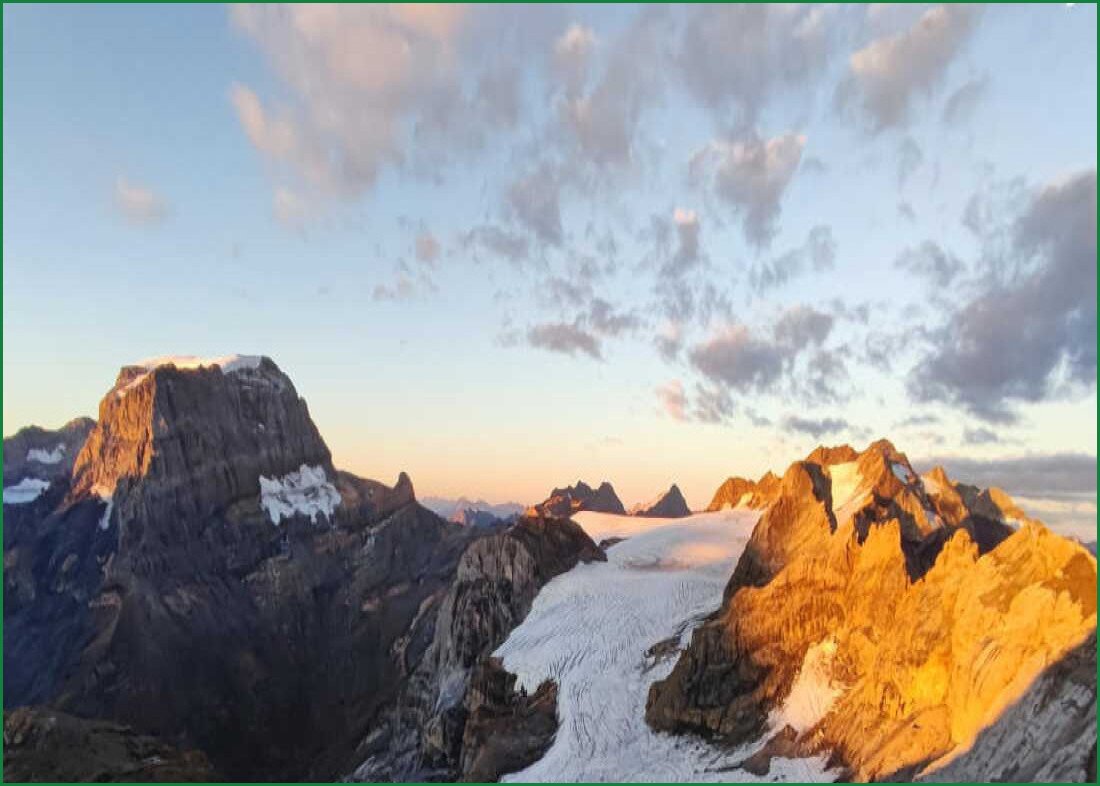
Switzerland's glaciers experienced another year of rapid decline, losing 5.5% of their total ice volume in 2026. This dramatic contraction, documented in a report by the country's glacier monitoring network, GLAMOS, and the Swiss Academy of Sciences (SCNAT), reflects a broader global trend of accelerating ice loss driven by global warming.
Matthias Huss, who leads GLAMOS, spent the summer measuring the country's high-altitude ice fields. While the 5.5% loss in 2026 is slightly below the historic record of 6% set in 2022—a difference attributed only to a higher accumulation of winter snow—the underlying trends remain deeply alarming. Huss discovered that some of Switzerland's largest and most iconic glaciers, including the massive Rhône and Aletsch glaciers, suffered record-breaking ice losses this year.
Returning to the glaciers after a long, hot summer, Huss found vast stretches where meters of ice once stood completely bare. He described the transformed terrain as a dry, dead moon landscape, devoid of ice save for a few melting blocks scattered across hot rocks. In areas formerly buried under deep ice, alpine plants are already beginning to seed themselves in the exposed earth.
The rapid disappearance of these ice fields threatens Europe's broader ecological and economic stability. Often referred to as the continent's "water towers," glaciers store winter snow and gradually release it to feed vital waterways such as the Rhine and the Danube during the dry spring and summer months. This water is critical for agriculture, power generation, and commercial shipping.
The consequences of dwindling ice and snowmelt were starkly visible this summer. As river levels plummeted, freight transportation along the Rhine and Danube ground to a halt. Additionally, nuclear power plants that rely on river water for cooling were forced to temporarily shut down. While some water did flow through these rivers, it was supplied by the melting of the glaciers themselves rather than sustainable seasonal snowmelt.
This reliance on melting glaciers is a finite solution. Over the past 50 years, approximately 1,200 smaller Swiss glaciers have vanished entirely. Once the remaining glaciers disappear, the lack of meltwater could present an existential threat to European agriculture, leading to severe droughts.
Beyond water scarcity, the loss of glaciers and alpine permafrost poses immediate physical dangers. Ice and frozen ground act as a natural glue holding mountain slopes together. Without it, the risk of catastrophic landslides and flooding rises. Last year, the Swiss village of Blatten was devastated when a fragile glacier collapsed, triggering a massive landslide that brought down a mountainside and destroyed 300 homes.
Although Blatten's residents were evacuated safely due to ongoing monitoring, they remain in temporary housing one year later, unsure if they can ever return to a village now buried under an estimated 9 million cubic meters of ice, rock, and mud. Similar disasters have unfolded globally; this summer, a glacier collapse on Nepal's border with Tibet unleashed devastating floods that claimed the lives of at least 1,400 people.
Huss urged caution when directly linking specific natural disasters to climate change, noting that mountain environments are inherently hazardous. He explained that the relationship is more complex than simply stating that rising temperatures cause mountains to fall apart. However, he emphasized that climate change acts as a critical catalyst. The combination of intense heat, disappearing ice, and warming permafrost can serve as the final trigger for these catastrophic events.
After years of tracking this decline, Huss has little patience for climate change denial. He argued that the visible decay of the glaciers is undeniable proof of a changing planet, stating that the evidence has been clear for decades and serves as an urgent call to action. If global temperatures continue to rise at their current pace, GLAMOS projects that all of Switzerland's glaciers will completely disappear by the end of this century.
Fortunately, the instability was being monitored, and Blatten's population was evacuated before the landslide. But one year later, they are still living in temporary accommodation, with no idea if they will ever be able to return to homes now buried under an estimated 9 million cubic meters of ice, rock and mud.
And after years of monitoring the glaciers, Huss has little patience with those who still claim climate change does not exist. What is happening to the glaciers should be a warning sign, he argues. "Look at them, it's not a hoax. The evidence is clear, and it's been clear for decades. And I think many people have understood that it's time to act now."