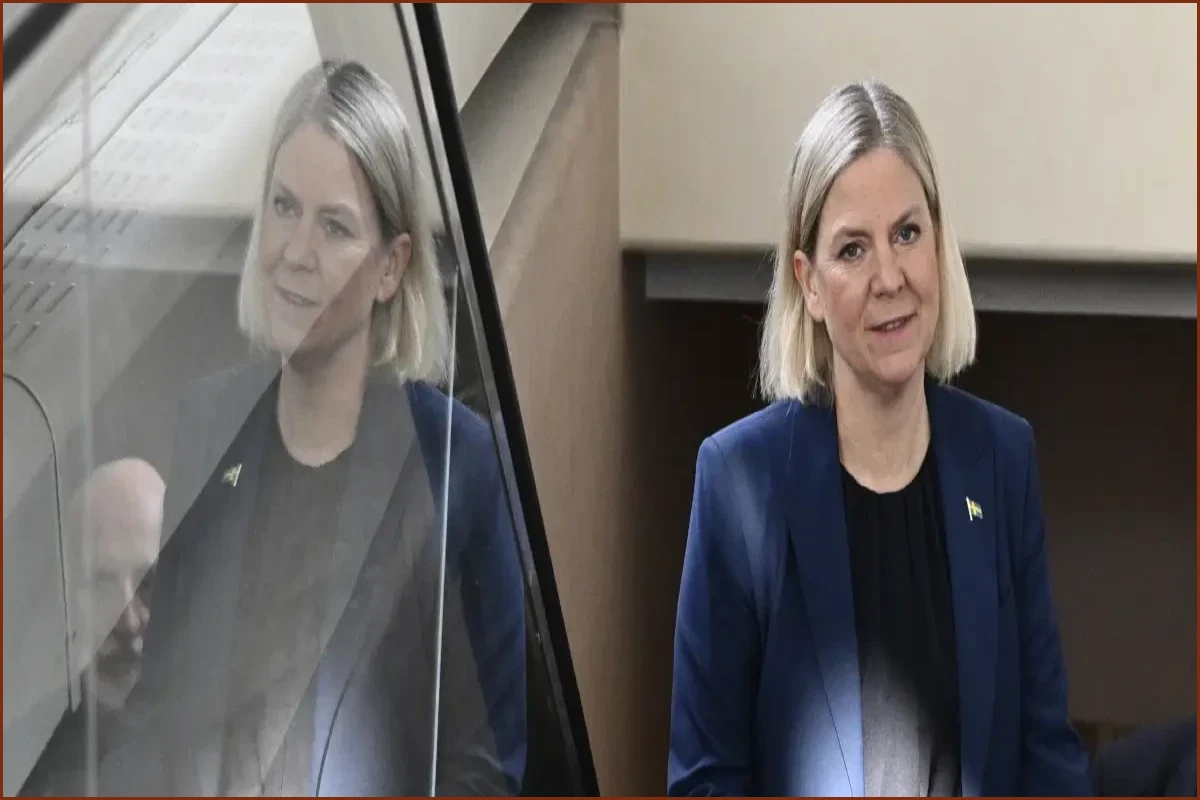
Social Democrat leader Magdalena Andersson announced on Monday morning that her efforts to establish a government have reached an impasse. During a press conference, Andersson stated that there is currently no viable path for her to form a coalition of parties that would support her as prime minister. Her decision follows a period of intense, deadlocked negotiations that failed to bridge the gap between key political factions.
The collapse of her mission occurred just hours before a scheduled parliamentary vote to select the next speaker. In a move that surprised many, the Left Party broke from the centre-left bloc to support the incumbent speaker, Andreas Norlén of the Moderate Party, rather than a candidate from Andersson’s side. Andersson indicated that this shift in parliamentary dynamics was a decisive factor, noting that a new constellation of Left Party members and Moderates had effectively emerged. She stated clearly that had the Left Party not chosen to back Norlén, she would have continued her efforts to negotiate a government mandate.
The decision by the Left Party to support Norlén has been interpreted by many as a strategic maneuver to exert pressure on the Social Democrats during ongoing talks. Left Party leader Nooshi Dadgostar, however, rejected the characterization of this move as a new political alliance. She maintained that the decision was based on the need for a capable, experienced, and impartial speaker, telling the Expressen newspaper that it was strange to frame the vote as a political act. Conversely, Nicholas Aylott, an associate politics professor at Södertörn University, described the situation as a calculated political game, suggesting the Left Party is flexing its strength, much like the Sweden Democrats did in 2014, to force a response from the Social Democrats.
Andersson had been tasked with forming a government by Norlén following the September 13th election, which resulted in a slim majority for the centre-left bloc. The negotiations stalled early on, hampered by the Centre Party’s refusal to engage with the Left Party, with the Centre Party labeling discussions pointless unless the Left Party abandoned its ministerial demands. Throughout the past week, these conflicting red lines remained rigid, with the Left Party insisting it would hold its position even if it meant risking a new election.
With Andersson's withdrawal, the responsibility now falls to speaker Andreas Norlén to appoint a new leader to head the negotiations. It is widely expected that the task will be handed to Moderate Party leader and incumbent Prime Minister Ulf Kristersson. However, his path to a majority remains uncertain, as the current centre-right bloc lacks the necessary seats and requires support from parties like the Centre Party, which has pledged to block any coalition involving the far-right Sweden Democrats. Under parliamentary rules, the speaker has four opportunities to present a nominee for a vote before a new election must be called. Because Andersson was never put to a vote, all four attempts remain available for the speaker to use. As the political landscape shifts, it remains EXPLAINED: What needs to happen for Sweden to get a new prime minister? WHAT'S NEXT: From the obvious to the unthinkable – nine options for Sweden's government.