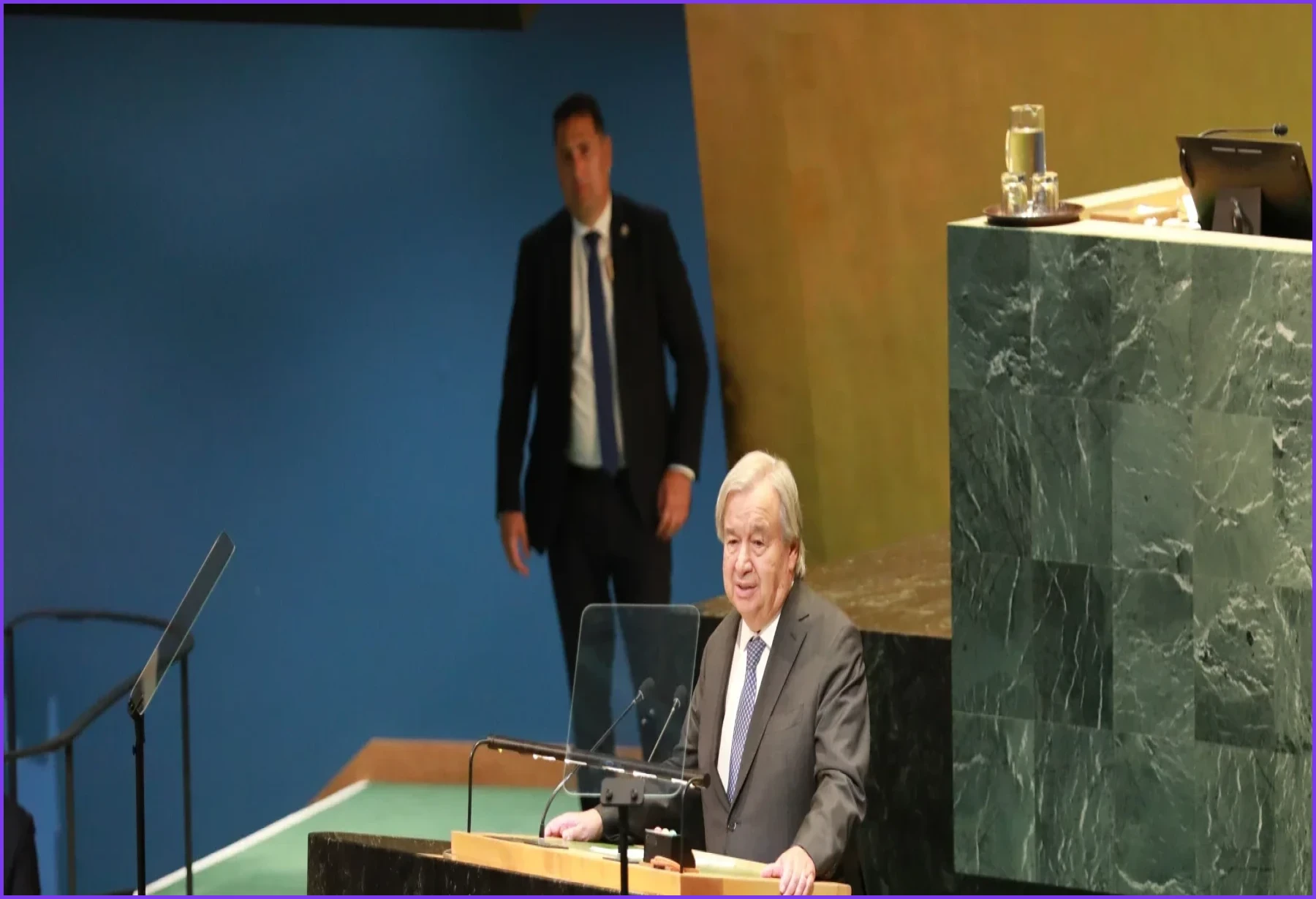
World leaders are converging at the United Nations headquarters in New York this week, entering what Secretary-General António Guterres has described as an era of deep uncertainty. The event, which serves as the 81st session of the U.N. General Assembly, marks the final high-level week for Guterres before his term concludes at the end of the year.
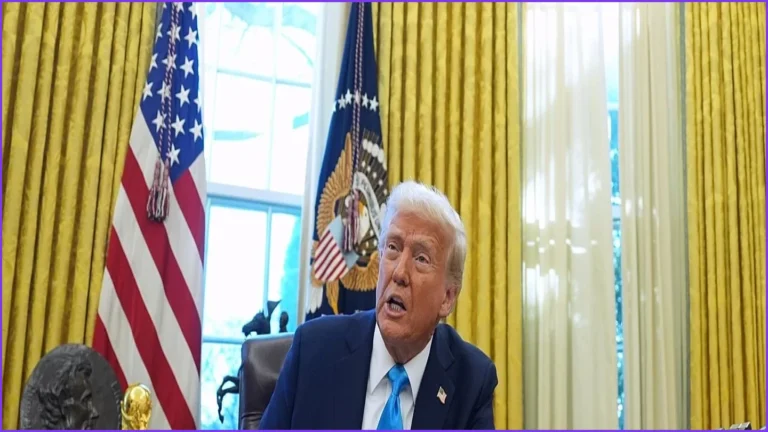
Proceedings are scheduled to begin Tuesday morning with opening remarks from Guterres. Following tradition, Brazilian President Luiz Inácio Lula da Silva will be the first world leader to speak, followed by President Trump. The assembly’s agenda remains packed with addresses from top officials and leaders through September 28.
Guterres indicated last week that he intends to utilize his bilateral meetings to advocate for de-escalation in the Middle East and to secure freedom of navigation through the Bab el-Mandeb waterway and the Strait of Hormuz. Additionally, he continues to press for a ceasefire in Ukraine, as the nation enters the fifth year of Russia's full-scale invasion. Despite these goals, U.N. observers remain skeptical that significant breakthroughs will be achieved on these fronts.
The schedule includes an address by Iranian President Masoud Pezeshkian on Wednesday, occurring nearly seven months after the United States and Israel initiated their war on Iran in late February. The U.S. State Department confirmed that the Iranian delegation will be smaller than in previous years, noting that visa access was denied to some individuals. Furthermore, Iranian officials in New York face strict mobility and purchasing restrictions enforced by diplomatic security agents. It remains uncertain whether any members of the Iranian delegation will engage with the Trump administration.
Ukrainian President Volodymyr Zelenskyy is also slated to speak on Wednesday, as European allies attempt to bolster support for the country ahead of another winter of conflict. While Russia continues to utilize its veto power on the U.N. Security Council to block substantive U.N. involvement, Russian Foreign Minister Sergey Lavrov is expected to address the assembly on September 26. Lavrov is also anticipated to hold meetings on the sidelines with Secretary of State Marco Rubio.
Diplomatic friction is evident regarding the Palestinian delegation, as the Trump administration has denied a visa to Palestinian Authority President Mahmoud Abbas for the second consecutive year. In response, the General Assembly voted to permit Abbas to deliver his statement via video, which is scheduled for Thursday morning. Meanwhile, Israeli Prime Minister Benjamin Netanyahu is expected to use his 15-minute slot on Thursday to defend his administration's actions regarding Gaza and Iran. Despite planned protests, Israel’s U.N. Ambassador Danny Danon stated that Netanyahu would address the assembly with pride. New York City Mayor Zohran Mamdani has stated he does not intend to join the protests, though he previously suggested Netanyahu should be arrested under an International Criminal Court warrant—a suggestion the Trump administration has dismissed while pledging to continue its campaign to undermine the court.
While approximately 120 leaders and senior representatives are attending, several prominent figures are absent. The leaders of Germany, India, and South Africa are sending senior representatives, and Chinese President Xi Jinping is expected to address the body via video, despite his planned visit to the White House on Thursday. Richard Gowan of the International Crisis Group noted that this split-screen dynamic—with major powers meeting in Washington while smaller nations speak to an empty hall—could send a message regarding the current distribution of global power.
The search for a successor to Guterres continues, with the Security Council having held three straw polls so far. While no consensus has been reached, front-runners include Guyana’s former Foreign Minister Carolyn Rodrigues Birkett and Costa Rica’s former Vice President Rebeca Grynspan. Following the withdrawal of former Chilean President Michelle Bachelet, seven candidates remain. The U.S., as a veto-wielding member, has emphasized that the next secretary-general must focus on returning the U.N. to basics, though the timeline for a final decision remains unclear as the year-end deadline approaches.
U.N. Secretary-General António Guterres speaks at the opening of the 81st session of the U.N. General Assembly in New York, Sept. 8. Guterres will attend his last high-level week as secretary-general. Zhang Fengguo/Xinhua via Getty Images hide caption
Russian President Vladimir Putin, who launched the full-scale invasion of Ukraine in February 2022, has not attended the General Assembly for over a decade. Instead, Russian Foreign Minister Sergey Lavrov is expected to give an address on Sept. 26 — and meet Secretary of State Marco Rubio on the sidelines of the event