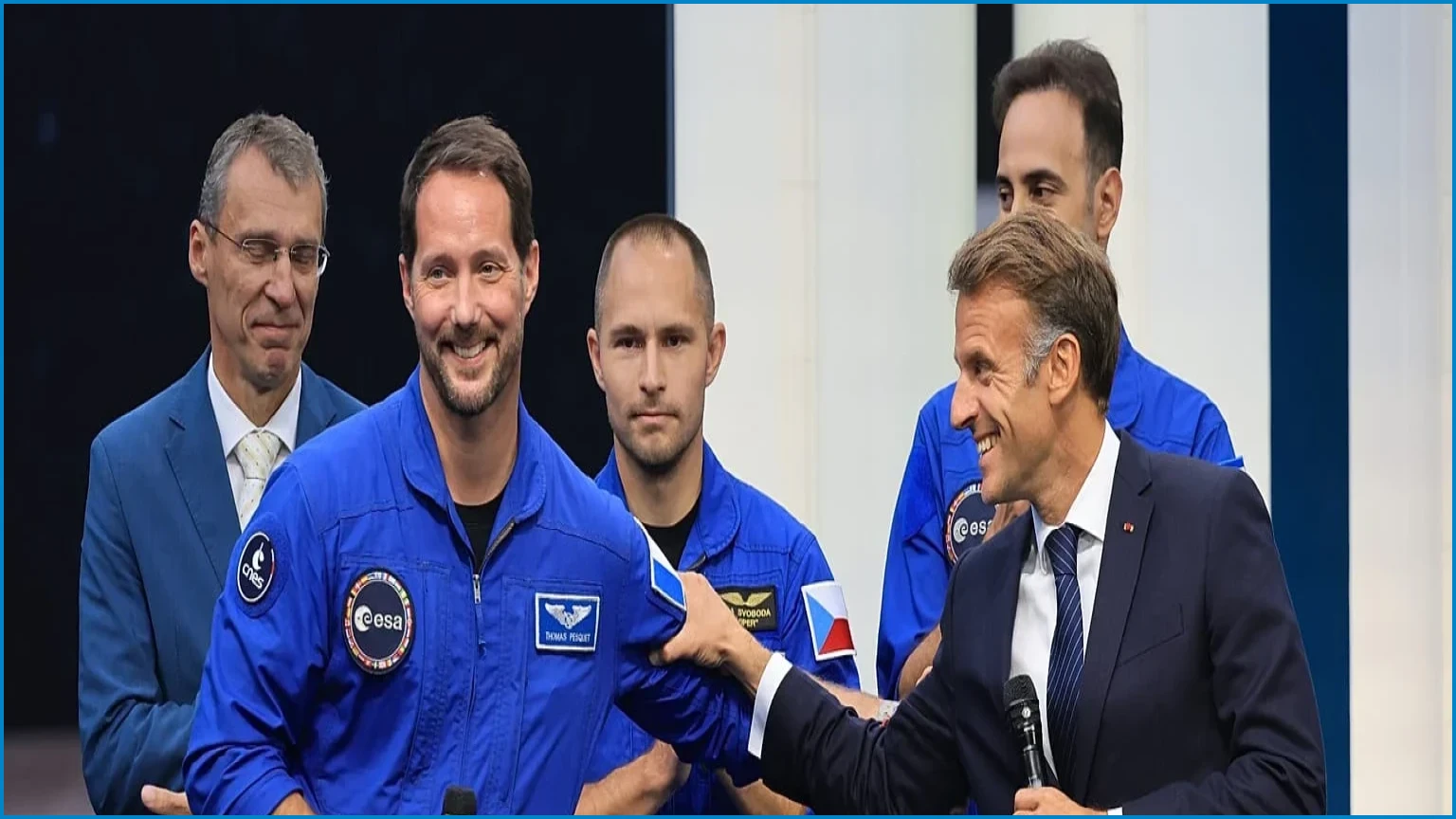
French astronaut Thomas Pesquet has emphasized that Europe and France must prioritize the "scientific return" from the European Space Agency’s (ESA) upcoming private mission to the International Space Station (ISS). Pesquet, who is scheduled to lead the mission aboard PAM-6 in the summer of 2027, spoke about the urgency of this goal during the International Space Summit in Paris.
With the ISS slated to retire and be deorbited in 2030 due to aging hardware and a shift in the space sector toward commercialization, time is running out. Pesquet noted the uncertainty regarding future European opportunities, stating, "We know the ISS is coming to an end soon and we don't know when Europe and specifically France's next turn, will come again, given that long-term missions to the ISS are assigned on a rotating basis."
The ISS has been a collaborative international effort since Russia and the US launched its first segments in late 1998, with astronauts occupying the station starting in 2000. Europe and Japan later contributed their own modules, while Canada provided robotic systems. Pesquet serves within the ESA Astronaut Corps, which manages the selection and training of crew for international missions.
The International Space Summit, co-hosted by France and Germany, served as a platform for industry leaders and heads of state to advocate for European sovereignty and increased investment. Currently, the ESA lacks its own operational crewed spacecraft or launcher. Pesquet views the push for autonomy as essential, particularly as international partnerships face growing challenges.
He remarked on the current geopolitical climate, saying, "Given the upheavals in the geopolitical landscape, without getting into the details, it’s clear that it’s difficult to rely on long term partners, consistency has become a rare commodity on the international stage. We believe we must first do things ourselves first."
This drive for independence has been accelerated by the war in Ukraine and a desire to reduce reliance on the United States. Kyiv's reliance on Elon Musk's Starlink has shown the strategic importance of space services in war, given that satellite networks can provide connectivity even when infrastructure is damaged or destroyed.
Looking to the future, Pesquet envisions a shift toward smaller, varied stations rather than a single large one, and he is preparing for this rapidly evolving landscape.
Despite terrestrial geopolitical tensions, Pesquet maintains that space crews often set such conflicts aside. He recalled the early days of his career in 2011, noting, "We already tended to focus on the things we had in common, on the very things that brought us together." While acknowledging that organizational relations can be complex, he emphasized the importance of maintaining a collaborative, safe environment among international agencies like NASA, Roscosmos, and the ESA.
In support of these goals, the ESA approved a record-breaking €22.3 billion budget for 2026–2028 in November 2025, including €35 billion specifically for security and defense. Géraldine Naja, director of space transportation at the ESA, noted that Europe is addressing its historical underinvestment in the sector compared to the US and China.
She highlighted the recent successful launch of the Spectrum rocket by German startup Isar Aerospace as a positive step, noting that the company benefited from ESA programs designed to support commercialization.
Naja stressed that space tools are now vital for defense, as modern weaponry relies heavily on communication and navigation capabilities provided by satellite networks. "If you compare GNP and the number of people, we are spending six times less than the US," she said.
Europe's push to build up its military space assets has been driven by Russia's war in Ukraine, as well as a decision to distance itself from its longstanding dependence on the US in the space domain.
"When you’re part of a crew — on a boat, in a plane, or in a submarine, it's part of collective intelligence, so we keep this attitude. Obviously, relations between organisations aren't always easy. But at least at our level we don’t want that to affect our work, we don’t want it to affect safety, so we maintain healthy relationships."