Iran launched a series of attacks against U.S. allies in the Gulf early Wednesday, marking a sharp escalation in hostilities following a monthlong pause in direct combat. The strikes followed a night of American bombardment that Iranian officials say included a deadly attack on a wedding party in the coastal town of Kuhestak. According to the state news agency IRNA and state television, the strike in Kuhestak killed four people—two women and two children, aged 4 and 16—and wounded at least 68 others. Ahmad Nafisi, the province's deputy governor, had initially reported five deaths to state television, though no explanation was provided for the subsequent change in the casualty count.
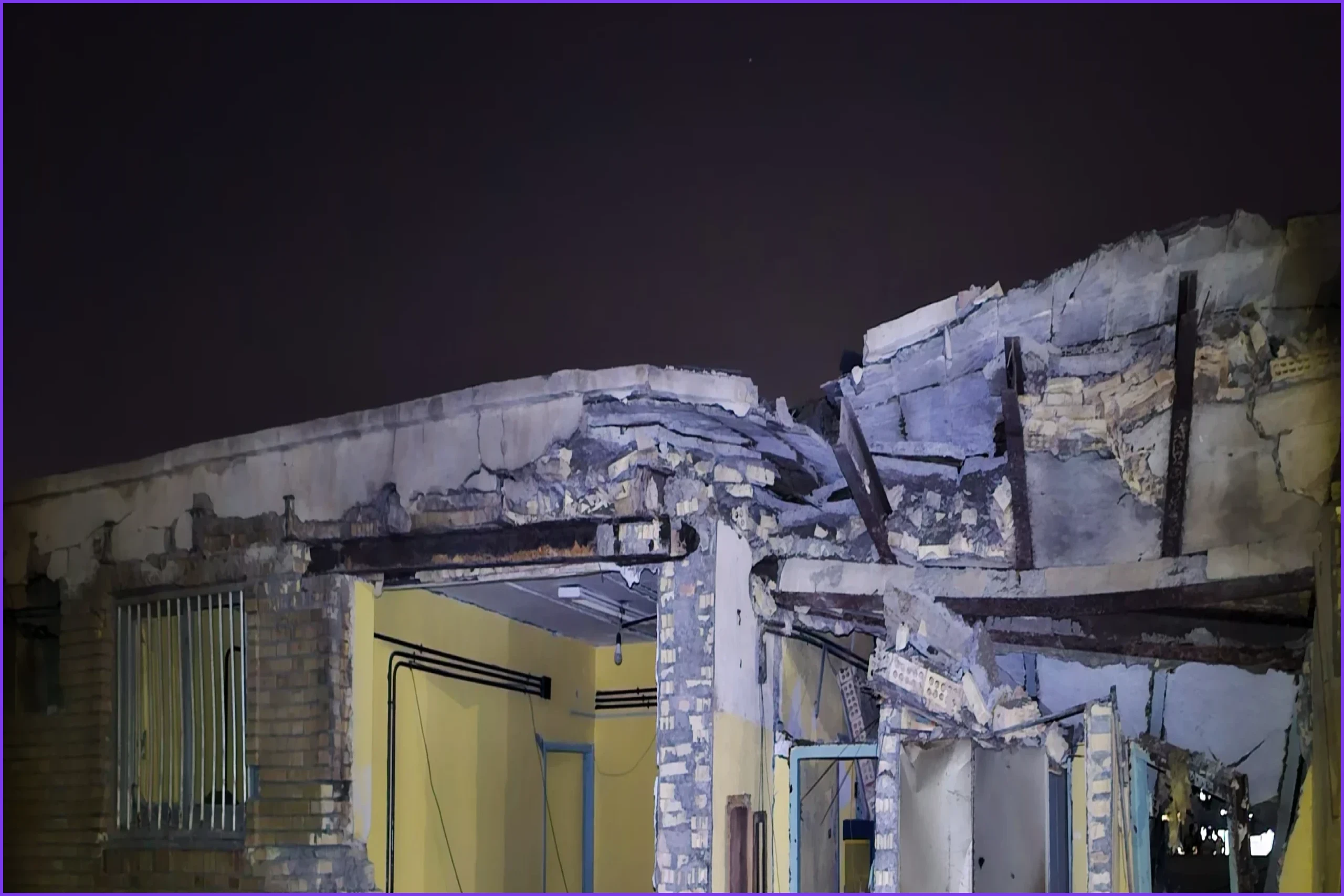
Security camera footage broadcast by the semiofficial Fars news agency showed heavy explosions and fireballs lighting up the night sky in Kuhestak. Images from the semiofficial Tasnim news agency depicted children receiving treatment at a hospital in the nearby town of Minab, where a previous U.S. strike on the first day of the war hit a primary school, killing over 100 children. Rescue footage from the Iranian Red Crescent showed a hole in the roof of a home in a densely populated neighborhood. Two weapons experts, Trevor Ball of Bellingcat and N.R. Jenzen-Jones of Armament Research Services, identified missile fragments shown in Iranian media as parts of a U.S.-made SLAM-ER cruise missile. While the missile is also used by the United Arab Emirates and Saudi Arabia, neither country has reported conducting recent strikes on Iran. U.S. Central Command spokesman Capt. Tim Hawkins stated the military is aware of the reports originating from Iranian state media but would not confirm if a formal investigation has been launched.
The fighting has intensified since the U.S. military struck Iranian rocket launchers on an island in the Strait of Hormuz over the weekend, citing intelligence that Iran planned to use them to deploy mines. Iran responded by firing missiles at American bases in Jordan, which were intercepted. Following the strikes in Jordan, Kuwait and Bahrain reported they had also come under attack, though neither nation reported casualties. In Iraq, Kurdish authorities intercepted 10 explosive-laden drones near Irbil, while Iranian television claimed American bases in the area were targeted. Additionally, Israel’s military reported that Iran-backed Hezbollah fired two explosive drones at soldiers in southern Lebanon, causing no casualties.
Economic pressure continues to mount as the conflict persists. On Wednesday, Iran's currency hit a new record low, with traders in Tehran exchanging 2.20 million rials for one U.S. dollar, a 10% decline from the previous week. Brent crude oil prices have climbed to approximately $95, an increase of more than 30% since the war began. The Saudi shipping company Bahri confirmed that two Filipino sailors were killed in an attack late Monday while their vessel was transiting the Strait of Hormuz. U.S. Central Command's Adm. Brad Cooper stated last week that the strait had been cleared of mines and that the U.S. Navy had assisted nearly 1,500 commercial vessels carrying 750 million barrels of oil, though these figures remain below prewar levels.
Hamidreza Azizi, a senior Iran analyst at the Crisis Group, warned that the current cycle of violence is unsustainable. He cautioned that one side may eventually feel the need to escalate to break the stalemate, potentially pushing both nations toward a full-scale war they have previously sought to avoid. Mohsen Rezaei, the recently appointed head of Iran's Supreme National Security Council, stated on X that Iran’s new strategy in diplomacy and on the battlefield would shatter the foundations of its adversaries. Ebrahim Azizi, chairperson of the Iranian parliament's National Security and Foreign Policy Committee, also vowed on X that the strikes would not go unpunished. Iran has separately reported the deaths of four members of its paramilitary Revolutionary Guard and 10 members of the volunteer Basij forces in the recent U.S. attacks.
President Trump stated late Tuesday that he would not force Iran to the bargaining table, noting that he prefers the current position of controlling the Strait of Hormuz while the Iranian economy collapses. He questioned when the Iranian people would rise up to fight, asserting that the current situation is inevitable.