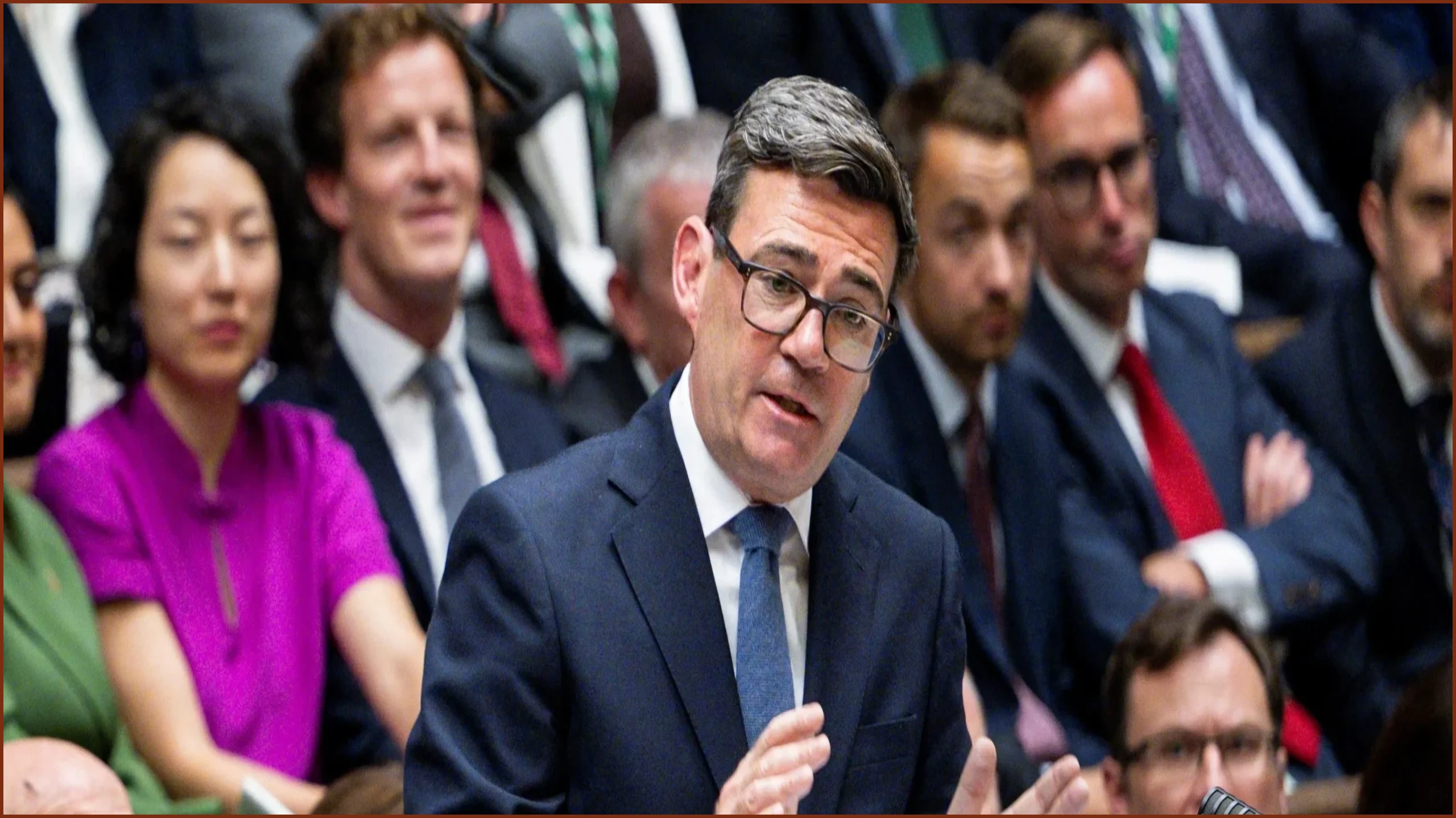
Prime Minister Andy Burnham faced intense scrutiny from Conservative leader Kemi Badenoch during his inaugural Prime Minister's Questions session, with the opposition focusing heavily on the state of the UK economy and rising government borrowing costs. The exchange marked the first time the two leaders have squared off in the House of Commons since Burnham assumed the premiership in July, following his transition from Sir Keir Starmer ahead of the parliamentary summer recess.
Badenoch challenged the Prime Minister on the lack of detail regarding how his administration intends to fund its various spending pledges. She accused Burnham of being a "spendthrift" prime minister who avoids clarifying whether he intends to implement tax increases to cover his promises. "The markets are clearly worried that we now have a spendthrift prime minister who wants to say yes to everyone but cannot tell us where the money is coming from," Badenoch stated, pressing him for a "yes or no" answer on potential tax hikes. She further argued that the reason the previous budget failed was because spending was announced before the funding was secured, claiming Burnham is repeating that error.
Burnham defended his record, pointing to early actions such as reducing VAT on energy bills and cutting business rates for the hospitality sector. He emphasized that he would not "write the budget" during the session and confirmed that he and Chancellor John Healey had agreed on an early date for the Budget in October to mitigate market speculation. Regarding the broader economic climate, the Prime Minister attributed current market turbulence to the legacy of the previous Conservative administration, stating, "The turbulence on global markets are because of that exposure that they left behind."
The debate touched upon warnings from economist and cross-bench peer Lord Jim O'Neill, whom Badenoch cited as a critic of the government's recent performance. While Lord O'Neill had previously praised the Prime Minister’s first five weeks for boosting confidence, he also warned that the current spike in interest rates for government debt—with 10-year bond yields at their highest since 2008 and 30-year yields at their highest since 1998—could force the government to address the "triple lock" on state pensions and "excessive" welfare spending. Badenoch argued that Lord O'Neill's recent comments suggested the government's tone had unsettled investors, though she acknowledged the peer also noted the impact of US market upheaval related to the Iran conflict.
Burnham rejected the criticism, noting that he and Lord O'Neill do not always agree. He instead turned his attention to the composition of Badenoch's new shadow cabinet, accusing her of appointing MPs who served in the leadership team of former Prime Minister Liz Truss. "Can I also say to her and the whole of her new shadow cabinet, the majority of whom were part of a government that lasted for 49 days, a short-lived government that crashed confidence in the economy and hammered people's mortgages," he said. He further claimed that Badenoch had removed a shadow chancellor who admitted the Truss "mini-budget" was a mistake and replaced them with one who helped author it.
The opposition leader also questioned the government’s commitment to defence, raising concerns following a Russian attack on Leipzig airport in Germany and urging a commitment to 3% spending. Burnham reaffirmed his administration's dedication to national security, stating that the appointment of his current Chancellor was driven by his commitment to defence. He confirmed that the government would fully fund its defence investment plan and set out a roadmap to meet NATO commitments by 2035 during the upcoming spending review, noting that the interim 3% commitment had been pushed back to spring next year.
Concluding his remarks on the economy, the Prime Minister insisted that his government remains committed to fiscal responsibility and will adhere to established fiscal rules while simultaneously working to alleviate cost-of-living pressures for constituents.
"Yesterday he said change begins with honesty, so will he be honest and tell us: is he preparing to raise taxes again, yes or no?"
So far the new government has only committed to meeting the 3.5% spending target for defence by 2035, pushing back the interim 3% spending commitment to spring next year.