Japan and South Korea are fundamentally shifting their approach to nuclear power, transforming it from a managed liability into a central pillar of national and regional security. This strategic pivot is increasingly coordinated with the United States, as energy policy becomes deeply integrated into the broader framework of trilateral security cooperation in Northeast Asia.
For Japan, the transition represents a departure from the post-2011 climate that followed the Fukushima Daiichi accident, which had effectively halted all domestic commercial nuclear production. Facing intense pressure from high costs associated with importing roughly 90 percent of its primary energy—a burden exacerbated by tight global gas markets after the 2022 invasion of Ukraine—Tokyo has moved to restart reactors and advance next-generation designs. This shift was formalized through Prime Minister Kishida Fumio’s Green Transformation (GX) policy, launched in 2022, and subsequent cabinet approvals, including the Seventh Strategic Energy Plan in February 2025. A significant milestone occurred in early 2026 with the restart of Unit 6 at the Kashiwazaki-Kariwa plant, operated by the same utility responsible for the Fukushima facility. This restart would have been politically unthinkable a decade ago.
The motivation for this return is rooted in industrial necessity. With over a trillion yen in new public funding directed toward semiconductor and data center infrastructure, Japan has signaled that nuclear energy is indispensable for powering these sectors with renewable or carbon-free electricity. South Korea has mirrored this trajectory. Despite President Lee Jae-myung’s initial campaign rhetoric skeptical of nuclear power, his administration reversed course seven months into his June 2025 term, spurred by surging electricity demand from AI-driven data centers and strong public support for nuclear energy.
In July 2026, this domestic focus evolved into a trilateral mission. Japan, South Korea, and the United States agreed to jointly develop and export small modular reactors (SMRs) throughout the Indo-Pacific. This partnership serves a clear strategic objective for Washington: ensuring that its two East Asian allies, rather than Russia or China, become the primary suppliers of reactor technology to developing nations.
Despite this political momentum, both countries face a persistent challenge regarding spent fuel. Neither Japan nor South Korea has established a permanent deep geological repository for nuclear waste. In Japan, research at the Horonobe Underground Research Laboratory continues to test disposal methods, but no site has been formally designated for long-term storage. This unresolved issue remains a point of contention, as domestic opposition to waste management sites often exceeds that directed toward reactor operations. The lack of a clear regional strategy for waste management poses a potential risk for the trilateral SMR initiative, inviting criticism that these nations are more adept at building political consensus for construction than for addressing the long-term consequences of nuclear energy production.
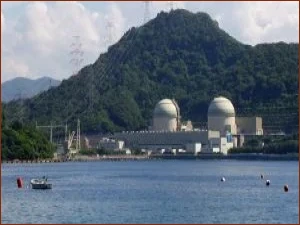
Japan Takahama nuclear power plant units 3 and 4.
You have reached the limit of 2 free articles this month.