France’s top Muslim representative body has strongly condemned what it described as "irresponsible" political statements targeting Muslim women who wear headscarves, warning that such rhetoric escalates the risk of hostility and attacks against them.
On Tuesday, the French Council of Muslim Faith (CFCM) rejected attempts to associate women wearing headscarves with extremist ideologies. The council argued that these comments publicly stigmatize women who freely choose to wear the religious garment. Warning of the real-world consequences of such language, the council declared that those participating in this escalation bear political and moral responsibility, noting that the rhetoric could expose Muslim women to insults, threats, intimidation, and physical attacks.
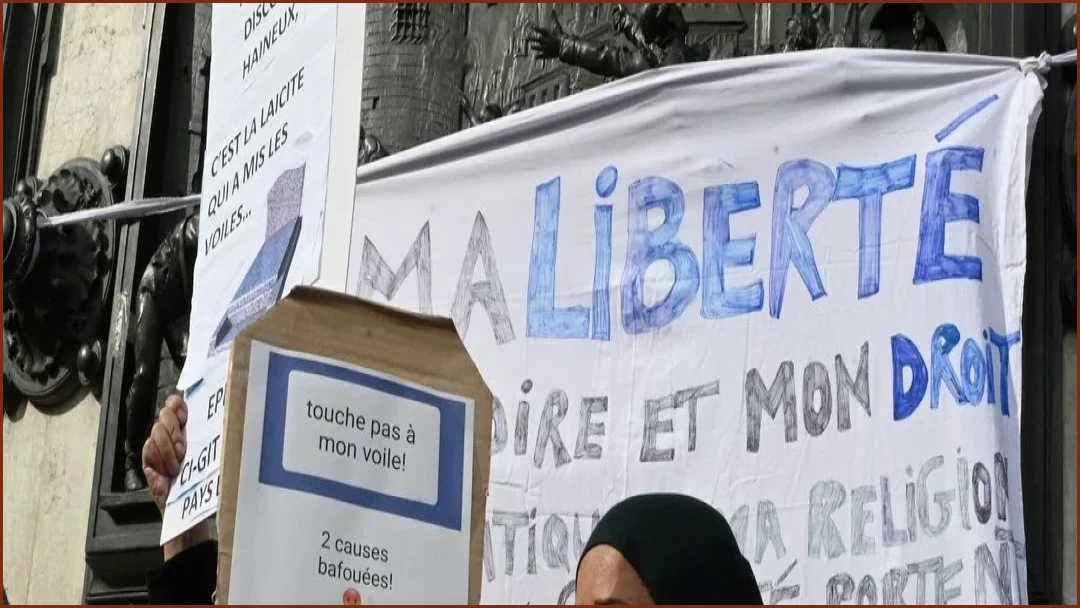
Defending the freedom of religious choice, the CFCM emphasized that head coverings are not merely a modern invention of extremist movements, pointing out that forms of head covering are rooted in the foundational traditions of Islam, Christianity, and Judaism. While acknowledging that extremist groups have attempted to instrumentalize the headscarf, the council maintained that this does not alter its deeply personal and religious nature. The group asserted that a woman who chooses to wear the headscarf, just like one who chooses not to, must be protected and her free choice respected.
Furthermore, the CFCM argued that implementing a public headscarf ban would directly conflict with France's constitutionally protected principles, including individual liberty, freedom of conscience, and secularism.
The organization also criticized the increasing political focus on controlling women’s clothing ahead of upcoming major electoral deadlines. It questioned whether deploying law enforcement to police what women wear should be treated as a political priority, especially when France faces pressing national challenges such as terrorism, crime, violence, drug trafficking, and general insecurity.
Warning against the use of electoral debates to foster division, fear, and stigmatization, the CFCM urged political leaders to show responsibility and restraint. It called on citizens committed to the values of freedom, equality, and fraternity to actively participate in public debate and civic action. "Let us not make millions of French people hostages to electoral strategies. Let us not put targets on the backs of Muslim women," the council concluded.