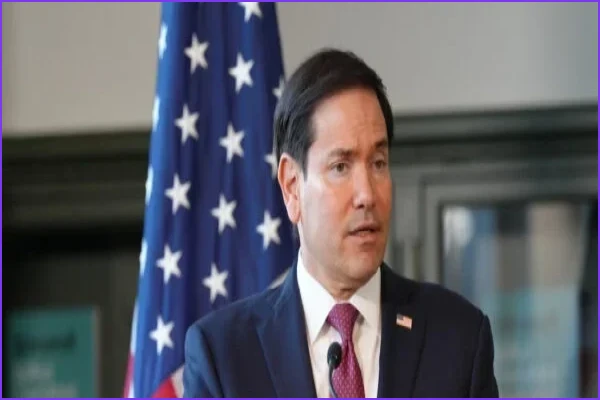
On June 23, 2026, former South Korean Prime Minister Kim Min-seok returned to the campus of Tsinghua University in Beijing to visit his alma mater. Having earned a law degree there in 2010, Kim reflected on his time at the institution, noting, “I believe that my time studying at Tsinghua University will remain one of the most beautiful memories of my life, forever cherished and held close to my heart.” Kim, who has since resigned from his role as prime minister to become the chair of the ruling Democratic Party, recalled the dedication required to attend classes, often flying in from Seoul on early morning flights to arrive on time.
Kim is part of a growing cohort of Asian leaders with ties to Chinese education. Just three weeks prior to his visit, Lao President Thongloun Sisoulith toured the dormitory at the Central Party School where he had resided during a month-long program in 2000. Expressing nostalgia, he remarked, “Though the campus has undergone some changes, the places where I lived and studied remain just the same.”
Other prominent leaders share similar backgrounds. President Kassym-Jomart Tokayev of Kazakhstan studied at the Beijing Linguistic Institute—now the Beijing Language and Culture University—between 1983 and 1984 and remains a fluent Mandarin speaker. Furthermore, Vietnam’s Prime Minister Le Minh Hung, who took office in April 2026, completed a training course on financial analysis and the market economy at the Shanghai University of Finance and Economics in 1996.
This trend is driven by three primary factors. First, Chinese universities have significantly improved their standing in global rankings; Tsinghua University, established in 1911, reached sixth place in the 2026 U.S. News Best Global Rankings, with 10 other mainland institutions joining it in the top 100. Second, increased government investment, including the Silk Road program for students from Belt and Road partner countries, has broadened access for international students. In the 2024-25 academic year, China hosted 380,000 international students from 191 countries, 61 percent of whom were from Asia. Finally, these programs provide leaders with essential insights into China’s language, social context, and regulatory frameworks, such as the party theory and state policy curriculum studied by Thongloun or the Chinese law studied by Kim.
While these educational ties facilitate communication—as seen during Kim’s meeting with Tsinghua Party Secretary Qiu Yong—they do not necessarily alter core foreign policy. Vietnam continues to balance its relations with Washington while managing hedging in the South China Sea, and Kazakhstan maintains close ties with Moscow alongside its economic partnership with Beijing. However, such training offers leaders a deeper understanding of the logic behind China’s development, which Thongloun noted provided a “crucial foundation for leading national development” in Laos.
You have reached the limit of 2 free articles this month.