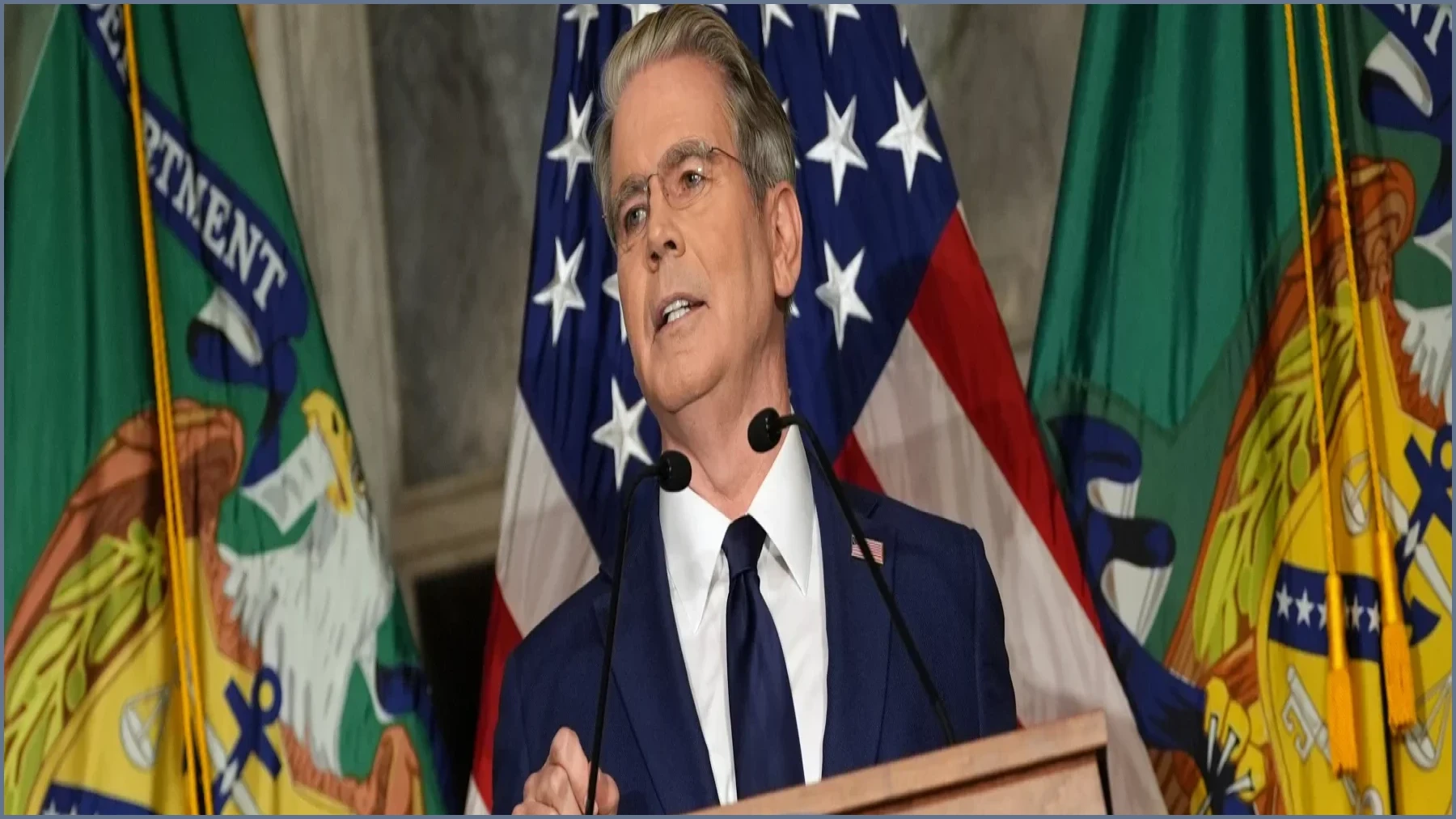
The United States has launched a sweeping financial offensive against Iran, with Treasury Secretary Scott Bessent announcing major new economic sanctions targeting the nation and its global facilitators. Described by the Trump administration as an "economic D-Day" and an "economic onslaught," the measures aim to sever Iran's international financial connections. The Treasury Department has mapped out the networks and financial channels supporting Iran, though the U.S. plans to offer foreign nations a grace period to adjust their operations before enforcement actions begin. The economic strategy comes after nearly six months of military conflict, raising questions about whether financial pressure can achieve the diplomatic breakthroughs that airstrikes and negotiations could not.
Simultaneously, the Trump administration secured a temporary legal victory as the Supreme Court intervened in a high-profile battle over mail-in voting. On Monday, the justices paused a lower court's decision that had blocked key elements of a March executive order. The presidential directive instructs the U.S. Postal Service to deliver mail-in ballots exclusively to individuals verified on official lists of U.S. citizens. The lower court's injunction had applied to Washington, D.C., and 23 primarily Democratic-led states that filed suit against the administration. With midterm elections only weeks away, federal agencies, including the Postal Service, now face the immediate logistical challenge of executing these voting directives.
In another domestic development, court documents have revealed that Department of Homeland Security agents conducted covert surveillance during an immigration enforcement surge in the Twin Cities last winter. According to a federal court motion filed in an ongoing conspiracy case against ICE protesters, undercover agents secretly recorded meetings held in public and community spaces, including churches, libraries, schools, and restaurants. The documents also show that federal agents infiltrated private group chats to gather intelligence on community members. While proponents point to the federal government's broad information-gathering powers under the Fourth Amendment, critics have raised sharp ethical concerns over the intrusive tactics.
Meanwhile, Washington, D.C., hosted its inaugural IndyCar Series race over the weekend, drawing tens of thousands of spectators to the National Mall for the two-day Freedom 250 Grand Prix. The temporary racetrack wound past some of the city's most famous landmarks along Pennsylvania, Constitution, and Independence Avenues. Before the high-speed race commenced, President Donald Trump and First Lady Melania Trump marked the historic event by taking a ceremonial lap around the course in their armored limousine, known as "The Beast."
Additionally, political events continue to shape major metropolitan areas like New York. A file photo showing the view outside Madison Square Garden from Seventh Avenue in New York, captured by Evan Agostini, highlights the city's central role in the national landscape as security and public interest remain high.
Living Better is a special series about what it takes to stay healthy in America.
Drivers take part in the Freedom 250 Grand Prix IndyCar Series race in Washington, D.C., U.S., August 23, 2026. REUTERS/Nathan Howard Nathan Howard/REUTERS/Reuters hide caption