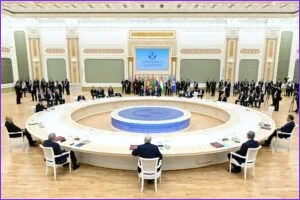
Indonesia and China held their latest 2+2 dialogue on August 21, 2026, in Jakarta, gathering their respective foreign and defense ministers to discuss the future of bilateral security cooperation. This meeting, which featured Chinese Defense Minister Dong Jun and Foreign Minister Wang Yi alongside their Indonesian counterparts, Foreign Minister Sugiono and Defense Minister Sjafrie Sjamsoeddin, builds upon the inaugural dialogue held in April 2025.
While the forum serves as a significant diplomatic symbol, its strategic value is defined by how effectively both nations manage their differences while pursuing national interests. The 2026 dialogue resulted in two primary commitments: an agreement to increase the frequency of joint military exercises and a plan to establish joint factories for munitions, rockets, and missiles within Indonesia. For Jakarta, these initiatives align with its ongoing efforts to modernize its military armaments and potentially enhance its anti-access/area denial (A2/AD) capabilities.
Historically, the relationship between the two nations has been complex, including a complete severance of diplomatic ties from 1967 to 1990. Although China has since emerged as Indonesia’s largest trading partner, its influence in the defense sector remains limited compared to the United States. Data from the International Institute for Strategic Studies (IISS) indicates that between 2003 and 2022, Indonesia and China conducted only four joint military exercises, a stark contrast to the 110 exercises held between Indonesia and the United States during the same period. Furthermore, research from Laboratorium Indonesia 2045 suggests that the Indonesian military has historically utilized only three types of Chinese-made defense technologies.
In contrast, the defense relationship between Indonesia and the United States is more deeply institutionalized, a reality underscored by the Major Defense Cooperation Agreement signed in April 2026. Despite past setbacks—such as military embargoes and the suspension of Indonesian officers from the International Military Education and Training (IMET) program—the U.S.-Indonesia defense partnership has proven resilient and continues to develop.
For Indonesia, increasing military interactions with China serves as a form of strategic hedging. Adhering to a “free and active” foreign policy, Jakarta aims to avoid alignment with any single power bloc, necessitating strong defense diplomacy with both Washington and Beijing. However, this path presents significant challenges. Developing joint munition and missile production facilities with China carries potential risks, including technical interoperability issues with existing Western-heavy hardware, scrutiny from Western partners, and concern among ASEAN neighbors.
To maintain its non-aligned posture, Indonesia must ensure these new defense ventures remain strictly focused on sovereign modernization and technology absorption. Beijing, meanwhile, remains keen to increase its influence in the region, particularly given Indonesia's status as a natural leader in ASEAN and the ongoing geopolitical competition in Southeast Asia.
However, the significance of the 2+2 should not be measured solely by its symbolism. The strategic value actually lies in how far both countries can use the forum to manage differences while still maximizing their respective national interests. Already, this year’s 2+2 dialogue resulted in an agreement increasing the intensity of joint military exercises and plans to open joint munition factories in Indonesia, in line with the current national interests of both countries.
You have reached the limit of 2 free articles this month.