Iran has warned of a "harsh response" to newly expanded U.S. sanctions, asserting that the measures will not bring peace to the region. This warning comes amid a series of major developments across the Middle East, including Israeli airstrikes in Gaza, high-level diplomatic talks between Syrian and Israeli officials, and a claim by Israeli Prime Minister Benjamin Netanyahu that Iran targeted one of his sons.
On Monday, August 24, 2026, the Iranian rial plummeted to a record low of 2.02 million to the U.S. dollar as trading opened. The currency was already under severe strain following a joint U.S. and Israeli attack on Iran on February 28. The Trump administration promised to announce even stronger measures on Monday, including secondary sanctions targeting countries that continue to conduct business with Tehran.
Iran’s Foreign Ministry spokesperson, Esmail Baghaei, cautioned that Tehran would react aggressively to the expanded sanctions, including targeting nations cooperating with Washington. "Any escalation of this situation will undoubtedly bring about consequences," Baghaei stated, adding, "Our hands are not tied." Additionally, the newly appointed head of Iran's top security body warned on Sunday that any nation supporting these sanctions would be viewed as committing an "act of war."
The U.S. has struggled to disrupt Iran's control over the Strait of Hormuz, a vital maritime corridor through which one-fifth of the world's traded oil flowed prior to the conflict, which began nearly six months ago. Although sanctions have historically driven up the cost of basic goods in Iran, the country's economy has adapted over decades by establishing domestic industries and securing alternative trading partners.
China, Iran's largest oil buyer, criticized the new measures on Monday. Before the U.S.-Israeli conflict with Iran, China imported over 80 percent of Iranian oil. Chinese Foreign Ministry spokesperson Lin Jian stated during a Beijing briefing that additional pressure "will not help resolve the issue" and will "only exacerbate tensions and escalate the situation, which is in no one's interest." He urged all involved parties to avoid actions that disrupt global financial stability and economic development.
In Israel, Prime Minister Benjamin Netanyahu claimed during a phone interview with Israel's Channel 14 television that Iran had attempted to assassinate one of his sons. Netanyahu asserted that the attempt would have succeeded if not for his son's security detail. "Iran targeted one of my sons. Iran tried to murder one of my sons," Netanyahu said. He did not specify which son was targeted, where or when the incident occurred, or how the plot was foiled. The Prime Minister's Office declined to provide further details when questioned.
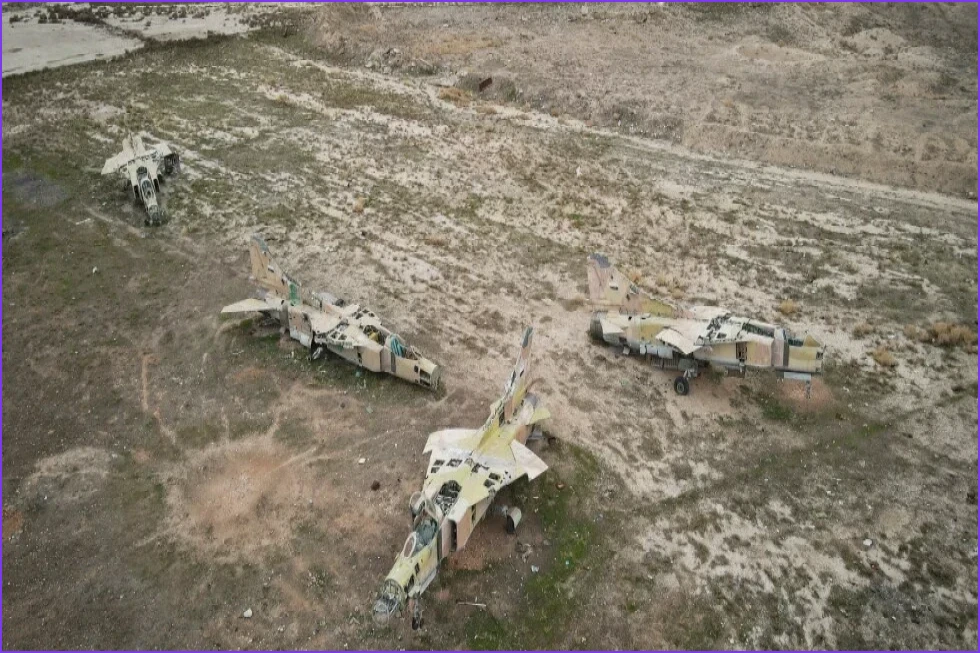
Meanwhile, Syrian Foreign Minister Asaad al-Shibani met over the weekend with a high-level Israeli delegation in Jordan. According to the Syrian state news agency SANA, the U.S.-mediated discussions on Sunday aimed to defuse tensions following Israeli airstrikes last week on the Abu Duhur military air base in Idlib province, northern Syria.
Israel stated the airstrikes were intended to prevent Turkey—which has assisted the new Syrian government in rebuilding its military after 14 years of civil war—from establishing a presence at the base. During the talks, Syrian officials defended their right to build up their military and form alliances freely. SANA reported that Syria also demanded the withdrawal of Israeli forces from a southern Syrian buffer zone occupied since December 2024, and reiterated that the Golan Heights—captured by Israel in 1967 and later annexed—remains Syrian territory. Israeli officials did not immediately comment on the meeting.
In the Gaza Strip, Israeli military strikes killed at least four people on Monday, including two children, according to hospital officials. In the Bureij refugee camp in central Gaza, a strike hit a building after residents received evacuation warnings. A four-year-old child was killed when his family was unable to escape in time, and his mother and sister were injured, according to Awda Hospital. Four other structures, including mosques, were struck after evacuation warnings, forcing displaced Palestinians to flee through rubble. The Israeli military claimed it targeted Hamas weapons storage facilities located inside mosques but did not provide evidence.
Separately, Israel announced it killed a Hamas special forces militant in an overnight airstrike, targeting individuals involved in the October 7, 2023, attacks. According to the Gaza health ministry, at least 1,288 Palestinians have been killed since a ceasefire took effect last October.
In the occupied West Bank, tensions remain high. Loui Ridi, an Ohio resident who traveled to his family home in the village of Qusra a week ago, reported being unable to move freely. The village has been besieged by Israeli settlers for over two weeks. Although Israeli soldiers have urged the settlers to leave, police have made no arrests, prompting condemnation from rights groups and U.S. Ambassador to Israel Mike Huckabee, who labeled the settler violence "terrorism." The West Bank is home to approximately 3 million Palestinians and 560,000 Israeli settlers.
In a separate incident in the West Bank, police arrested a 16-year-old boy from the Avigayil settlement in connection with the pipe-beating of a 61-year-old Palestinian man.
In Washington, the Trump administration officially removed Syria from the U.S. State Department’s blacklist of state sponsors of terrorism on Monday. This action finalized a series of sanctions removals first announced more than a month ago. Treasury Secretary Scott Bessent stated, "Treasury is following through on President Trump’s promise to give the Syrian people a chance at greatness."