Western leaders are arriving in Kyiv this weekend ahead of Ukraine's Independence Day celebrations on Monday, marking a period of intense diplomatic activity and escalating military actions on both sides of the border.
As preparations for the national event intensified, Ukrainian President Volodymyr Zelenskyy met with his Finnish counterpart, Alexander Stubb, in the capital on Sunday. The two leaders hosted a roundtable meeting focused on joint defense cooperation. Zelenskyy also welcomed US Senators Richard Blumenthal and James Lankford to Kyiv, briefing them on the continuous threat of Russian ballistic missiles and emphasizing the urgent need for enhanced air defense systems. Other high-profile international guests, including European Council President António Costa and Luxembourg Prime Minister Luc Frieden, are also expected to travel to Ukraine for the celebrations.
The diplomatic visits come at a time of internal political discussion. On Sunday, Zelenskyy reportedly rejected a surprise proposal from his former Defense Minister, Mykhailo Fedorov, to hold a wartime presidential election. "I believe that in a war like this, elections as such are a huge risk. Elections right now are a tsunami for the country that will split Ukraine," Zelenskyy stated during a media briefing. He warned of the destabilizing consequences of such a move, adding, "If we want to destroy the country, then we can move in the direction of elections during these times of war."
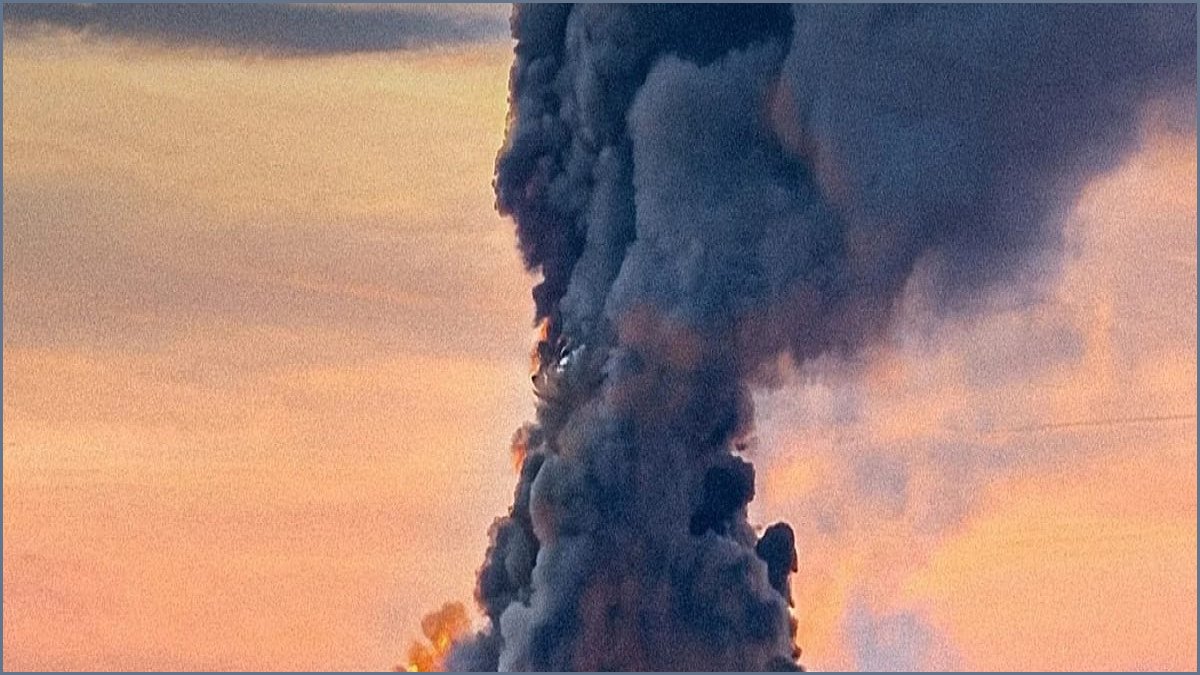
On the military front, Ukraine is expanding its economic warfare by targeting Russian e-commerce marketplace Ozon, following a sustained campaign against the online retailer Wildberries. On Sunday, which also marked Ukraine's National Flag Day, Ukrainian forces launched their second strike of the weekend against an Ozon facility, hitting a logistics site in the Russian city of Orenburg.
Orenburg Mayor Albert Yumadilov confirmed the incident in a Telegram post, stating that several unmanned aerial vehicles (UAVs) were shot down over a special economic zone housing local industrial facilities. "Fortunately, no one was injured," Yumadilov reported, noting that "debris fell onto the grounds of the Ozon logistics complex, causing a fire which was quickly extinguished by staff from the Ministry of Emergency Situations."
This followed a separate Ukrainian strike on Saturday targeting an Ozon logistics hub in Russia's Samara region, an attack confirmed by both Kyiv and the company. In a statement, Ozon disclosed that they "evacuated more than 500 employees within minutes" and suspended warehouse operations indefinitely. The company also noted an unspecified number of injuries resulting from the strike.
The Ukrainian Ministry of Defence announced a deliberate strategy behind these actions, targeting facilities they claim house "dual-use goods" vital to Russia's war effort. "After Ukrainian units hit 15 of Wildberries’ largest logistics hubs, it’s now Ozon’s turn," the ministry shared on social media. "Systematic strikes on storage centers holding dual-use goods are disrupting the enemy’s logistics and negatively impacting Russia’s economy as a whole."
Kyiv's campaign against these major Russian digital retailers is framed as a direct response to Moscow's strikes on Ukrainian commercial infrastructure, such as the logistics company Nova Poshta. Zelenskyy has previously asserted that Wildberries is actively involved in "the supply of military goods" and represents "big money for Russia," claiming that past attacks on the firm's warehouses have inflicted billions of dollars in financial losses. Wildberries was founded in 2004 by Russian billionaire Tatyana Kim and has grown to become the nation's largest online marketplace.
Meanwhile, Russian forces launched retaliatory strikes on Ukraine's transport infrastructure on Sunday, heavily targeting the country's railway network. In the northeastern Kharkiv region, a Russian strike hit a train at Lymanivka station, killing one passenger and injuring four others. Mykola Kalashnyk, Ukraine's Minister of Infrastructure, explained on Telegram that the train had been halted early due to drone threats, allowing most passengers and crew to evacuate. However, some individuals who remained near the train were caught in the blast.
In the southern Odesa region, a Russian Shahed attack drone struck a passenger train traveling from Zhytomyr to Odesa. Oleksandr Pertsovskyi, head of the state-run rail operator Ukrainian Railways, reported that the monitoring team issued a timely evacuation order, enabling an emergency stop. "Everyone is safe: the passengers, the train crew and the locomotive crew," Pertsovskyi said, confirming that 593 passengers, including 15 children, were on board the train at the time of the incident.
Amid these ongoing hostilities, Zelenskyy highlighted that ballistic missiles and securing adequate defense funding remain Ukraine's most critical challenges. While local air defenses have improved against cruise missiles and drones, the president emphasized the difficulty of intercepting heavier ordnance, noting that "ballistic missiles are ballistic missiles." To secure Ukraine's airspace ahead of winter, Zelenskyy is pushing to acquire 300 US-made Patriot interceptor missiles. "I would very much like to believe that we can find a way to access some small percentage of U.S. stockpiles – say, 5% or 10%," Zelenskyy wrote on X on Sunday. "We are ready to pay for those supplies."