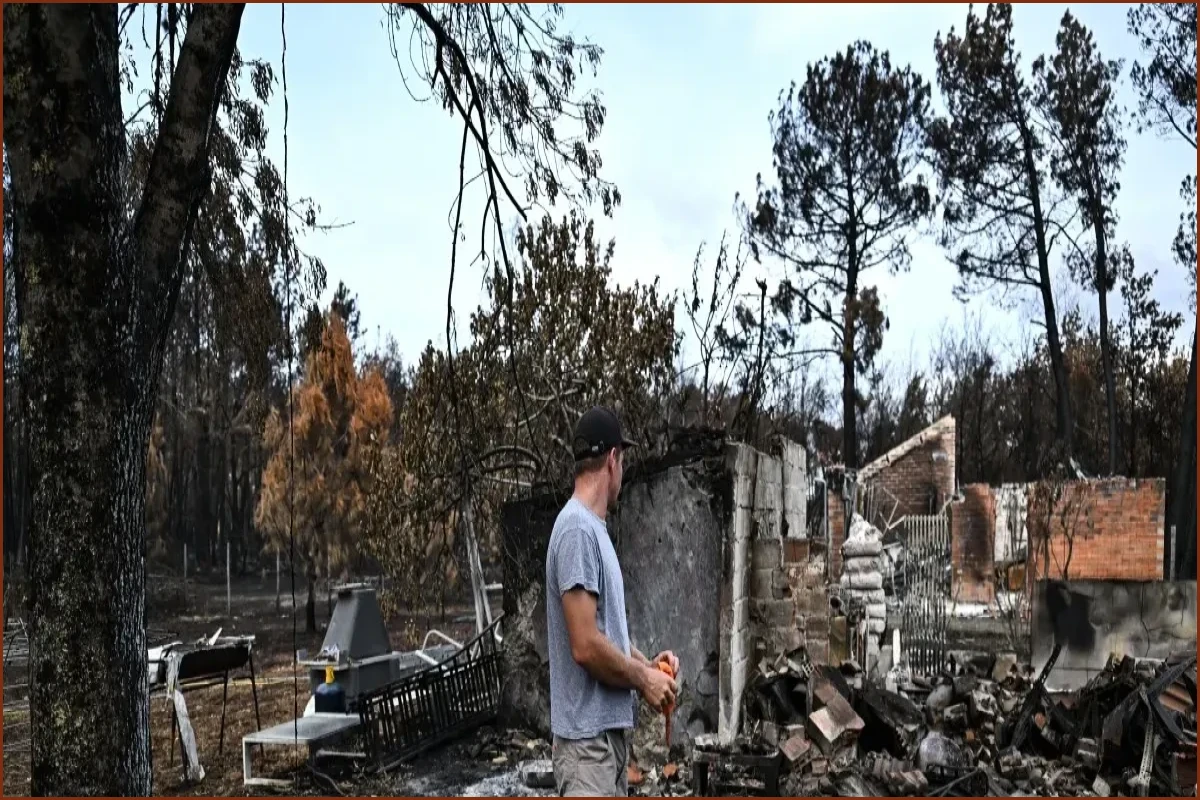
As France prepares for the end of the summer holidays and the annual return to work known as la rentrée, politicians are bracing for a series of formidable challenges. While school children still have one week of vacation remaining, President Emmanuel Macron is set to signal the official end of the summer recess on Monday by chairing the first Council of Ministers meeting since the break. Awaiting the country's leadership are major issues spanning environmental disasters, economic strain, legislative hurdles, and geopolitical threats.
Chief among the immediate crises is the aftermath of a devastating summer of extreme weather. Firefighters across France are still actively battling multiple wildfires. Although final data has not yet been compiled, the summer has already proven highly destructive. Multiple severe heatwaves have been linked to at least 7,300 excess deaths, while wildfires have consumed massive areas of land. Additionally, France is suffering through one of the worst droughts on record. In hard-hit departments such as Gironde and Var, which were ravaged by massive blazes, clean-up operations have commenced but are projected to take months or even years, costing millions of euros.
The severe drought has also left French farmers facing a catastrophic harvest. Agricultural representatives have already declared that they will require financial assistance from the state to survive the coming year. Meanwhile, consumers are preparing for a corresponding rise in food prices. This places the government in a difficult position, as it must find a way to support those impacted by the climate anomalies while simultaneously managing France's rapidly expanding budget deficit.
This financial pressure leads directly to the upcoming budget negotiations, which traditionally begin in September. The standard legislative timeline requires parliamentary debates to take place in late October and early November, with the goal of passing the budget by Christmas so it can take effect on January 1st. Macron's administration appears to have already initiated the process. French media outlets, citing anonymous sources, have reported on various proposed measures, including the introduction of extra taxes on businesses. The government may find some political breathing room this year, as few opposition parties seem motivated to collapse the government. Forcing new legislative elections would serve as an unwanted distraction from the primary focus of all political factions: the upcoming presidential campaign.
Although the next French presidential election is not scheduled until April and May 2027, the political return in September is expected to accelerate campaigning. This political vulnerability is already being targeted. Russian-linked disinformation groups, apparently active throughout the summer, have already begun circulating fake news stories targeting three of the front-running candidates. Combating this influx of Kremlin-linked disinformation, much of it spreading on Elon Musk's social media platform X, represents a significant hurdle. To address this, parliament is scheduled to begin debates on a new law aimed at countering foreign interference in domestic elections.
Another major legislative battle returning to parliament involves the proposed ban on social media for children under the age of 15. Members of Parliament had passed the ban prior to the summer recess, but the initiative was struck down in August by the Conseil Constitutionnel. The constitutional body ruled that the ban disproportionately interfered with the freedom of expression of under-15s. In response, the Elysée Palace quickly issued a statement promising to draft a new version of the law and reintroduce it to parliament, with the target of passing it by the beginning of 2027. Experts note that this is an incredibly ambitious timeline, especially since the Council's ruling indicates that minor adjustments to the original proposal will not suffice to clear constitutional hurdles.
Hovering over all of these issues is the broader challenge of climate change itself. While the government is prepared to manage the immediate consequences of a warming planet—such as funding clean-up efforts and addressing heatwaves, droughts, and fires—it remains uncertain whether tackling the root causes of the crisis will be prioritized. Past actions suggest a lack of deep commitment. Furthermore, much of the political opposition, with the exception of the Green party and a few left-wing politicians, has shown a preference for debating minor issues like air conditioning regulations or forest management rather than committing to comprehensive climate action.
READ ALSO: Travel alerts on penultimate weekend of France’s summer holidays
READ ALSO: Explained: French laws on foreign interference in politics