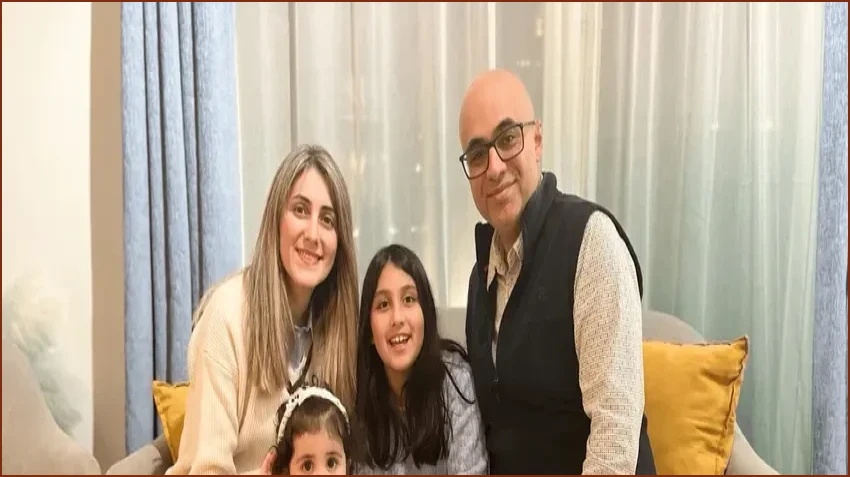
Seven years ago, Shima and Bijan made the decision to relocate from the United Kingdom to Sweden with their young daughter, optimistic about their future. Today, facing the harsh realities of Sweden's family immigration policies, the couple states they would never have made the move if they had known what lay ahead. Their transition began in 2019 when Bijan accepted an industrial design position at Chalmers University of Technology in Gothenburg, leaving behind a similar academic post at Lancaster University.
Upon arriving in Sweden, Shima, who holds a Master's of Industrial Design, chose to focus on integrating into their new home by mastering the language. She spent two and a half years studying Swedish and achieved fluency. To contribute to a sector with high demand, she retrained as a schoolteacher and now works as a technology teacher at a school in Gothenburg. However, her current teaching position is neither permanent nor full-time, a detail that has plunged her family into a prolonged period of legal uncertainty.
The family has since grown with the birth of a second daughter, now two years old. Financially, the family is secure; Bijan is now an associate professor of industrial design at Chalmers and serves as the director of the university's industrial design engineering programme. His high salary means that Shima's part-time income is more than sufficient for their household. Yet, because Shima has been unable to secure a permanent contract with a higher salary despite her persistent efforts, the family remains stuck in a frustrating legal limbo.
Under Sweden's current immigration framework, families are often not assessed as a single cohesive unit, even if they relocated together, have lived in the country for years, and have children born there. Instead, the legal system prioritizes a stable, high income over actual social integration. This has created a stark divide within Shima and Bijan's household. Bijan, who works entirely in English and speaks only beginner-level Swedish, is a Swedish citizen, as is their ten-year-old eldest daughter, who was born in the UK. In contrast, Shima and their Swedish-born two-year-old daughter are both relegated to temporary residency permits. Shima has never been eligible to apply for permanent residency and remains unsure of when she ever will be, describing the constant stream of stressful immigration news as something she now avoids reading entirely: "I'm not checking the news because it's so stressful."
This legal fragmentation leaves the mother and youngest child on tenuous legal footing, while the father and eldest daughter enjoy the full security and rights of citizenship. The temporary permits are valid for only two years, and the renewal process is plagued by lengthy processing times. During these waiting periods, applicants are unable to leave Sweden without risking being denied re-entry, leaving the family feeling entirely trapped. Bijan explains that because someone in the family is almost always waiting for a permit renewal decision, they are effectively locked inside the country, making normal family life and travel with school-aged children highly difficult: "Basically you can't move [around], because there are periods of year that some member of the family is waiting for the results [of a temporary permit renewal]. So it's like you are locked in in the country, for many reasons. And then with children, when they go to school, it's not easy."
The difference in citizenship status between the two sisters stems from a matter of timing. The eldest daughter was able to be included in Bijan's citizenship application because of when his approval came through. However, because his application was still being processed when their youngest daughter was born, she could not be included and was instead issued a temporary residency permit. Shima notes that her desire for a permanent job is driven entirely by the need for secure residency rather than financial necessity, especially since they have two children to consider. If she were to find a permanent, high-paying job, she would qualify for permanent residency and eventually citizenship, allowing her to attach her youngest daughter to her application. However, securing a permanent contract in Sweden is notoriously difficult, even for highly qualified and experienced job seekers who repeatedly encounter systemic barriers.
The ongoing uncertainty, coupled with the frequent introduction of new, retroactively applied immigration laws, has caused both parents to deeply regret their move. Bijan states firmly that he would definitely not have made the choice to come to Sweden had he anticipated these complications and the unequal treatment of family members, describing the current system as "medieval." He notes that he would have preferred to work in a less desirable job elsewhere if it meant his family could enjoy secure status in the place they call home. He observes that when they moved in 2019, they were unaware of these sudden, "pop-up" rule changes, which now seem to occur almost weekly and apply retroactively, rendering their future completely unpredictable. Shima echoes this sentiment, stating that if given another chance, they would never choose Sweden.
The couple's primary concern is the well-being of their children. Their ten-year-old daughter, who arrived in Sweden at age three, is fully integrated and has no real memory of any other country, while their two-year-old has lived there her entire life. Bijan finds the application of strict immigration laws to young children, who have no say in where they are born or who their parents are, to be exceptionally harsh. He also points out the counterproductive nature of these rules, noting that while the political goal may be to reduce the number of immigrants, the laws instead trap families who would otherwise have the flexibility to pursue career paths elsewhere. Because of their school-aged children, moving away is not a simple task, leaving them effectively stuck.
Beyond the impact on children, the couple warns that Sweden's immigration laws are actively undermining the country's stated values of gender equality and women's safety. When a family's legal security is tied heavily to the partner with the permanent, high-paying job—often the husband—the system deepens the power imbalance between spouses. Bijan warns that making a wife entirely dependent on her husband's immigration status creates a highly problematic power dynamic, presenting hundreds of potentially dangerous scenarios that contradict the progressive, egalitarian image Sweden projects globally.
This policy framework also contains a deep irony regarding integration. While Bijan holds Swedish citizenship, he works in an English-speaking university environment and is largely isolated from broader Swedish society. In contrast, Shima is deeply integrated; she holds official Swedish teacher accreditation, works daily in a local school, and speaks fluent Swedish. Yet, on paper, she remains legally dependent on her husband. Shima notes that Swedish friends and other parents at their children's school are consistently shocked to learn of their precarious situation. Most people assume that because Bijan is a citizen, his entire family is automatically protected and that Shima could easily obtain secure status.
Bijan believes that the Swedish public is largely unaware of how these laws divide families, particularly when it comes to children and the reinforcement of traditional gender dependencies. He argues that populist politicians have successfully sold a single, negative scenario of immigration abuse to the public to garner support for strict rules. However, the resulting laws are applied broadly, severely impacting professional, integrated families who do not fit that narrative.
Taking a broader historical perspective, Bijan recalls reading travel histories from 19th-century Iran during the pandemic, which detailed Swedish professionals working in Iran. He emphasizes that workforce mobility has always been a natural component of a free global economy, and that penalizing families does nothing to benefit a nation's economy. For Shima and Bijan, returning to Iran—the only country where Shima and their youngest daughter currently hold permanent residency rights—is not a safe option. Bijan expresses concern over the parallels he sees between Sweden's current direction on family immigration and the painful history of 1980s Iran, where foreigners were forced out and families were systematically separated, urging Swedish voters to consider the deeper consequences of their political choices.