Following a Veterans' Day ceremony at Arlington National Cemetery in Arlington, Virginia, on November 1, 2026, U.S. foreign policy has entered a period of heightened uncertainty. Democrats swept to power in both the Senate and the House of Representatives during the November 3 midterm elections, stripping President Donald Trump of congressional control two years before his term ends.
Despite political setbacks at home, Trump is embarking on a series of multilateral engagements across Asia. Post-midterm international trips have historically offered refuge for domestic leaders facing legislative defeat. Bill Clinton attended the APEC summit in Indonesia following the 1994 midterms, George W. Bush traveled to APEC in Hanoi a week after losing Congress in 2006, and Barack Obama toured Asia after his party's losses in 2010. Edgard Kagan, a former U.S. ambassador currently with the Center for Strategic and International Studies, noted that overseas travel represents an operational arena where domestic opposition cannot intervene, allowing a president room to pursue executive results.
Trump, who established his political platform on criticism of multilateral frameworks, is scheduled to participate in multiple international gatherings over the coming weeks. His itinerary includes the ASEAN–U.S. summit and the first Quad leaders' meeting in two years in Manila, followed by the APEC Leaders' Meeting in Shenzhen, China, and the G-20 summit hosted at his Miami resort in December.
The upcoming meetings in Asia will serve as a direct measure of how international partners, particularly those impacted by Washington's trade tariffs, react to a politically diminished American administration. While formal summit communiques are routinely negotiated in advance, diplomatic significance primarily hinges on unscripted interaction and sideline bilateral engagements, showing which world leaders seek audience with Washington versus Beijing.
During his brief stop in Manila, Trump is scheduled to arrive after the East Asia Summit has begun. His agenda includes the ASEAN–U.S. session, the Quad summit, and a bilateral meeting with Philippine President Ferdinand Marcos Jr. U.S. officials hope to secure regional backing for Washington's technology initiatives, though expectations for substantive breakthroughs remain limited.
Following the Manila meetings, Trump will travel to Shenzhen for his third encounter with Chinese President Xi Jinping in 2026, following earlier bilateral meetings in May and September. The White House described the Shenzhen meeting as a routine visit. Historically, Trump has placed low emphasis on APEC, skipping the summit in 2018 and departing last year's event in Gyeongju before the main leaders' session concluded, following a side meeting with Xi in Busan.
In contrast, Beijing has viewed APEC as a cornerstone of its global economic integration since joining in 1991. When Trump vacated the stage at previous summits, Xi utilized the platform to position China as a defender of global trade systems, filling a role historically claimed by the United States. While Washington aims to secure short-term policy outcomes—such as an exit strategy from conflict in Iran and nuclear arms-control arrangements with Moscow—Beijing is using its role as APEC host to advance broader economic framework goals. China has utilized its chairmanship to revive discussions around the Free Trade Area of the Asia-Pacific (FTAAP) and promote open supply networks to counter U.S. trade protectionism.
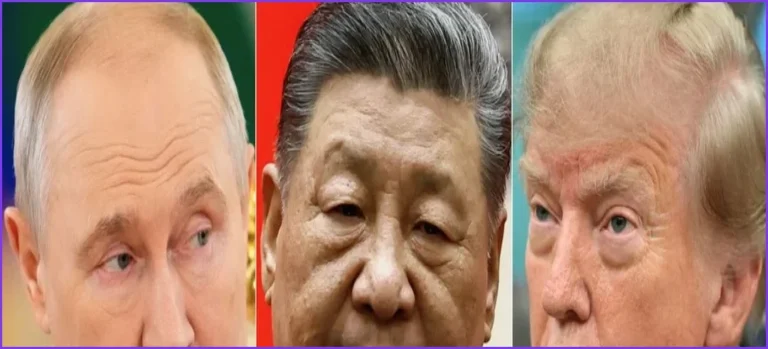
Diplomatic focus in Shenzhen will also center on a potential trilateral meeting between Trump, Xi, and Russian President Vladimir Putin addressing denuclearization and Iran. Staging and scheduling for any three-way discussion remain subject to Beijing's terms. Putin is planning his first in-person attendance at APEC since 2017, while expected to pass on attending the December G-20 in Miami. Meanwhile, Xi has continued consistent attendance at APEC while skipping G-20 meetings in 2023 and 2025.
Hosting the summit carries operational risks for Beijing. After trade clashes between Washington and Beijing prevented leaders from issuing a joint declaration for the first time in 2018, China faces four benchmark goals to deem the Shenzhen gathering successful: delivering a consensus declaration, advancing regional trade integration, managing the proposed Putin-Trump-Xi meeting on its own terms, and maintaining robust engagement from traditional U.S. allies.