A sweeping new "ethnic unity" law in China is intensifying the struggle for Tibetans working to preserve their native language and cultural heritage. Implemented on July 1, the regulations mandate Chinese as the primary language for schools and government offices, while prohibiting any acts deemed to incite division among China's 56 ethnic groups. Under the law, families, schools, and other institutions are required to actively foster patriotism and a unified national identity.
Critics and human rights advocates warn that the legislation is designed to accelerate the cultural assimilation of Tibetans and other ethnic minorities, granting Beijing sweeping authority to target activities it labels as separatist, even beyond its borders. In Tibet, a remote Himalayan region tightly controlled by Beijing, the stakes are elevated as China marks the 75th anniversary of what it terms the "peaceful liberation" of the region—an event Tibetan exiles and critics characterize as an invasion.
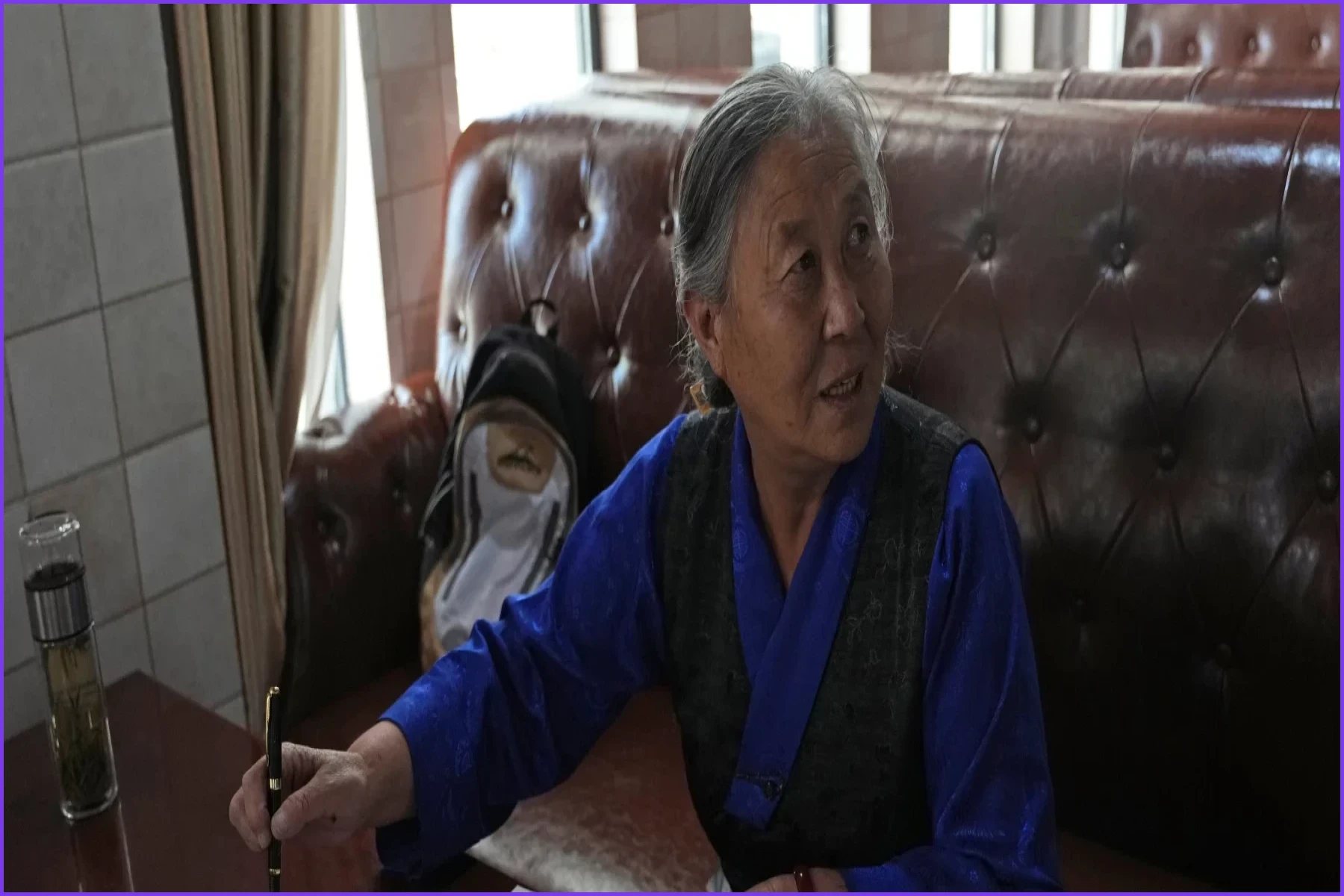
During a tightly controlled, government-organized tour for foreign journalists in July 2026, the daily reality of these policies was on display. In Lhasa, at the Chengguan District Day Care Center for the Elderly, 73-year-old retired nurse Kalsang Lhamo practiced the vertical strokes of Tibetan calligraphy on July 20. Though she has spoken Tibetan her entire life, she never learned to write it. Now, she spends her retirement learning the script, even as she also speaks and writes Chinese. "Our mother tongue is the Tibetan language," Lhamo said. Nearby, other elderly residents performed tai chi in front of portraits of Chinese President Xi Jinping and other Communist Party leaders.
Signs of Beijing's authority are omnipresent across the high-altitude region. Upon arriving at Lhasa Gonggar International Airport, located at an elevation of 3,600 meters (11,800 feet), visitors are met with official welcome messages and constant billboards promoting ethnic unity. Written in both Mandarin and Tibetan, the signs urge residents to "forge a strong sense of community for the Chinese nation." Chinese national flags and portraits of President Xi are prominently displayed in public squares, temples, and government buildings.
The cultural pressure has forced many Tibetans to find quiet ways to maintain their identity, such as speaking Tibetan at home, studying its script, practicing traditional weaving, and participating in Buddhist rituals. At the Jokhang Temple, one of the holiest sites in Tibetan Buddhism, 19-year-old student Qongqiu Quco expressed the widespread desire to keep her heritage alive. "As a Tibetan, I think it's important to preserve our language and our culture," she said, noting that she hopes to become a teacher. However, she admitted that because students at her school speak different regional Tibetan dialects, they must rely on Mandarin to communicate.
The spiritual life of the region remains under intense government oversight. At both the Jokhang Temple and the Potala Palace—the historic winter residence of the Dalai Lamas where the Chinese national flag now flies—there are no public images or references to the 14th Dalai Lama. The spiritual leader has lived in exile in India since fleeing a failed 1959 uprising against Chinese rule. The issue of his succession remains highly contentious; the Dalai Lama has stated his successor could be born outside China and that only his office can recognize the reincarnation, while Beijing insists the selection must comply with Chinese laws and receive government approval.
Scholars argue that the new law codifies a long-standing campaign of assimilation. Benno Weiner, a professor and modern Chinese history expert at Carnegie Mellon University, observed that the erosion of language and educational rights has been underway for years. "I don't think the law itself changes things," Weiner said. "I think it sort of codifies and sort of summarizes a trend that's been going on." He added that Beijing's cultural preservation efforts are often selective, focusing on "anodyne or nondangerous" elements like traditional clothing and non-religious celebrations that are highly suitable for attracting tourists.
During the journalists' tour, which included stops in Lhasa and Shannan, officials arranged visits to traditional medicine clinics, artisan weaving workshops, and a Tibetan opera performance. Throughout the trip, reporters were accompanied by government minders and were not permitted to report independently.
Defenders of the policies argue they are beneficial. Laba Ciren, the Communist Party official overseeing the Tibet Museum—which features exhibits linking Tibet historically to ancient Chinese dynasties—insisted the new unity law "only brings benefits and does not have any negative effects." Beijing maintains that its policies improve educational opportunities and ensure equal access for ethnic minorities.
The push for assimilation is not unique to Tibet. Rights organizations point out that similar language policies have been deployed in other minority regions, including expanded Mandarin-only education for Uyghurs in Xinjiang and the replacement of Mongolian-language instruction in Inner Mongolia. In Foreign Affairs magazine, James Leibold of La Trobe University and Tenzin Dorjee of the Tibet Action Institute wrote that minority communities wishing to preserve their culture "will be pushed toward a double life of public conformity and private reservations."
The political priority of the region remains absolute control. During the same week as the journalists' visit, Wang Huning, the fourth-ranked leader in the Chinese Communist Party, toured Tibet. According to the state news agency Xinhua, Wang emphasized that maintaining stability is the top priority for governing the region. He called for the strict implementation of the ethnic unity law and urged officials to "guide Tibetan Buddhism to adapt to socialist society."