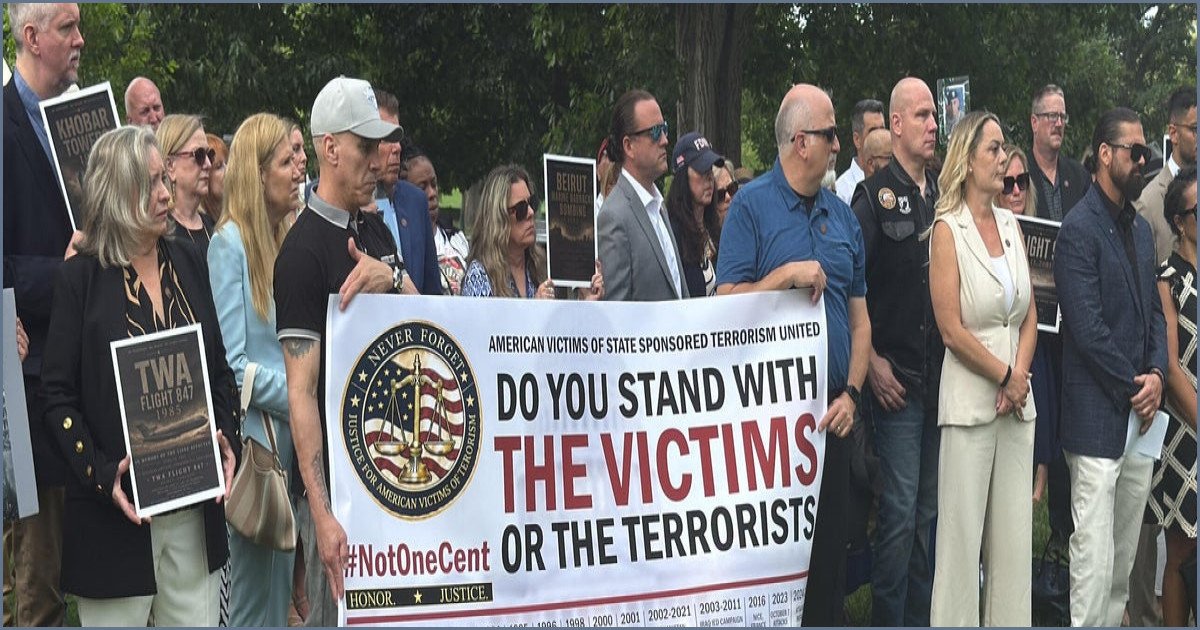
A coalition representing more than 20,000 American victims of Iran-backed terrorism is pressing for financial restitution to be a non-negotiable component of any peace agreement between the United States and the Islamic Republic. Angela Mistrulli, who organized a two-day advocacy gathering in Washington, is scheduled to deliver a formal letter to President Trump at the White House this Tuesday.
Mistrulli, whose father Joseph was killed in the September 11, 2001, attacks on the World Trade Center, emphasized the necessity of holding the regime accountable.
She stated that if the government can effectively bankrupt those responsible for terrorism, it would reduce the loss of American lives, adding that no funds should be returned to the regime until these obligations are met. Mistrulli further noted that for this community, the pursuit of these judgments is not merely about compensation, but about achieving the only form of justice available to them to prevent future tragedies.
The delegation includes more than 100 individuals who have successfully obtained federal court judgments totaling tens of billions of dollars against Iran for its role in financing, orchestrating, or providing material support for major global terror attacks. These include the 1983 Beirut Marine barracks bombing, which claimed the lives of 241 U.S. service members, as well as numerous suicide bombings targeting American citizens in regions such as Israel.
According to Mistrulli, Congress passed legislation in the 1990s allowing victims to sue state sponsors of terrorism, leading to court-ordered judgments against Iran, Syria, and North Korea reaching up to $156 billion. Iran accounts for the largest share of these judgments of any country since the law was enacted.
The push for restitution occurs at the midpoint of a 60-day Memorandum of Understanding signed by President Trump and Iranian leadership on June 17. Negotiated largely by Vice President JD Vance, the agreement offered Iran potential sanctions relief and access to hundreds of billions of dollars in frozen assets, provided the country complies with terms such as securing maritime traffic in the Strait of Hormuz and eliminating any nuclear threat.
While the President noted after the signing that he would prefer a peaceful resolution, he warned that the U.S. might return to military action if the goals were not met. Recent weeks have seen the initial momentum toward a long-term deal stall, with the U.S. resuming military strikes against Iranian targets more than a week ago.
Legal challenges remain significant for the victims. While a federal judge found Iran liable for the 9/11 attacks in 2018, citing its assistance to the hijackers, and a U.S. District Court in Washington recently awarded $573 million to plaintiffs representing service members killed or injured by Iranian-backed insurgencies in Iraq between 2003 and 2015, collection remains difficult.
A pending case is also currently examining Iran's alleged involvement in the October 7, 2023, Hamas-led attacks in Israel. Attorney Aryeh Portnoy, who represents thousands of victims including those from the October 7 attacks, noted that while a fund established in 2015 has paid out over $10 billion, this represents less than 10% of total awarded damages.
Portnoy cited chronic underfunding, legal disputes, and limited enforcement as primary obstacles, urging the administration and Congress to fulfill the commitment made to those seeking justice for these atrocities. A spokesperson for the Iranian Embassy in Washington did not immediately respond to a request for comment regarding these claims.