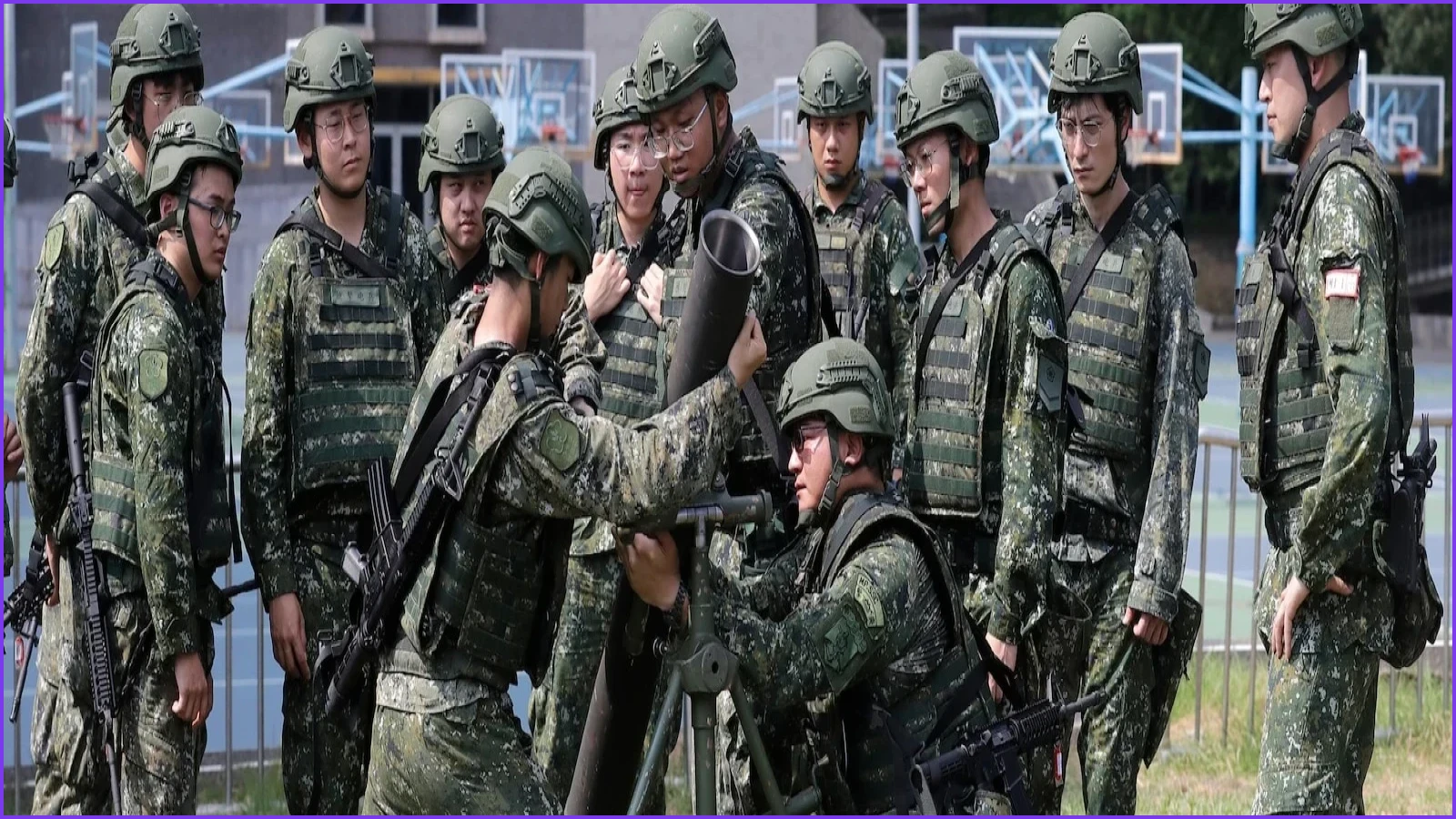
Taiwan has officially commenced its annual Han Kuang military exercises, a 10-day series of live-fire drills designed to simulate a defensive response to a potential invasion by China. Beijing considers the self-governed island a breakaway province and has frequently asserted its intent to retake the territory by force if necessary, maintaining a near-daily presence of military aircraft and warships near the island.
These exercises aim to test the Taiwanese military's capacity to maintain 24-hour defense operations while countering China’s so-called "gray-zone tactics," which are maneuvers intended to exert pressure without crossing the threshold into open warfare. A significant component of this year's strategy involves the largest mobilization of reservists in the island's history, with more than 5,000 service members across two brigades participating. This marks an increase from the previous year, which involved a single brigade of over 3,000 reservists, as the military evaluates how quickly personnel can transition from peacetime standby to full active duty.
The drills also incorporate new, U.S.-inspired communication methods known as backbriefs, where subordinates explain mission plans to their commanders. Experts believe these methods will enhance the self-reliance and battlefield effectiveness of frontline fighters. Additionally, the military is testing newly acquired equipment, specifically the M1A2T Abrams tanks. Taiwan procured 108 of these American-made tanks in 2019, with the final shipment arriving in April.
As part of a longstanding commitment to civil defense, the exercises include urban resilience drills scheduled in Taipei, Taichung, and Kaohsiung. During these simulations, mobile internet speeds will be intentionally reduced for approximately 30 minutes to mimic potential telecommunications interference during an attack.
The backdrop for these exercises involves ongoing debates regarding defense spending and international support. Taiwan recently saw its parliament approve a $24.8 billion supplementary budget for U.S. arms, though this figure fell short of President Lai Ching-te’s $40 billion proposal. While the United States remains Taiwan's primary informal backer, the procurement process has faced complications. Although the U.S. Congress and President Donald Trump previously authorized an $11 billion arms package, Trump later suggested that such sales could serve as a "negotiating chip" with Beijing, leading to a delay in the approval of the most recent arms package.