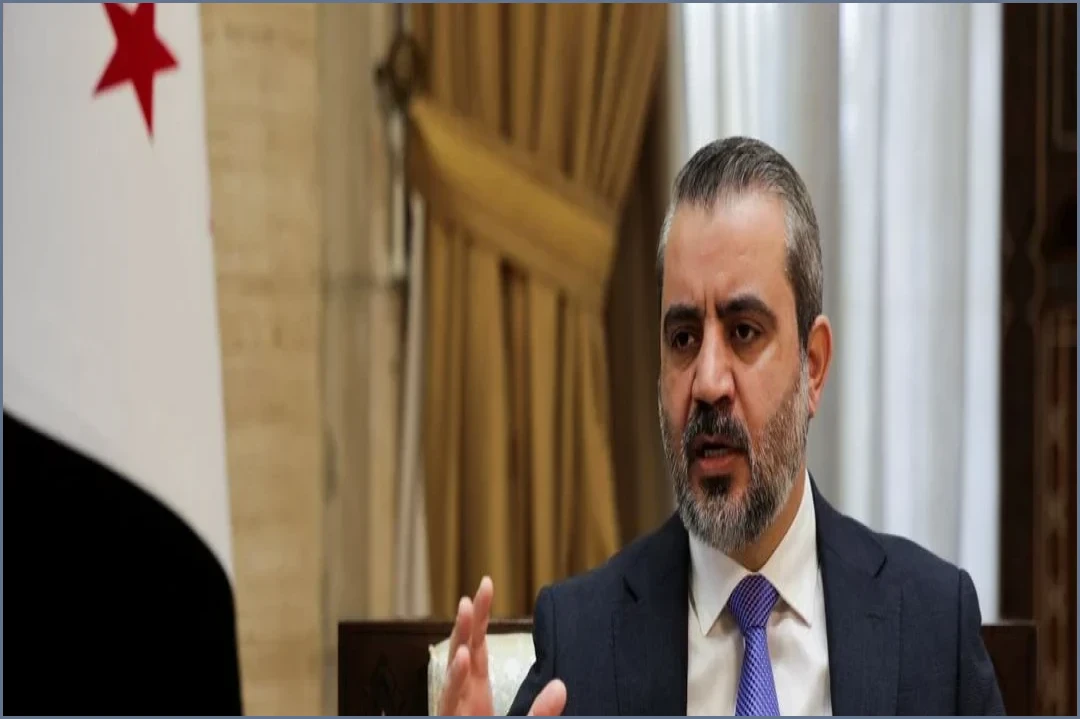
Syrian Foreign Minister Asaad al Shaibani announced on Sunday that direct contacts with Israel have been suspended following an Israeli air strike on the Abu al Duhur airbase in northern Syria. Despite the halt, Shaibani expressed an expectation for negotiations on a security agreement to resume soon, aiming for Israel's withdrawal from Syrian territory.
The suspension of the negotiating track, which Shaibani linked to the Iran-Israel war, occurred specifically after an Israeli air strike targeted the Abu al Duhur airbase in the northern province of Idlib on August 18. “We do not trust Israel at present,” Shaibani stated, adding that Israel bombed the facility even though Damascus had informed it that the site “would not become a Turkish base.”
Despite the current lack of trust, the Syrian foreign minister emphasized that the “door remains open to diplomacy,” urging Israel to seize a “historic opportunity.” He described communication with Israel as “necessary, given that it is a party that constantly threatens Syria’s security,” but stressed that Damascus does not wish for such contacts to continue without yielding results. Syria's immediate priority, according to Shaibani, is to halt Israeli attacks and implement confidence-building measures.
Shaibani also affirmed that Syria would continue to rely on Turkish assistance in military training and co-operation, stating, “We will not dispense with this support.”
Earlier this year, Damascus and Tel Aviv reportedly reached understandings on most provisions of a proposed security agreement, with Shaibani noting that “almost everything was agreed upon on paper.” This agreement would require Israel to cease attacks on Syria, refrain from interfering in its internal affairs, halt military “operations,” and withdraw from territories seized after the fall of Bashar al Assad’s regime. It also envisioned the establishment of security zones near the border, including “a buffer zone where only the United Nations would be present,” alongside other areas where Syrian forces would be deployed at varying levels. However, Shaibani accused Israel of attempting to avoid finalizing the agreement, stating, “We did not find that they had the motivation or genuine will to reach an agreement.”
Regarding the occupied Golan Heights, Shaibani clarified that Syria’s current priority is to stop Israeli attacks, even before reaching a security agreement. Discussions on the Golan Heights and broader peace could follow later. Israel has occupied most of the Syrian Golan Heights since 1967. Following the fall of the Assad regime in late 2024, Israel declared the 1974 disengagement agreement void and occupied the Syrian buffer zone and other positions, including the Syrian side of Mount Hermon (Jabal al-Sheikh).
The Syrian foreign minister also indicated that the US is exerting continuous pressure on Israel to return to the negotiating table and conclude an agreement with Syria. This aligns with Damascus’ broader ambition to establish stable relations with its regional neighbors. On July 26, Syrian President Ahmad al Sharaa had stated that his country was working with several states to conclude a security agreement with Israel, arguing that its success could pave the way for “comprehensive peace” without relinquishing Syria’s claim to the occupied Golan Heights.