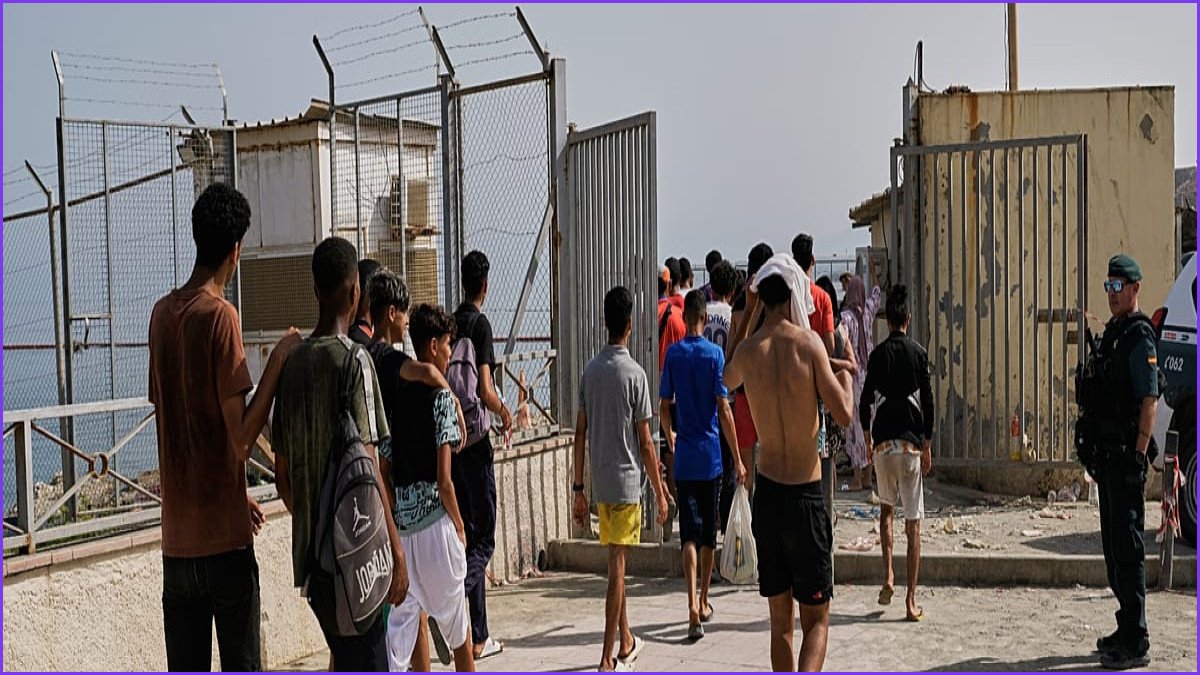
Spain's Civil Guard has compiled a six-page internal report to assess the possibility of a mass migrant crossing into the Spanish territory of Ceuta on August 15. The document, which was brought to light by the Spanish media outlet Mañaneros, examines an online campaign that has been circulating across various social media platforms. According to the report, these calls have reached groups with hundreds of thousands of followers. The investigation, which relied entirely on open-source material such as media reports and social media posts, sought to evaluate the authenticity of the calls, the extent of their reach, and the level of coordination behind the movement.
The Civil Guard's investigation, which concluded its monitoring on August 4, did not reach any definitive conclusions regarding the likelihood of a mass event. As reported by RTVE, the document states there is no concrete basis to estimate how many individuals might participate or to assume that the events observed in late July will be repeated on August 15. The report emphasizes that the actual outcome will depend heavily on the security measures implemented by Spain, as well as the preventive actions taken by Morocco along the coast, in transport hubs, and in the town of Fnideq.
Investigators analyzed activity across platforms including Facebook, WhatsApp, and Instagram, noting that some groups involved in the discussions have memberships ranging from approximately 400,000 to over 422,000 people. However, the report cautioned against placing too much weight on these figures. The most significant concern identified by the Civil Guard was not the size of the groups, but rather the recurring patterns observed: consistent references to the August 15 date, the same geographical locations, and ongoing discussions regarding how to organize the crossing. These messages have persisted over several days, moving beyond Spanish social media to include coverage in Moroccan media.
The report characterizes the campaign as a decentralized effort. Rather than identifying a single organizer, investigators found that the proposed date spread organically between online groups. While the Civil Guard stated it could not identify those responsible for promoting the campaign and found no evidence linking it to the Moroccan government, security services, or specific smuggling networks, it did dismiss the idea that the activity was entirely spontaneous. Instead, the report concluded there is evidence of some degree of digital facilitation, though the source and extent of this coordination remain unclear.
Furthermore, the investigation highlighted a significant amount of misinformation circulating online. This includes false claims that the border would be opened, that migrants would be granted asylum or financial assistance, or that individuals who reach Ceuta could not be legally returned. The European Commission is also monitoring the situation closely. Spokesperson Guillaume Mercier stated that the Commission remains fully vigilant before, during, and after August 15. Brussels has urged caution, noting that many online reports remain unverified and the overall situation is unclear, though the Commission is maintaining close contact with both Spanish and Moroccan authorities.
The Commission also noted that it has detected Russian-linked channels that began rapidly amplifying the migration issue starting on July 30. While the European Union possesses tools such as the Digital Services Act (DSA) to address online disinformation and mitigate systemic risks to public security, Spain has not activated the act's crisis mechanism, which would allow for enhanced coordination with digital platforms.