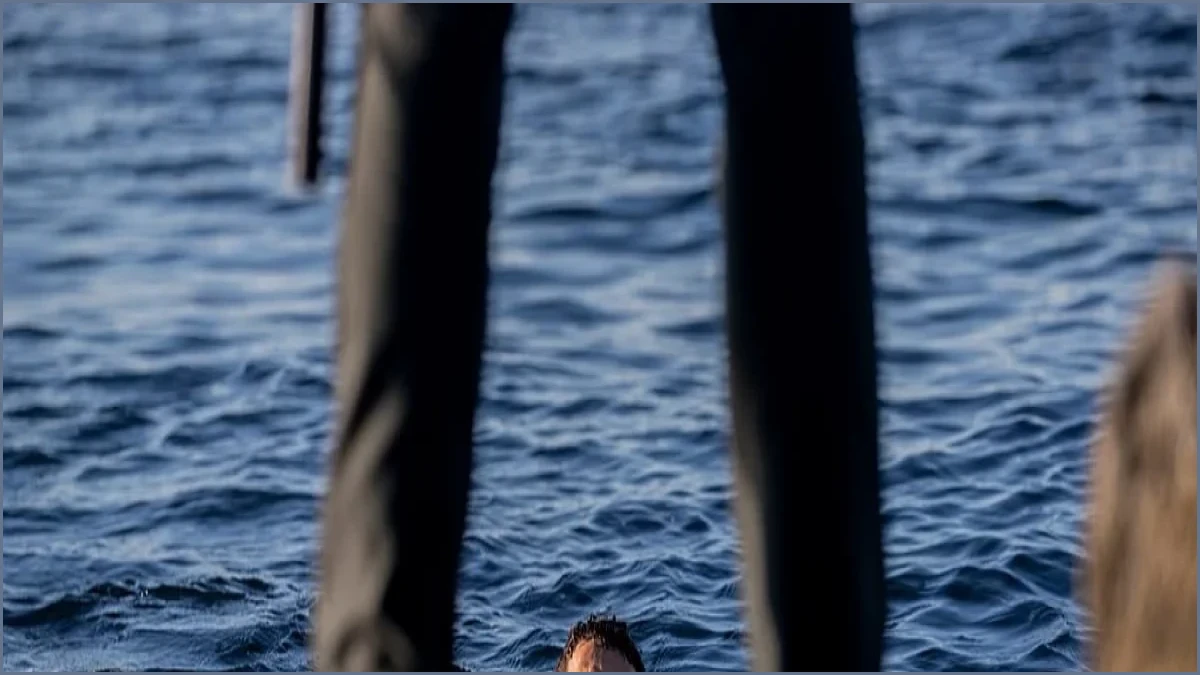
The Spanish enclave of Ceuta is currently grappling with its highest volume of migrant arrivals in five years. According to figures provided by Spain’s Interior Ministry, approximately 50,000 individuals from Morocco, Algeria, and sub-Saharan Africa have entered the territory since Thursday. Most of these arrivals reached the enclave by swimming around the southern breakwater located at Tarajal beach. By Friday afternoon, authorities noted that about 48,000 of these individuals had already returned to Morocco on a voluntary basis.
The current situation is exacerbated by a collision of two significant legal developments. The first issue stems from a long-standing court case involving an Algerian migrant who challenged his summary return. He argued that because he arrived in Ceuta by swimming, he had not breached a border containment element, such as a fence or razor wire. The courts, including the High Court of Andalusia and the Supreme Court, ultimately ruled in his favor. This precedent established that migrants arriving by sea cannot be subjected to summary returns without an individual case file being opened under Spain's Aliens Act, effectively limiting the government's ability to process these arrivals quickly.
A second legal complication arose on July 8, when the Supreme Court (STS 868/2026) invalidated several provisions of the 2024 Aliens Regulation. The ruling struck down measures that had previously reduced the state's obligation to provide immediate care for unaccompanied foreign minors. While the decision bolsters protections for children, local officials, including Vivas, have characterized it as a major obstacle to managing the border, leading to calls for the legalization of summary returns for minors.
In response, the government of Ceuta is backing a bill proposed by the People's Party (PP) in Congress. The legislation aims to amend the tenth additional provision of the Aliens Act, effectively extending the special border rejection regime to anyone attempting to enter Ceuta or Melilla irregularly, regardless of whether they arrive by land or sea. The objective is to provide legal certainty for the Civil Guard, whose unions, such as the AUGC, have requested a clearer framework to operate without the risk of violating judicial rulings. However, the bill faces strong opposition from groups like the Jesuit Migrant Service, No Name Kitchen, and Coordinadora de Barrios, who argue the reform would jeopardize individual safeguards.
The legislative process is in its early stages, and officials acknowledge that any final law will likely face further legal challenges given the Supreme Court's recent stance on minor protections. Meanwhile, the pressure at the border remains intense. Personal accounts, such as that of 23-year-old Mohamed from Nador, highlight the desperation driving these crossings. Mohamed, who had previously lived in Barcelona, returned to Morocco to visit family but lacked the documents to return legally. He described a grueling 12-hour journey followed by a swim to Tarajal without protective gear, citing hunger and a lack of opportunities in his home country.
Across the border in Castillejos, Moroccan authorities have attempted to deter crossings by closing sections of the seafront and installing metal fences, though these are frequently bypassed. Reports from El Faro de Ceuta indicate that the situation remains perilous, noting that a mother and her three children narrowly avoided drowning during an attempt on Tuesday. The ongoing crisis highlights a persistent struggle to balance border control with legal obligations under the European Pact on Migration and Asylum.