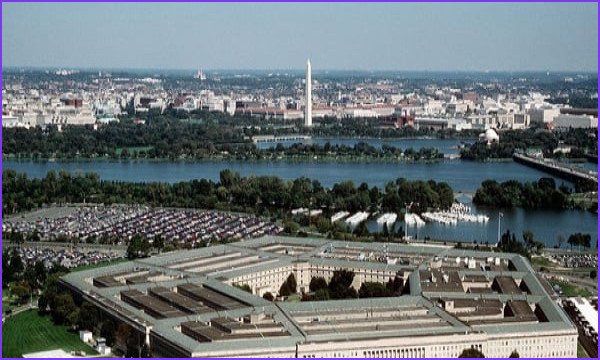
The Pentagon’s list of Chinese Military Companies (CMC) has grown to feature prominent private firms such as Alibaba, Tencent, DJI, and Unitree. This expansion occurs despite the May meeting in Beijing between Chinese President Xi Jinping and U.S. President Donald Trump, where both nations expressed a commitment to a "constructive relationship of strategic stability." Beneath this diplomatic surface, however, strategic competition between the two powers continues to intensify.
Unlike the U.S. Entity List or the Specially Designated Nationals (SDN) List, the CMC List does not inherently prohibit commercial transactions, impose export controls, or trigger economic sanctions. It does not legally bar these companies from the U.S. market. Despite these limited legal repercussions, Washington has increasingly prioritized the list, using it as a mechanism to classify Chinese firms through a national security lens.
The shift is driven by the blurring lines between commercial innovation and military capability, particularly in sectors like artificial intelligence, robotics, and cloud computing. As noted by the National Bureau of Asian Research, the challenge for the U.S. is identifying how civilian technological advancements are mobilized to support China’s military modernization under the Military-Civil Fusion (MCF) framework. The Georgetown Center for Security and Emerging Technology (CSET) has observed that this strategy creates complex collaborations between civilian companies and the defense sector that often fall outside traditional defense contracting definitions.
Ultimately, the CMC List functions as a common framework for interagency risk assessment. By providing a shared baseline for identifying potential MCF contributors, it reduces coordination costs across different government agencies. This infrastructure is increasingly shaping future policy, as seen with the implementation of the BIOSECURE Act, where entities on the Section 1260H list are prioritized for future designations such as "Biotechnology Companies of Concern."
The practical consequences of inclusion are felt in the lobbying sector. U.S. lobbying firms are effectively forced to choose between representing listed Chinese companies and maintaining ties with Department of Defense contractors. Consequently, major firms like Mercury Public Affairs and Brownstein Hyatt Farber Schreck reportedly dropped clients like Tencent and Alibaba following these restrictions. While the list itself does not restrict commercial activity, it creates spillover effects that influence investment decisions, supply chain adjustments, and compliance efforts, effectively building the architecture for future regulatory actions.
You have reached the limit of 2 free articles this month.