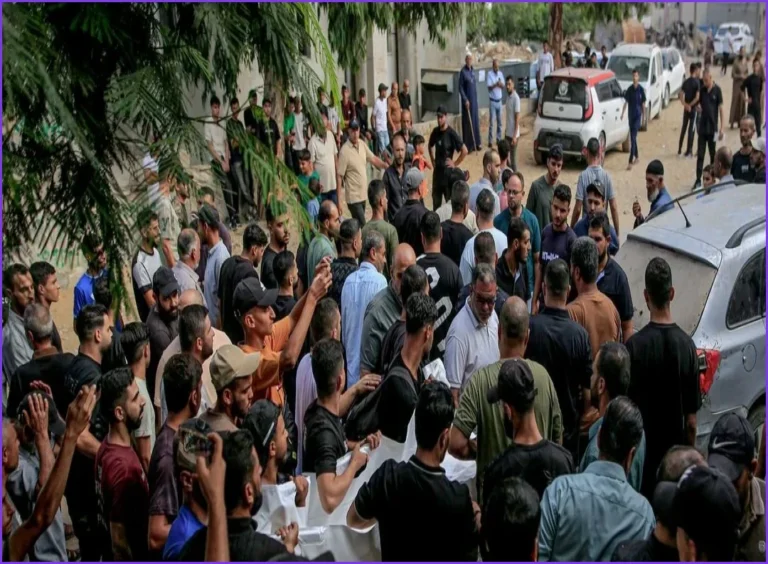
At least 21 protesters were killed and dozens more sustained injuries after Pakistani security forces opened fire on demonstrators in Pakistan-administered Jammu and Kashmir (PaJK) on July 27. The violence erupted as members of the Joint Awami Action Committee (JAAC)—a grassroots coalition of students, traders, and civil society groups—organized a "Long March" from Rawalakot toward the regional capital, Muzaffarabad. Confirming exact casualty figures remains difficult, as the Pakistani government has imposed a comprehensive communications blackout across the territory.
The unrest follows the Pakistani government's decision on June 5 to proscribe the JAAC under anti-terrorism legislation. Prior to the recent escalation, an estimated 40 people, including six police and paramilitary personnel, had reportedly died in clashes between June 5 and July 24. Initially formed in 2023 to protest rising electricity and wheat prices, the movement has increasingly pivoted toward political demands, including constitutional reforms, governance issues, and electoral changes.
While Pakistan officially labels the region Azad (Free) Jammu and Kashmir and appoints a prime minister, substantive decision-making power remains centered in Islamabad. A central grievance of the JAAC is the structure of the 53-seat legislative assembly. Twelve seats are reserved for "refugee" constituencies—descendants of individuals who migrated from Indian-administered Kashmir after 1947, many of whom do not reside in the territory. Critics, including political analyst Luv Puri, argue these seats are undemocratic and grant Islamabad disproportionate influence over government formation, effectively manipulating the assembly.
As legislative assembly elections proceed from July 27 through August 10, the protests have expanded from their epicenter in Rawalakot to include Mirpur, Muzaffarabad, and other districts. Observers suggest that Islamabad’s strategy involves both superficial negotiations and the aggressive deployment of paramilitary forces to provoke violence, which the state then uses to justify extreme crackdowns. Pakistani Defense Minister Khwaja Asif recently exacerbated tensions by characterizing the protesters as "enemies" on par with India.
Analysts believe the government is determined to maintain control over the territory, which it considers its "jugular vein," and may use the crisis to foster national unity amid Pakistan’s own domestic economic instability and ongoing insurgencies in Khyber-Pakhtunkhwa and Balochistan. The heavy-handed response from the establishment suggests a continued reliance on force to suppress what has transformed into a significant political movement.
Screenshot of a JKJAAC video showing protesters in Pakistan-administered Jammu and Kashmir on a “Long March,” August 2, 2026.
You have reached the limit of 2 free articles this month.