New Caledonia has a new president, Virginie Ruffenach, leader of the pro-France Rassemblement (The Rally) Party, who was elected to lead the New Caledonia Congress on July 10. Her election comes after a coalition was formed with the centrist Eveil Océanien (Oceanian Awakening) Party, securing a governing majority in a territory marked by over a decade of political turbulence, social tensions, and economic instability.
In her inaugural address, Ruffenach stressed the importance of unity and dialogue to navigate the divided Congress. "Our ambition is clear: to put our territory back on the path to recovery. We must rebuild our economic tools, repair our social fabric and restore trust," she stated, emphasizing that societal progress is hindered by doubt and institutional instability.
The French overseas territory, home to over 290,000 people, faces a deep political chasm between pro-independence movements, largely led by the Indigenous Kanak population, and loyalist factions who advocate for continued ties with France, prioritizing economic stability and security. The population is comprised of approximately 41 percent Kanak islanders and 24 percent of European heritage.
Sonia Backès, leader of the Caledonian Republicans, highlighted the pragmatic approach of the new coalition, stating, "We have chosen to set aside our disagreements on the institutional future to focus on the concrete, everyday concerns of New Caledonians." This alliance includes staunchly pro-France parties alongside the influential Oceanian Awakening Party, founded by islanders from Wallis and Futuna.
The territory's political landscape remains heavily influenced by historical inequalities and recent unrest. In 2024, riots erupted after the French government's attempt to expand the electoral roll by 25,000 mostly non-Kanak voters, a move perceived by pro-independence supporters as an effort to dilute their political influence. The aftermath of these riots resulted in significant economic damage, estimated at over $1 billion, leading to increased poverty, unemployment, and a decline in government revenue.
In response to the crisis, France boosted its financial support, allocating 2 billion euros (US$2.2 billion) in February to aid the islands' recovery. However, independence activists, like Doriane Nonmoira of the Union of Francophone Women of Oceania, criticize the growing fiscal dependence on France, warning that the territory "survives through borrowing from the government and the indebtedness of future generations."
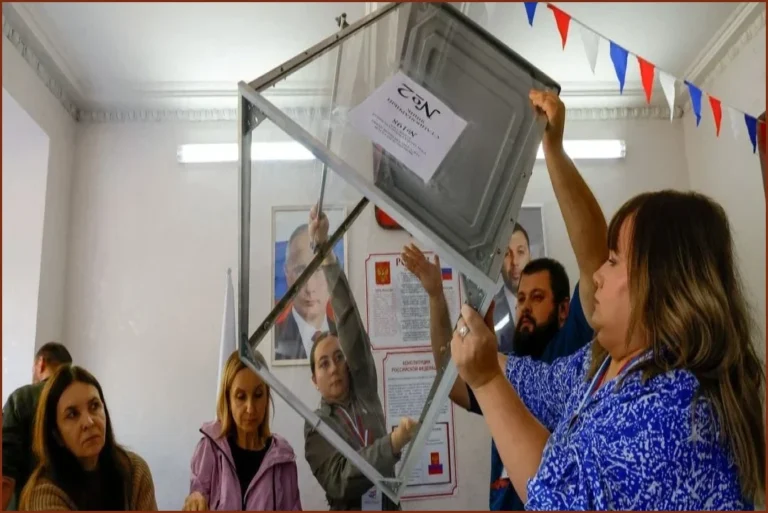
The recent elections on June 28 utilized a slightly expanded electoral roll, including an additional 10,500 Kanak and non-Kanak residents born in the territory after the 1998 Nouméa Accord. French Prime Minister Sébastien Lecornu defended the amendment as necessary for democratic rights, stating, "The status quo is not inevitable; the status quo gradually traps people" and risks becoming "the breeding ground for tomorrow’s violence." Despite these efforts, voter turnout was low at 63.7 percent, with a notable decline in Kanak participation, attributed to political frustrations and logistical challenges.
The balance of power in the Congress has not drastically shifted. Pro-independence parties collectively secured 26 seats, holding a slight majority over the loyalist bloc's 24 seats. The UC-FLNKS party won 16 seats, followed by the National Union for Independence with seven, and the Indigenous Dynamic party with three. This trend reflects a gradual increase in pro-independence representation over the past quarter century.
The path forward involves renewed talks between French and New Caledonian leaders to determine the territory's political future. The 1998 Nouméa Accord envisioned three referendums between 2018 and 2021, all resulting in pro-France outcomes, though the final vote was boycotted by many Kanaks and rejected by pro-independence parties.
A subsequent Bougival Accord, signed in July 2025, proposed a compromise of a New Caledonian "state" within France, with devolved powers. However, this accord failed to gain universal buy-in and has not yet been constitutionally validated by France, with a planned referendum on the accord postponed indefinitely.
For France, maintaining New Caledonia is crucial for its Indo-Pacific strategy and its self-image as a unified republic. Pro-independence leaders, such as Paul Néaoutyine of the PALIKA Party, view accords like Bougival as a containment strategy that "closes the door to full sovereignty."
Dr. Pierre-Christophe Pantz, a researcher at the University of New Caledonia, noted that past agreements were also contentious. "The absence of a stable majority in the National Assembly in France has made any constitutional validation of the agreement uncertain," he commented.
French Minister Sébastien Lecornu is urging for talks to resume with the new leadership, aiming for an agreement by the end of the year. However, deep-seated inequalities persist, with the Kanak employment rate at 49 percent compared to 70 percent for non-Kanaks, fueling ongoing grievances. Nonmoira insists that lasting peace requires "decolonization with France."
The United Nations has advised France to ensure the free, prior, and informed consent of the Kanak people regarding political reforms. Discussions are further complicated by the upcoming French presidential election in 2027, with political analysts like Pantz predicting that substantive negotiations may be delayed until after the elections, given the current divisions in the French Parliament.
You have reached the limit of 2 free articles this month.