The government of Prime Minister Anwar Ibrahim has officially stated that it will not move forward with the planned repatriation of 5,000 Rohingya refugees if their safety cannot be guaranteed. This announcement follows earlier confirmation from the Prime Minister on July 30 that Myanmar had agreed to accept the return of 5,000 individuals currently held in Malaysian immigration detention depots.
Communications Minister Fahmi Fadzil explained during a recent press briefing that both the Ministry of Foreign Affairs and the Ministry of Home Affairs are currently reviewing the repatriation plan. He emphasized that the administration would not return any refugees if they face the threat of persecution or harm, noting that several critical matters remain under study by the Foreign Ministry. This stance was echoed by the Prime Minister himself, who acknowledged the necessity of ensuring the safety of those involved before any relocation takes place.
The proposed repatriation comes amid a period of rising xenophobic sentiment within Malaysia, where public figures have increasingly used hostile rhetoric against the Rohingya population. Rohingya asylum seekers have arrived in Malaysia steadily over the past two decades, and particularly since 2017, when an ethnic cleansing campaign by the Myanmar military pushed more than 740,000 from Rakhine State into Bangladesh. This climate has led to the forced closure of refugee schools and the detention of over 100 refugees late last month following a protest outside the UNHCR office in Kuala Lumpur. While the Rohingya were initially welcomed by many in Malaysia, public opinion has shifted as the community grew to approximately 126,000 UNHCR-registered individuals. Malaysia, which does not officially recognize the Rohingya as refugees, recently directed the UNHCR to temporarily halt new registrations as the government seeks to implement its own management system.
Human rights organizations, including Human Rights Watch, have urged the Malaysian government to suspend the repatriation entirely. Bryony Lau of Human Rights Watch stated that current conditions in Myanmar do not allow for a safe, dignified, or voluntary return. Critics point out that the military-backed government in Myanmar continues to label the Rohingya as illegal immigrants, and large swaths of Rakhine State are currently under the control of the Arakan Army, a group also accused of mistreating the community. With limited options for third-country resettlement due to new U.S. government restrictions, the situation remains a complex challenge for the Malaysian authorities.
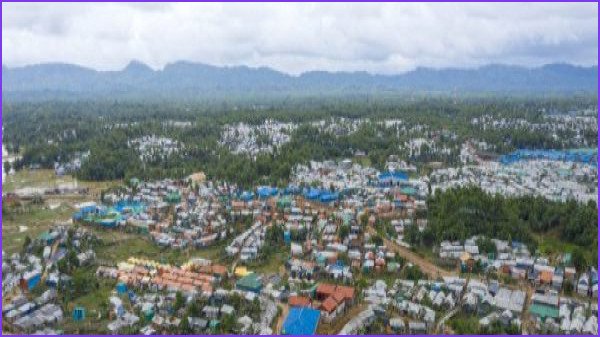
An aerial view of a refugee camp in Cox’s Bazar, Bangladesh.
You have reached the limit of 2 free articles this month.