A temporary localized truce in Ukraine's southeastern Kherson region reached its final hours on Sunday evening, leaving local civilians bracing for a resumption of heavy hostilities. The temporary pause in fighting, which began early Tuesday, marked the most significant cessation of combat between Moscow and Kyiv since Russia launched its full-scale invasion of Ukraine 4½ years ago.
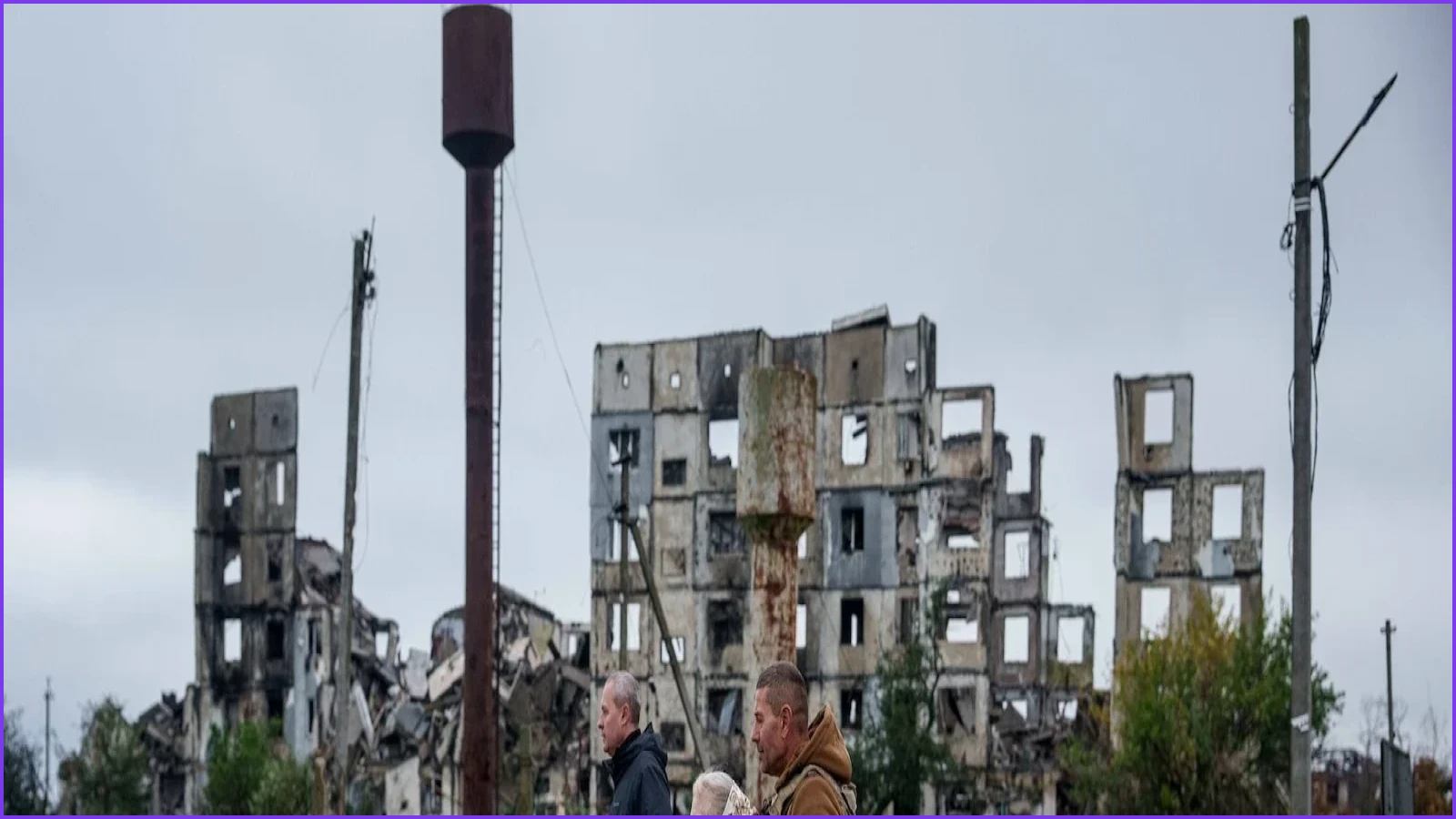
According to the White House, U.S. first lady Melania Trump assisted in brokering the agreement. The temporary halt in military action enabled a rare joint humanitarian operation to evacuate besieged residents from the front-line city of Oleshky, located on the Russian-occupied left bank. By the time the evacuation ended on Saturday, approximately 2,000 civilians who had been trapped in Oleshky were given the option to move to Ukrainian-controlled areas, relocate to Russian-held territory, or remain in place with replenished stocks of food and medicine. Authorities withheld exact figures on how many people remained behind to safeguard their security.
Emotional scenes unfolded on Saturday along the Ukrainian border as family members gathered to catch sight of arriving relatives. Residents from surrounding villages lined the highway, waving flashlights and flags to welcome the incoming humanitarian convoy.
Despite the localized pause along the Kherson front, widespread aerial warfare continued across other regions. Ukrainian President Volodymyr Zelenskyy reported on Sunday that Russian forces were persistently targeting Ukraine's energy infrastructure ahead of the cold winter months. Zelenskyy stated on X that overnight Russian strikes caused blackouts for hundreds of thousands of families, alleging that Moscow was seeking to capitalize on Kyiv's depleted air defenses. He noted that the intensity of the strikes was extremely high as Russian forces tried to take maximum advantage of Ukraine's shortage of ballistic missile interceptors.
Inside Kherson city, residents maintained a calm demeanor even as local officials cautioned that Russian forces were massing additional personnel and weaponry across the river, prompting expectations of heavier shelling. At the Mykola Kulish Kherson Regional Academic Music and Drama Theater, performances proceeded as scheduled throughout the weekend. Opening a concert on Sunday, theater director Oleksandr Knyha urged attendees not to be afraid and to hold on. Knyha, who originally commuted from Oleshky before the occupation and still hopes to return, emphasized that the troupe has operated on the front line for four years without canceling a single show, adding that whatever happens, the show will continue.
The theater troupe currently puts on shows in a basement venue and is in the process of fitting out an additional bomb shelter. Out of 120 total staff members, roughly 100 continue to work in Kherson, and none have fled the city. On the final day of the ceasefire, the company staged a production structured around a musical map of Ukraine, featuring music from the Crimean peninsula, which Russia annexed in 2014, to the Carpathian mountains in the southwest. Knyha remarked that uniting people and offering hope remains an essential part of their mission.
For other residents, the brief quiet brought little relief. Alla Vasylenko, a 58-year-old costume maker for the theater, admitted that the silence of the truce felt terrifying. She expressed skepticism about lasting peace, stating that believing Russian promises would be tantamount to disbelieving oneself. Vasylenko plans to stay in Kherson, citing financial constraints and her 10 dogs. She explained that evacuation warnings are difficult to heed without a destination or resources, noting that the journey alone costs between 30,000 and 50,000 hryvnias. She added that certainty will remain elusive until Ukrainian forces liberate the left bank of the region.
Meanwhile, Russian drone bombardments struck the Kyiv region for a second straight day, wounding a civilian woman and inflicting damage on residential homes, power infrastructure, and a commercial retail store. Ukraine's air force reported on Sunday morning that Russian troops launched 433 attack drones overnight, of which Ukrainian defense systems downed or jammed 371.
Concurrently, Ukrainian forces launched extensive drone strikes deep inside Russian territory. Regional Governor Gleb Nikitin stated Sunday that Russian air defenses shot down more than 100 Ukrainian drones over the Nizhny Novgorod region, located east of Moscow. Nikitin confirmed that an industrial facility in the town of Kstovo sustained significant damage. Russian media outlets subsequently reported that the drone strike ignited a major fire at the Kstovo oil refinery, circulating imagery of thick black smoke rising over the site. Additionally, President Zelenskyy announced Sunday that Ukrainian forces successfully hit an air defense facility and a factory manufacturing missile components in Russia's southern Rostov region, describing the strikes as a just defense aimed at curtailing Moscow's military capabilities.