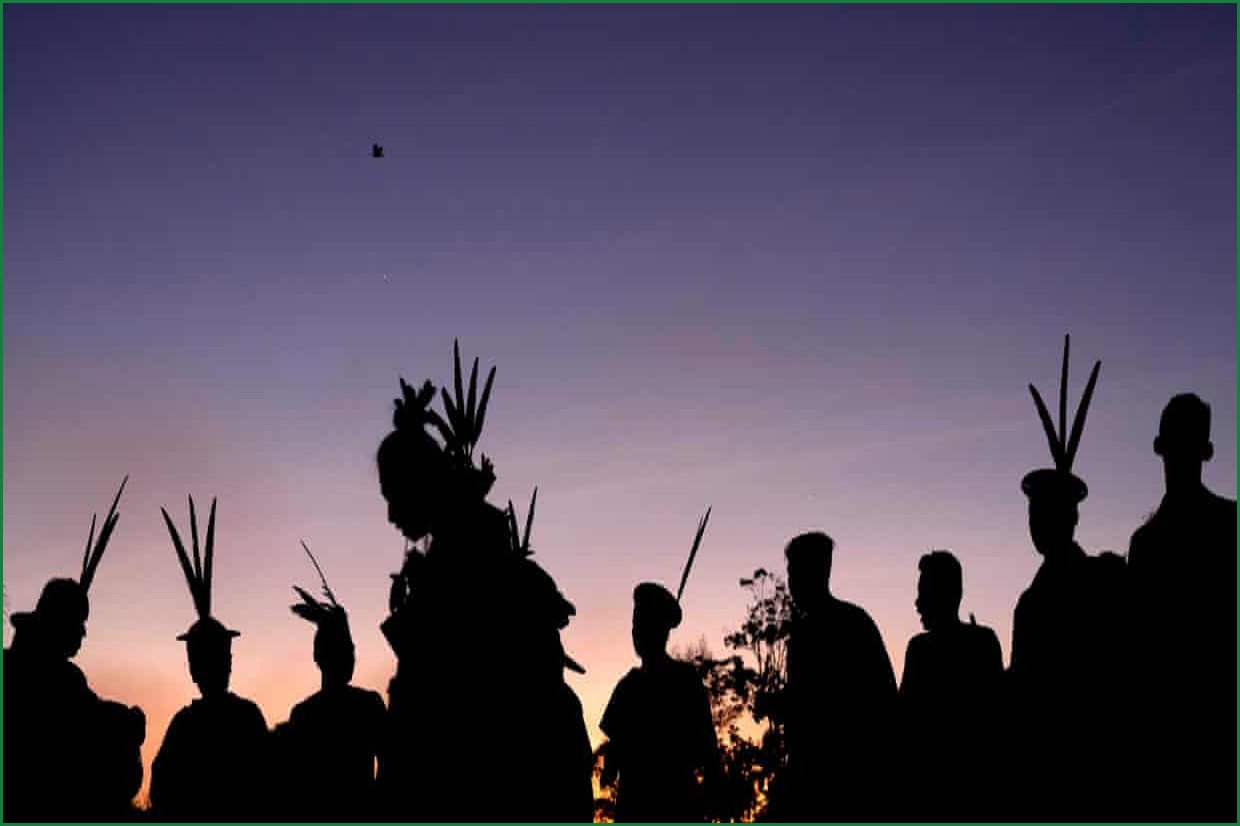
Indigenous leaders representing communities along the Brazil-Peru border have issued an urgent plea to the government of President Luiz Inácio Lula da Silva, warning that their villages are being held “hostage” by encroaching organized crime networks. The delegation, which traveled to Brasília this week, reports that these criminal groups are actively destroying the Amazon Forest, constructing illegal roads, and trafficking drugs through indigenous territories.
The Asháninka people, who have long acted as protectors of the forest against illicit extractivist activities, described the current situation as the most severe threat they have encountered. Francisco Piyãko, the general coordinator of the Organization of Indigenous People of the Juruá River, warned that if the state fails to provide protection, communities may be forced to organize their own defense, a scenario he described as potentially disastrous. According to Piyãko, these criminal networks represent a transnational expansion that threatens one of the last remaining barriers against the illegal occupation of the Amazon.
Recent violence has centered on the village of Apiwtxa, located in the Kampa do Rio Amônia Indigenous Territory. On the evening of July 6, five heavily armed, Spanish-speaking men entered the village and targeted the home of an Asháninka leader. Villagers, who had faced similar incursions by masked gunmen in the preceding days, were forced to hide their children in a secure building while waiting for authorities. Although the Brazilian army arrived at midnight, the suspects had already retreated into the forest.
This surge in tension is exacerbated by the proximity to the Peruvian department of Ucayali, where illegal road networks, gold mining, and coca cultivation have expanded significantly. Climate scientist Carlos Nobre has identified the intersection of drug trafficking and environmental crime as the primary new threat to the Amazon. While the Brazilian state of Acre has historically remained relatively stable compared to its neighbors, the influx of loggers, miners, and traffickers has created a perilous environment for land defenders. Acre is home to the legacy of Chico Mendes, one of the country’s most celebrated forest campaigners who was assassinated in 1988.
The Asháninka petition demands a permanent security presence along the border to halt the construction of “virus roads” and to suppress illegal logging and mining operations. The Igarapé Institute, a public security thinktank, has echoed these concerns, calling for a more robust, intelligence-led response from regional governments to combat organized environmental crime. As tensions rise, leaders argue that both the Brazilian and Peruvian governments possess the necessary means to resolve the situation if they commit to a joint, strategic effort to reclaim control of the region.
Apiwtxa was the last indigenous village visited by the British journalist Dom Phillips before he was murdered in the neighbouring Brazilian border state of Amazonas in 2022 while researching illegal extractivist activities in another area menaced by arms and drug smugglers.