A wide range of key U.S. allies expressed strong opposition on Friday following the administration's decision to renew tariffs on more than 60 countries. This move occurred immediately after the expiration of previous tariff measures. The administration's decision follows a ruling earlier this year by the U.S. Supreme Court, which had determined that many of the tariffs previously imposed under emergency powers were illegal. President Trump justified the renewal of these taxes by citing what he described as lax enforcement of bans on the use of forced labor in the production of goods, an allegation that has been vehemently rejected by both Australia and the European Union.
Australian Trade Minister Don Farrell described the 12.5 percent tariffs applied to his country's exports as an "unjustified" and "extremely disappointing decision." Farrell defended his nation's record, stating that Australia possesses some of the most progressive labor legislation in the world. He explicitly called on the United States government to reverse the tariffs. In New Zealand, Prime Minister Christopher Luxon echoed these sentiments, calling the move "extremely disappointing." Luxon argued that the U.S. investigation failed to provide any meaningful evidence to support the claims regarding forced labor, adding that such tariffs ultimately harm the economy by driving up costs and creating uncertainty for businesses.
The European Union's foreign policy chief, Kaja Kallas, also questioned the rationale behind the new tariffs. She told Reuters that the claims were not grounded in reality, pointing to the EU's labor laws which include paid vacations and high standards for employees, contrasting them with the conditions in the United States. Meanwhile, Japan’s Chief Cabinet Secretary Minoru Kihara expressed his regret over the measure. Kihara noted that Japan had previously been reassured by the Trump administration that they would not be subject to additional tariffs. He emphasized that Japan’s industry and trade practices are fully in line with international rules, making the tariff decision regarding forced labor particularly regrettable.
China, the world's second-largest economy, was also hit with 12.5 percent tariffs. The Chinese Ministry of Foreign Affairs condemned the move, with spokesman Lin Jian stating during a regular press conference on Friday that tariff wars and trade wars do not serve the interests of any party involved. Despite the widespread international criticism, a government spokesperson maintained the administration's stance, stating that they take the issue of forced labor very seriously to ensure that U.K. businesses are not complicit in global supply chain abuses.
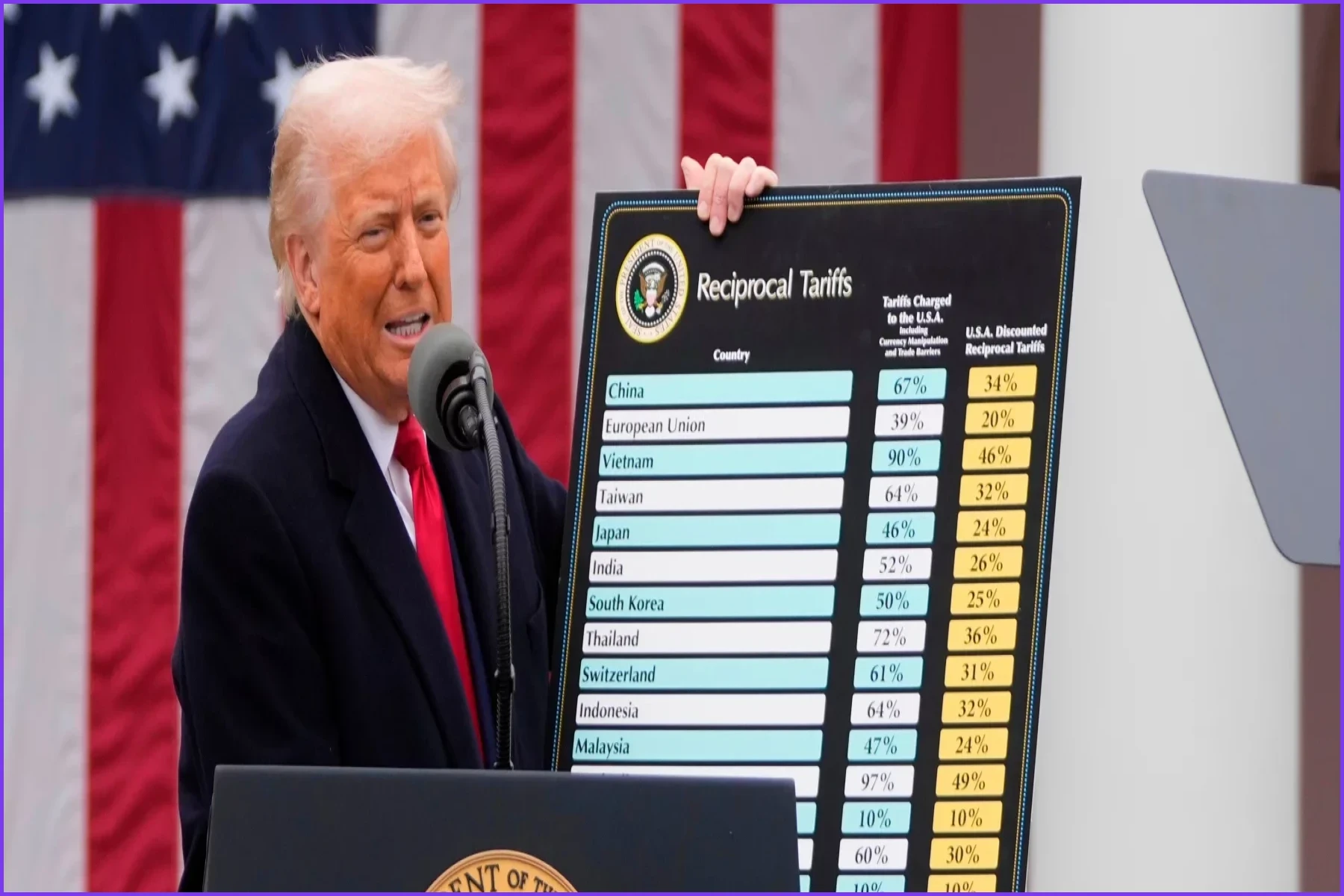
FILE – President Donald Trump speaks during an event to announce new tariffs in the Rose Garden at the White House on April 2, 2025, in Washington. Mark Schiefelbein/AP hide caption
Here's some reaction from around the world: