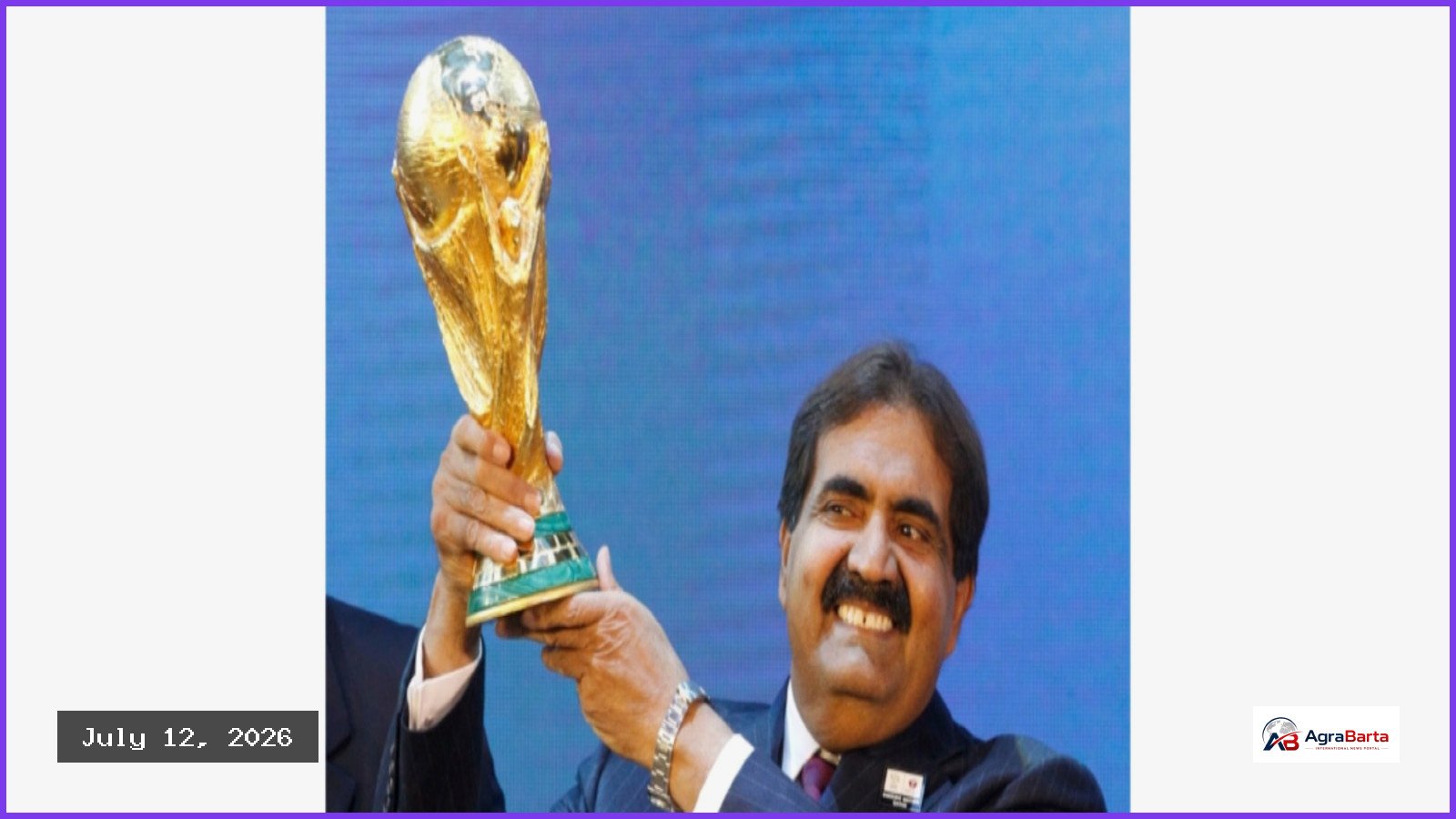
Sheikh Hamad bin Khalifa Al Thani, the former ruler of Qatar who steered the small Persian Gulf nation toward global prominence in diplomacy, media, and investment, has died at the age of 74. The state-run Qatar News Agency announced his passing without disclosing a cause of death.
Serving as emir for 18 years, Sheikh Hamad transformed Qatar from a regional backwater into an international hub. His legacy includes the founding of the Al Jazeera satellite news network and the acquisition of high-profile assets like London’s Harrod’s department store. Under his leadership, the country’s influence expanded across North Africa and Afghanistan, culminating in Qatar hosting the 2022 FIFA World Cup, where he received a warm reception from citizens during the opening match.
Sheikh Hamad’s path to power began in 1995 when he deposed his father, Sheikh Khalifa, in a bloodless palace coup. Educated at Britain’s Sandhurst military academy, he previously served as commander of the armed forces and defense minister. As leader, he broke with regional tradition in June 2013 by voluntarily abdicating in favor of his son, the British-educated crown prince Sheikh Tamim bin Hamad Al Thani, who was 33 at the time. This transition was viewed as a strategic move to align the nation with its young population and modern political realities.
His tenure was marked by an independent foreign policy that often drew criticism from Western and regional allies. Qatar maintained complex ties with Iran, the Palestinian militant group Hamas, and Egypt’s Muslim Brotherhood. While Al Jazeera was praised for revolutionizing Arab media, it also faced accusations of biased reporting that sometimes strained diplomatic relations, including with the United States, even as Qatar served as a key Pentagon logistics hub.
Sheikh Hamad’s diplomatic reach was extensive, involving mediation in conflicts across Sudan’s Darfur region, Lebanon, and between Palestinian factions. In 2012, he became the first head of state to visit the Gaza Strip since Hamas took control, pledging $400 million for development. He also navigated relations with Israel, meeting with then-Foreign Minister Tzipi Livni in 2007 and hosting an Israeli trade office in Doha until 2008. While neighboring Bahrain and the United Arab Emirates diplomatically recognized Israel in 2020, Qatar maintained its distance. Israelis at the World Cup also faced a multitude of Palestinian flags and anger over its occupation of lands Palestinians claim for their future state.
Beyond politics, he aggressively pursued international prestige through sports and infrastructure, including the expansion of Qatar Airways and the construction of a $15 billion international airport in Doha that bears his name. In his final years of power, he facilitated the opening of a Taliban office in Qatar, which eventually enabled U.S.-Taliban talks and the 2021 withdrawal from Afghanistan. Despite his influence, his policies regarding Islamist groups caused significant friction, contributing to a years-long regional boycott that continued into his son’s reign.
His abdication was seen as Qatar’s attempt to stay ahead of Arab Spring-inspired calls for reforms and leadership more attuned to the region’s large and powerful young population. Qatar, a peninsula half the size of New Jersey, is believed to have around 300,000 citizens.
At the time, Sheikh Hamad also was thought to have been in poor health for years. In December 2015, Qatari officials said he was flown to Switzerland for surgery after breaking a leg while on holiday.