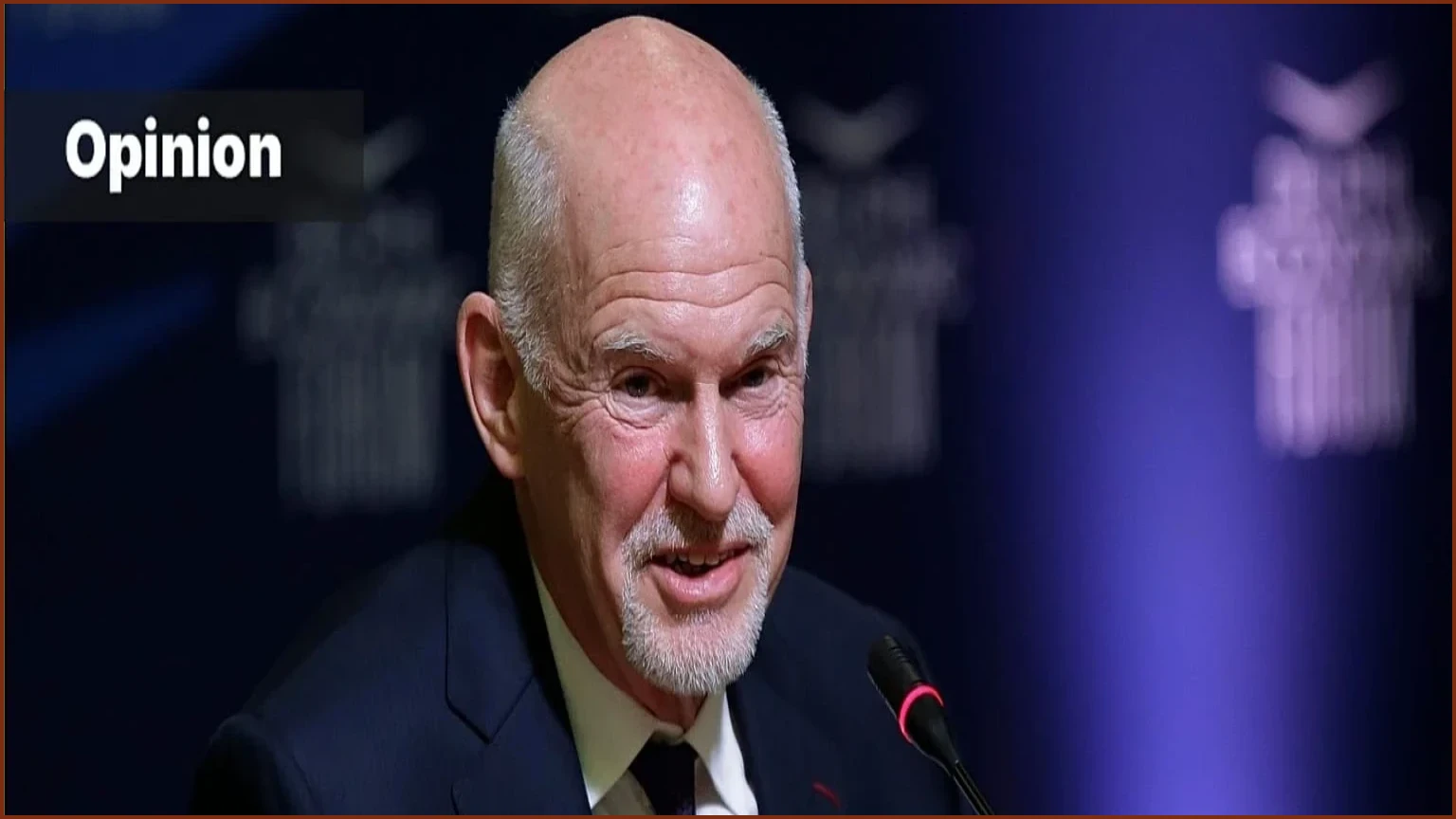
Former Greek Prime Minister George Papandreou has issued an urgent call for European institutions and national governments to protect and fully support the European Public Prosecutor's Office, asserting that independent judicial bodies must not be weakened simply because their work makes powerful political and financial figures uncomfortable. His comments come as Chief Prosecutor Laura Kövesi completes her term of office, with Papandreou stressing that her warnings regarding political interference and intimidation must be taken seriously across the entire European Union.
Highlighting recent controversies, Papandreou described efforts by the Greek government to discredit investigators and obstruct accountability regarding the misuse of European funds as reprehensible. He warned that attempts to shift focus away from the core evidence gathered by investigators constitute an explicit effort at a cover-up. While noting that all individuals are entitled to the legal presumption of innocence, he insisted that no government has the right to block the discovery of truth, demanding full transparency and complete cooperation with judicial authorities in response to allegations of pressure faced by prosecutors in Greece.
Reframing the purpose of legal accountability, the former prime minister argued that the rule of law exists fundamentally to protect citizens without high-level connections, including workers, honest farmers, and the most vulnerable members of society. When public money is mismanaged and oversight is blocked, Papandreou noted, these everyday citizens are the ones who ultimately pay the price. He emphasized that rule-of-law principles cannot end at national borders within a Union built on shared values, warning that national sovereignty must never serve as a shield to grant impunity to powerful elites.
Reflecting on Greece's economic history, Papandreou claimed that the nation could have avoided resorting to the European Union support mechanism and emergency economic memoranda had an empowered European Public Prosecutor's Office existed prior to the country's severe financial crisis. He argued that an independent body led by a figure like Kövesi would have possessed the necessary authority to uncover the previous Greek government's fiscal mismanagement and cover-ups before he took office as prime minister in 2009. Such exposure, he stated, would have jolted the European Commission out of inaction, enforced administrative accountability, and safeguarded international confidence in the Greek economy before disaster struck, sparing the Greek people a heavy financial toll.
Looking toward the future of European justice, Papandreou urged the incoming leadership of the European Public Prosecutor's Office to defend its independence with equal resolve and follow evidence without fear or favor. He stressed that prosecutors must never bow to influential lobbies, political coercion, or entrenched patronage networks regardless of their political ties or origin. Furthermore, he called on EU institutions and member states to back theoretical independence with tangible resources, expanded powers, and operational support, warning that an institution weakened by underfunding, bureaucratic delays, or deliberate work obstruction cannot effectively hold the powerful accountable.