New research indicates that extreme heat is pushing some of India’s most vulnerable workers deeper into poverty, with outdoor laborers experiencing income losses of up to 9%. The analysis by the International Institute for Environment and Development (IIED) highlights how extreme heat functions as a “poverty multiplier” for hundreds of millions employed in India's vast informal sector.
Workers engaged in highly physical professions across sectors such as agriculture, construction, and transport saw an average salary reduction of 6.6% in 2024 due to intense heat. Outdoor workers were hit hardest, losing nearly 9% of their earnings in 2024, an amount equivalent to £112 ($151). The arid desert region of Rajasthan recorded the highest economic loss, with informal workers there losing 8.3% of their income, as the gruelling effects of heat made them unable to work.
The IIED's findings estimate that India loses 21.1 working days annually due to extreme heat, a substantial and unaffordable burden for many of the 550 million workers in the informal sector.
Ritu Bharadwaj, climate finance director at the IIED, emphasized that the research demonstrates how extreme heat intensifies poverty and worsens existing structural inequalities in India, a nation aspiring to become developed within the next two decades. “Heat is quietly pushing these families deeper into poverty,” Bharadwaj stated. “As the heat rises, their efficiency goes down, so they earn less. With lower income their food intake falls. And because they cannot afford to stop, they keep working through it, doing lasting damage to their health. They are paying for a crisis they did nothing to cause, with their health and with their savings.”
Human-caused climate breakdown is making heatwaves globally more frequent and intense. A World Bank report noted that India, where nine out of ten people work in the informal economy, could become one of the first places where heatwaves exceed the human survivability limit. Informal workers, often among the most socially and economically marginalized, lack employment security, compelling them to endure illness and unsafe conditions.
The report also highlighted poor access to essential amenities at worksites, including drinking water, shade, rest areas, sanitation, and medical support. Many workers then return to homes that offer “no relief from heat.”
Eight construction workers interviewed reported falling ill repeatedly over the past four months due to the heat, forcing them to miss work and lose income. Some suffered collapses and serious injuries but received no compensation from employers, with some even being denied pay.
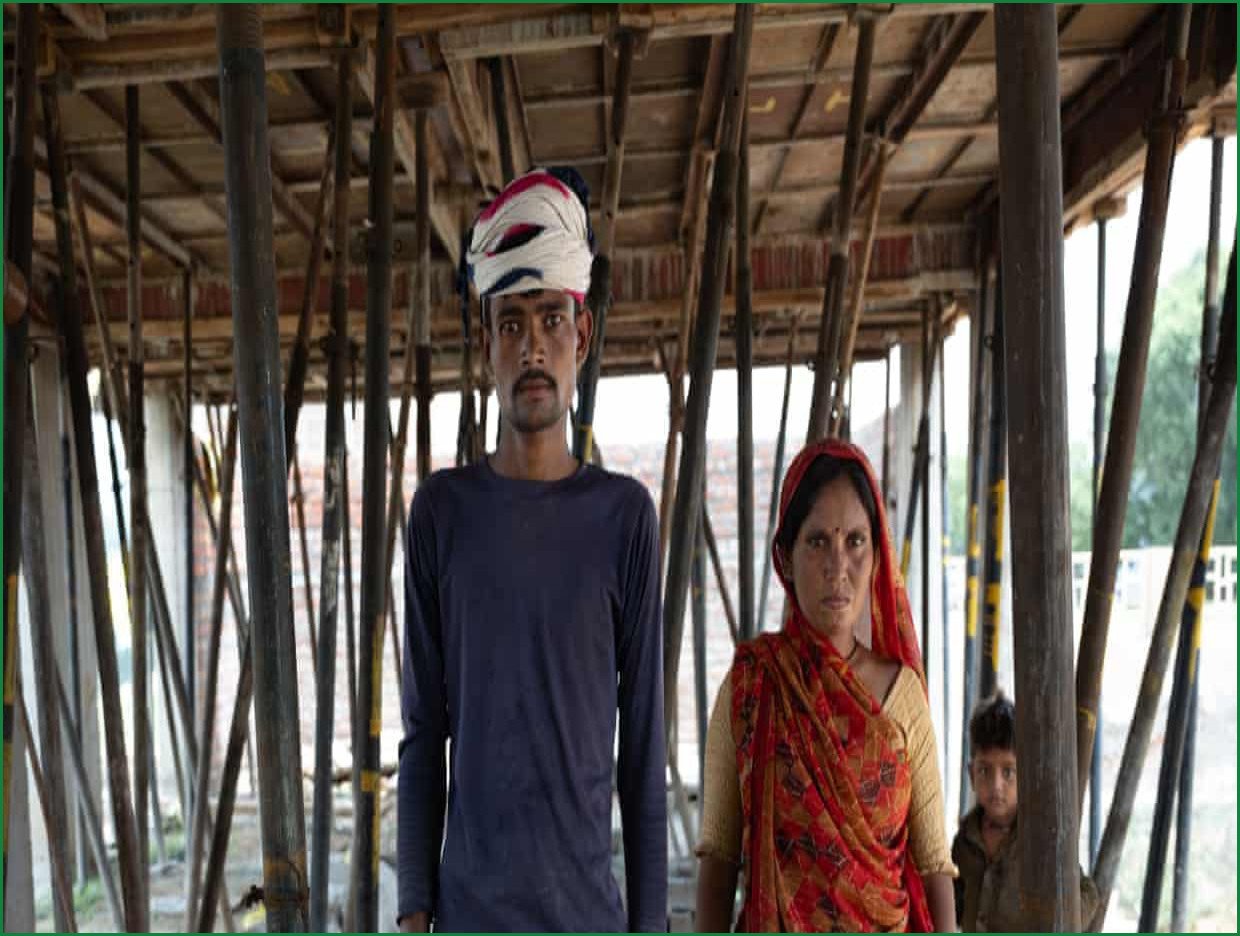
Inder and Laxmi Kumar, a couple working on a dusty construction site in Gurugram, a satellite city near Delhi, shared their struggles. Both were confined to bed with fever, body aches, and exhaustion. After losing eight days' wages, they could no longer afford to stay home. “I felt like I would collapse, like my body was on fire,” Laxmi recounted. “We kept working because if we stopped, we wouldn’t be paid.” Doctors diagnosed them with dehydration and heat exhaustion, advising rest.
The couple earns 800 rupees (£6) each per day, supporting their two young sons and four other family members in their home village in Madhya Pradesh. Their workday begins around 9 am, involving eight to ten hours of mixing cement, carrying materials, and laying bricks, with minimal breaks and little shade beyond the unfinished structure itself. Their five-year-old son often plays in the rubble nearby. In the last three months alone, they have fallen ill three times, losing nearly four weeks of work and spending a significant portion of their income on medicines.
“We had no choice but to come back,” Inder explained. “Whatever we manage to save is spent the next time we fall sick. We hardly have anything left to send home. I just pray this heat ends. It’s torture.” Inder added that he knew no laborer at the site who had avoided illness this summer, noting that the extreme heat often spoiled their lunch, making them even sicker. Their home, a 2.5 meter (8ft) square tarpaulin shelter within the unfinished building, offers little respite. In the evenings, a fan operates only for an hour after they return from work before the diesel generators are switched off, leaving them to sleep in stifling heat. “When I get home, my whole body aches,” Laxmi said. “But my son becomes restless in the heat and keeps crying. Then I still have to cook, and the room gets even hotter. It feels like we work and sleep inside an oven.”
The burden is often heavier for female laborers, many of whom also care for young children during their workday. Kumkumari, a 35-year-old, was seen pouring water over her two-year-old daughter beside a water tanker at a construction site. “This is the only way to cool her down,” Kumkumari stated. “She falls sick often, and when that happens I have to look after her instead of working.”
Prolonged exposure to heat and dehydration significantly increases the risk of developing chronic kidney disease. The IIED research estimates that over years of repeated exposure, one in 20 informal workers in India could develop chronic kidney disease, affecting more than 26 million workers.
Sattavir, another worker, could only work for eight days in the past two months after developing a kidney infection, which doctors attributed to working in extreme heat and repeated dehydration. “The heat is killer,” he said. “In the last two months, I earned barely 7,000 rupees but spent around 9,000 rupees on medicines and treatment. I’m already in debt, but I’m still looking for work even though doctors say I need treatment for my kidneys.” After waiting for several hours in the sun, Sattavir was not picked for work for the third consecutive day. “When people see you’re weak, they don’t hire you,” he lamented.