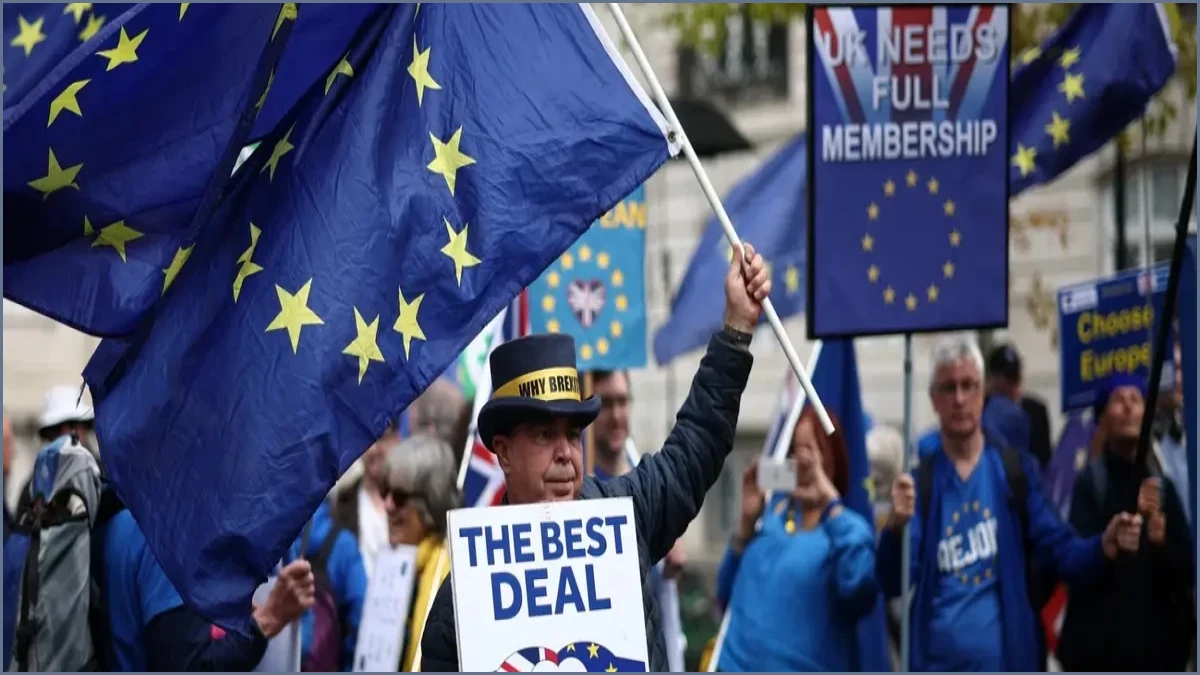
European Union and United Kingdom leaders are scheduled to gather in Brussels on November 20 for their second official summit since Brexit. The high-level meeting, which was originally planned for July but postponed following the resignation of former UK Prime Minister Keir Starmer, comes amid a changing political environment in London. New UK Prime Minister Andy Burnham has signaled a willingness to initiate a national conversation regarding Britain's future relationship with the bloc, including the potential to rejoin the EU and restore the free movement of people.
Despite the altered political discourse in London, experts caution that the summit's formal agenda remains tightly defined by negotiations launched at the previous EU-UK meeting in May 2025. Ian Bond, Deputy Director of the London- and Brussels-based think tank Centre for European Reform, noted that the summit's scope is relatively modest, yet reaching consensus remains challenging. Bond stated that while both sides will attempt to present the event as a success, a significant amount of arguing remains to be done.
Speaking during a European Parliament debate on the upcoming summit, European Trade Commissioner Maroš Šefčovič outlined the bloc's objective to conclude negotiations as a single package. This proposed package encompasses trade in agricultural products, the linking of carbon emission trading markets, and the creation of a youth experience scheme. Additionally, the European Commission confirmed that ongoing discussions cover the UK's potential participation in the EU electricity market.
Among the topics under discussion, an agreement on sanitary and phytosanitary (SPS) measures is viewed as the most straightforward to finalize. According to Bond, this agreement would eliminate existing trade barriers for food and agricultural products, as the UK would commit to aligning with the EU rulebook in this sector.
Negotiations regarding energy integration are also expected to yield progress, as both jurisdictions share a common interest in energy trading. A proposed arrangement would link emissions trading schemes and allow the UK to re-enter the EU electricity market. Bond highlighted that North Sea offshore wind infrastructure could supply both markets. Furthermore, because the Channel separates different time zones, peak energy demand hours vary slightly between the two sides, offering a mutual advantage by shifting generating capacity back and forth during peak periods. However, in exchange for granting access to its electricity market, the EU is requesting a sizable financial contribution from Britain to its cohesion fund, which funds projects aimed at reducing economic disparities across EU regions.
The most contentious element of the summit agenda remains the proposed youth experience scheme, which would permit individuals aged 18 to 30 to live, work, and travel across the Channel for up to three years without requiring employment sponsorship. Thomas Byrne, Minister for Europe of Ireland—which currently holds the rotating presidency of the Council of the EU—emphasized to the European Parliament that rebuilding bridges between young people in the UK and the EU is a central priority.
Despite shared interest, key disagreements persist regarding the youth scheme. The UK government seeks an annual cap on the number of young Europeans entering under the program. Conversely, the EU is demanding that European students attending British universities be charged home tuition fees, which are currently capped at £9,790, and be exempted from the National Health Service (NHS) surcharge. Following the termination of free movement, EU students in the UK have been subject to significantly higher international tuition rates, visa fees, and public healthcare surcharges.
Bond explained that meeting the EU's tuition demands presents a major financial challenge for both the British government and higher education institutions. Because UK universities rely heavily on the higher tuition fees paid by international students, granting home-fee status to tens of thousands of EU students could create substantial budget shortfalls that the government might be forced to cover. Bond also pointed out that granting work visas falls under the jurisdiction of individual EU member states rather than the European Commission. Media reports indicate that negotiators may delay finalizing the youth mobility agreement by six months to prevent the issue from derailing the overall success of the summit.
The summit agenda will also address whether the UK can be included in the EU's proposed "Made in Europe" provisions. These rules are designed to strengthen domestic manufacturing and reduce reliance on third countries like China across key sectors, including clean technologies, electric vehicles, aluminum, steel, and public procurement.
Foreign policy and security cooperation will form another pillar of the talks, with formal conclusions anticipated on joint support for Ukraine and defense coordination. Byrne informed the European Parliament that beyond these primary agenda items, ongoing efforts are underway to deepen cooperation across health security, police affairs, judicial matters, and initiatives to combat irregular migration and human smuggling networks.
Reflecting on the wider context, Bond observed that current negotiations echo long-standing British attitudes toward European integration dating back to the 1970s, where the UK largely viewed the EU as a commercial trade bloc rather than a political union. While programs like youth mobility, free movement of labor, and Erasmus+ contain economic dimensions, they are also designed to foster a shared sense of community. Bond noted that if the EU and UK can resolve past agreements and address forward-looking topics, it will establish a constructive atmosphere for Prime Minister Burnham to launch his national dialogue on the future of UK-EU relations.