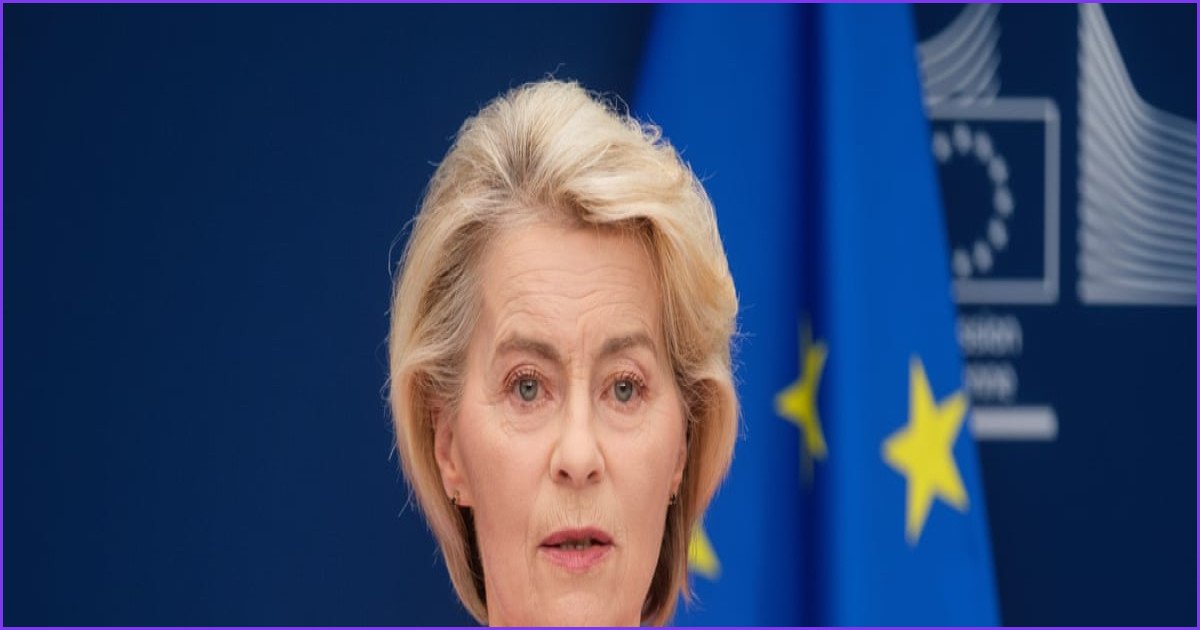
European Commission President Ursula von der Leyen has announced a commitment to implement an EU-wide ban on social media for children under 13. The move follows a report from a panel of experts who advised that such restrictions are necessary to protect minors from what the Commission president described as “predatory algorithms.” During a press briefing, von der Leyen emphasized that the goal is not to decide whether children can access the internet, but rather to regulate whether and when social media platforms can access children.
The proposed legislation, which is expected to be drafted in the autumn, draws inspiration from a “staged approach” recommended by the panel. This panel was co-chaired by German child and adolescent psychiatrist Jörg Fegert and French epidemiologist Maria Melchior. The experts specifically called for a delay in access to “social media plus,” a term encompassing platforms with similar features, including AI chatbots and certain video games. The report highlighted that the ages between 10 and 13 represent a particularly vulnerable developmental phase, with research indicating significant harm related to body image and addictive design features.
While von der Leyen did not specify a minimum age in her initial remarks, she noted that the panel’s recommendations were convincing. The experts suggested that member states could implement higher precautionary age limits if desired, though they acknowledged a lack of definitive data on the exact cut-off point where harmful features cease to impact users. They also noted that the risk of addictive behaviors and emotional challenges persists through age 25 as the brain continues to mature.
Several European nations have already begun taking unilateral action. France has committed to a ban for those under 15, while Spain is pursuing restrictions for children under 16. In Greece, curbs for users under 15 are scheduled to take effect on 1 January 2027. Estonia remains the only member state to voice opposition, suggesting that regulation should focus on platforms directly rather than bans, which they argue children will eventually circumvent. Australia has already established itself as the first country globally to implement a ban on social media for minors under 16.
The European Commission is currently pursuing investigations into Meta and TikTok regarding the addictive nature of their platforms, citing features like infinite scroll, video autoplay, and push notifications as problematic. Both companies have rejected the Commission’s preliminary findings. Von der Leyen compared the need for platform safety to physical safety standards, stating that the EU does not expect children to design their own seatbelts or parents to install airbags at home. The final draft law will require approval from a weighted majority of EU member states and the European Parliament.
Explaining the reasoning behind the age set for the ban, one expert said 10 to 13 was a “very vulnerable phase” for children, and that US research had shown “quite a lot of harm” from social media use at this age, especially among girls around body image. “The earlier you start, the higher [impact] the addictive features are,” they said.
The panel of experts recommended no screen use under three, except in limited ways such as video calls or looking at family photos. It also raised concerns about the use of AI-enabled toys and voice-based devices for babies and toddlers, because they may stimulate a response “without genuine reciprocity or emotional attunement” that came from a human carer.