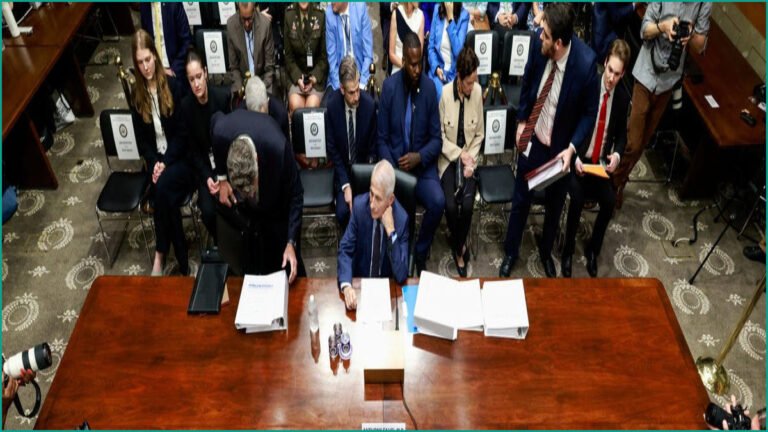
US Defense Secretary Pete Hegseth recently ordered an annual testosterone-deficiency screening for active-duty and reserve service members aged 30 and older, asserting that the measure will help maintain military readiness. Hegseth stated that the goals are to ensure troops have the right hormone levels to operate at their absolute best and to improve their resilience, longevity, and performance. He added that testing would be accompanied by advice to help soldiers make decisions about treatment, which would remain voluntary.
However, many medical professionals warn that the mandate might not improve readiness and could instead increase the risk of infertility or lead to other consequences if testosterone is prescribed inappropriately. This mandate is one of several recent healthcare policy changes implemented by Hegseth and other Trump administration cabinet officials that have sparked debate among experts and raised questions about the scientific basis supporting them.
Hegseth has also reversed the military’s longstanding flu vaccine mandate—a decision later walked back following a flu outbreak—while the Department of Health and Human Services removed 17 members from its vaccine advisory panel and altered its vaccine recommendations.
Five of six men’s health experts contacted by Reuters said they were puzzled by the announcement and concerned it may lead to unnecessary or harmful treatment. Four of these doctors stated there was no solid evidence suggesting that screening all personnel aged 30 and older would optimize combat readiness. Dr.
Kevin McVary, a urologist on the medical advisory board of the telehealth platform Rugiet, noted that while patients report improvements in cognitive alertness and stamina when treating low testosterone, the evidence is not concrete and stems from patients who were treated because they were symptomatic.
Giving testosterone without medical symptoms leads to overtreatment, McVary said, which can have its own adverse consequences.
The American Urological Association and the Endocrine Society advise testosterone supplementation only for patients with confirmed deficiency and symptoms such as reduced libido, erectile dysfunction, fatigue, decreased muscle mass, and low bone density. Dr. Haleem Mohammed, chief medical officer of Gameday Health, noted that while there is a population-level decline of 1% per year after ages 30-40 that accelerates as you get older, age 30 itself is not an appropriate point for screening because patterns are not the same for all.
Dr. Ugis Gruntmanis, an endocrinologist at Dartmouth Hitchcock medical center, noted that most studies have been done in older men, and while the mandate provides an opportunity to collect data on younger men, implementing it without preliminary study data is putting the carriage before the horse.
The US Food and Drug Administration (FDA) previously revised testosterone labels based partly on a study led by Dr. Steven Nissen of the Cleveland Clinic, involving more than 5,200 men aged 45 to 80 with low testosterone and high risk of heart disease, to remove a warning of increased risks of heart attack or stroke. However, participants showed higher rates of atrial arrhythmia—an abnormal heart rhythm—and bone fractures, a finding Nissen said may have implications for the military.
Experts also highlighted the severe impact of therapy on male fertility. McVary noted that many in the armed forces are young men who are not done having their families, and if testosterone is doled out, the testes will shrink and cannot be reliably counted on to recover. Other risks include blood thickening, prostate issues, acne, hair loss, breast tissue growth, and mood volatility.
Hegseth said one objective for the mandate is to comprehensively address operator syndrome, which afflicts special forces such as Delta Force members and Navy Seals and includes low testosterone along with traumatic brain injury, hormonal and metabolic dysregulation, sleep dysregulation, and other maladies. However, Dr.
B. Christopher Frueh of the University of Hawaii, whose team first described the syndrome in 2020, said special forces operators are not representative of all members. These operators are at an extreme end of a spectrum with much higher exposures to blasts, airplane jumps, and various weapons, Frueh said.
He believes many younger soldiers could regulate hormones through sleep, rest, and diet rather than replacement therapy. Regarding the scope of the testing, Frueh noted that broad screening could reveal new information about female soldiers’ hormones, though they likely would not need testosterone replacement. The Pentagon declined to comment beyond its brief official statement and has not provided detailed guidance on how abnormal results will be evaluated or if screenings will apply equally to men and women.
Other soldiers might have elements of the syndrome, he said, “but should we be screening 100% of everybody? Maybe. I don’t know.”
Still, medical professionals emphasize potential benefits from appropriate testosterone testing, as with other forms of medical tests.