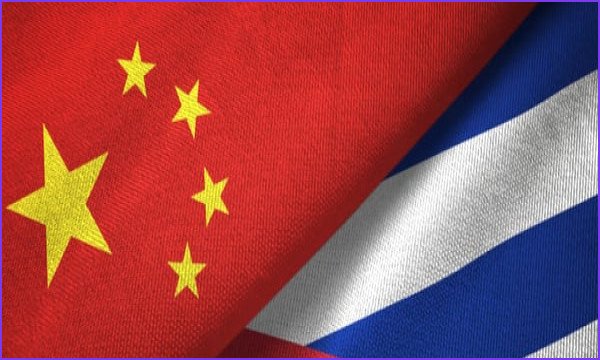
China’s footprint in Cuba is undergoing a significant transformation, with Beijing increasingly utilizing economic leverage and infrastructure development to secure its position just 90 miles from Florida. According to Dr. Orlando J. Pérez, a political science professor at the University of North Texas at Dallas, this engagement has shifted toward a model that provides Cuba with essential services that Washington’s current pressure campaign cannot easily disrupt.
Energy has become the primary theater for this expansion. Over the past year, Cuba has integrated 49 Chinese-built solar parks into its national grid, a move that increased solar’s contribution to the nation’s power generation from under 6 percent to more than 20 percent. Beijing has committed to a total of 92 parks by 2028, representing approximately 2 gigawatts of capacity—an amount nearly equivalent to the island’s entire existing fossil fuel capacity. This shift is reflected in trade data, with Chinese solar exports to Cuba surging from a few million dollars in 2023 to $117 million in 2025. Complementing this, China provided an $80 million emergency credit line and delivered 60,000 tons of rice in January, establishing a lifeline that remains immune to U.S. oil-related sanctions.
Intelligence operations remain a point of friction, with CSIS satellite imagery identifying signals-collection sites in Bejucal, Wajay, Calabazar, and El Salao. A large new antenna array is currently under construction at Bejucal, situated within range of Key West, Homestead, and the Cape Canaveral launch corridor. However, experts urge caution regarding the threat level, noting that some observers argue the hardware resembles aging Cold War-era equipment and that modern signals intelligence is less dependent on geographic proximity than in the past.
Washington currently views China and Russia as part of a single security anxiety regarding hostile powers near U.S. borders, but the nature of these relationships differs. While the signals-collection sites have drawn scrutiny from the Pentagon and Congress, the economic front is arguably more consequential. U.S. sanctions aimed at cutting off oil supplies have inadvertently created a vacuum that Beijing is eager to fill. As Pérez notes, sanctions can stop a tanker, but they cannot stop the sun or Chinese credit.
The current U.S. strategy, which relies on the assumption that economic collapse will force the Cuban regime to negotiate or fall, faces significant challenges. The removal of Venezuelan former president Nicolas Maduro on January 3 served as a major shock to Havana. Venezuela had previously supplied roughly 35,000 barrels of oil daily through a barter system. The fallout included three nationwide blackouts in March and the loss of 32 Cuban security officers who were serving as Maduro’s personal protection. For Havana, this event underscored the danger of relying on U.S. bargaining and has led the regime to close ranks.
Ultimately, the U.S. pressure campaign—which includes sanctioning the state oil company CUPET and indicting Raúl Castro for the 1996 shootdown of Brothers to the Rescue planes—fails to account for the internal structure of the Cuban government. Real power resides with the military conglomerate GAESA and the security apparatus, which are insulated from economic pain that primarily affects ordinary citizens. By failing to provide a credible political pathway, the current U.S. approach risks creating a more isolated, hardline regime that drifts further into Beijing’s orbit. For China, Cuba represents a low-cost, high-return geopolitical investment that demonstrates the reach of Chinese technology while securing regional goodwill.
You have reached the limit of 2 free articles this month.
Assess Beijing’s priorities in supporting Havana and implications for China-U.S. strategic competition in the western hemisphere.