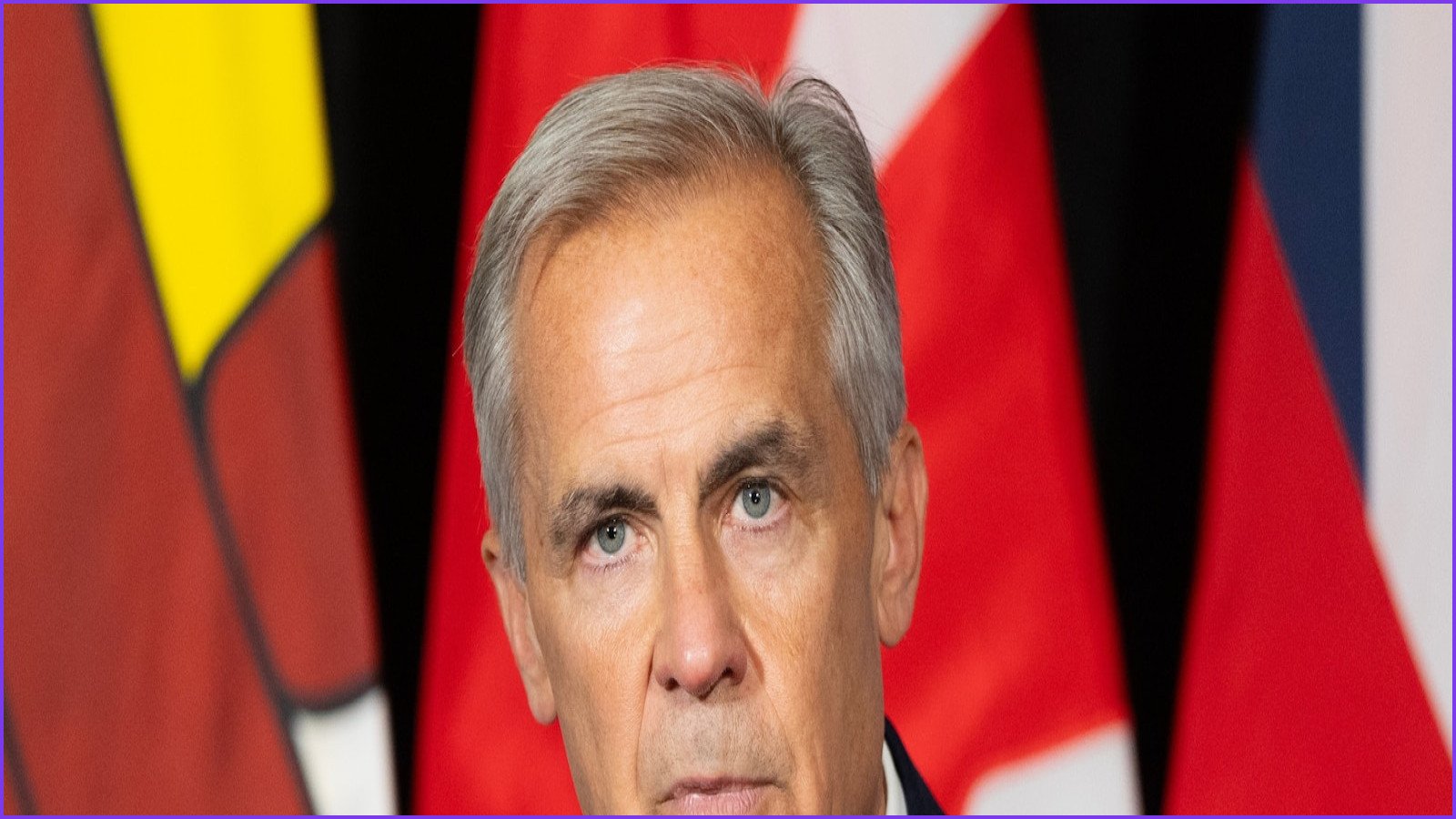
Prime Minister Carney has confirmed that Canada is fully prepared to respond to new tariffs announced by the United States, which are currently scheduled to come into effect on August 19. Following a meeting with Canada’s premiers and territorial leaders in Charlottetown, Prince Edward Island, Carney stated that a full range of potential measures is available if an agreement cannot be reached before the tariffs take force.
He emphasized that the government does not intend to respond in advance, noting that doing so would be counterproductive at this stage. Instead, he suggested that the tariff threat might be a negotiation tactic, pointing out that the U.S. has historically used outsized tariffs associated with specific deadlines during trade negotiations.
The proposed tariffs cover a wide array of goods, including honey, liquor, cement, dairy products, certain wood products, and hockey sticks. While the measures exclude energy products, potash, fish, and critical minerals, they would impact goods that were previously protected from import taxes under the 2020 United States-Mexico-Canada Agreement (USMCA).
Because that trade pact was not renewed by the U.S., the two nations have entered a new set of negotiations that could potentially run until 2036.
An analysis by Desjardins, one of Canada’s largest financial institutions, indicates that these tariffs would impact approximately $28 billion Canadian—or $19.8 billion—worth of annual Canadian exports to the United States. This figure represents about 5% of what the U.S. imports from Canada each year, with Ontario, Quebec, and British Columbia identified as the provinces most likely to be impacted.
During the meeting, Prince Edward Island Premier Rob Lantz highlighted the necessity of a unified "Team Canada" approach, asserting that the country is at its best when the federal government, provinces, and territories work together. Ontario Premier Doug Ford, who was present prior to the meeting, echoed the need for a strong, offensive plan to protect the people of Ontario.
When asked about the possibility of placing a surcharge on electricity sold to the U.S., Ford stated that his response would depend on the direction of the negotiations, emphasizing that Ontario has the most to lose.
Carney reaffirmed that regardless of the outcome, Canada will do whatever is necessary to build strength at home and support Canadian families, workers, farmers, and businesses, while also continuing to diversify its economic partnerships abroad.
In a separate development occurring later on Thursday, the Trump administration included Canada among dozens of countries subject to new tariffs, citing concerns regarding forced labor in supply chains. Canada-U.S. Trade Minister Dominic LeBlanc stated that the move was not unexpected. He noted that Canada shares the U.S.
objective of ensuring that goods produced with forced labor do not enter the supply chain. LeBlanc confirmed that Canada will continue engaging constructively with the United States on this matter, as well as other outstanding issues, over the coming weeks to the mutual benefit of citizens in both countries.
“We’ve seen a series of trade negations that the U.S. has undertaken, and normally there’s a deadline,” he said. “Normally there’s an outsized tariff associated with that deadline.”
“We need a strong plan,” he said. “Be on offense. Put everything on the table.”