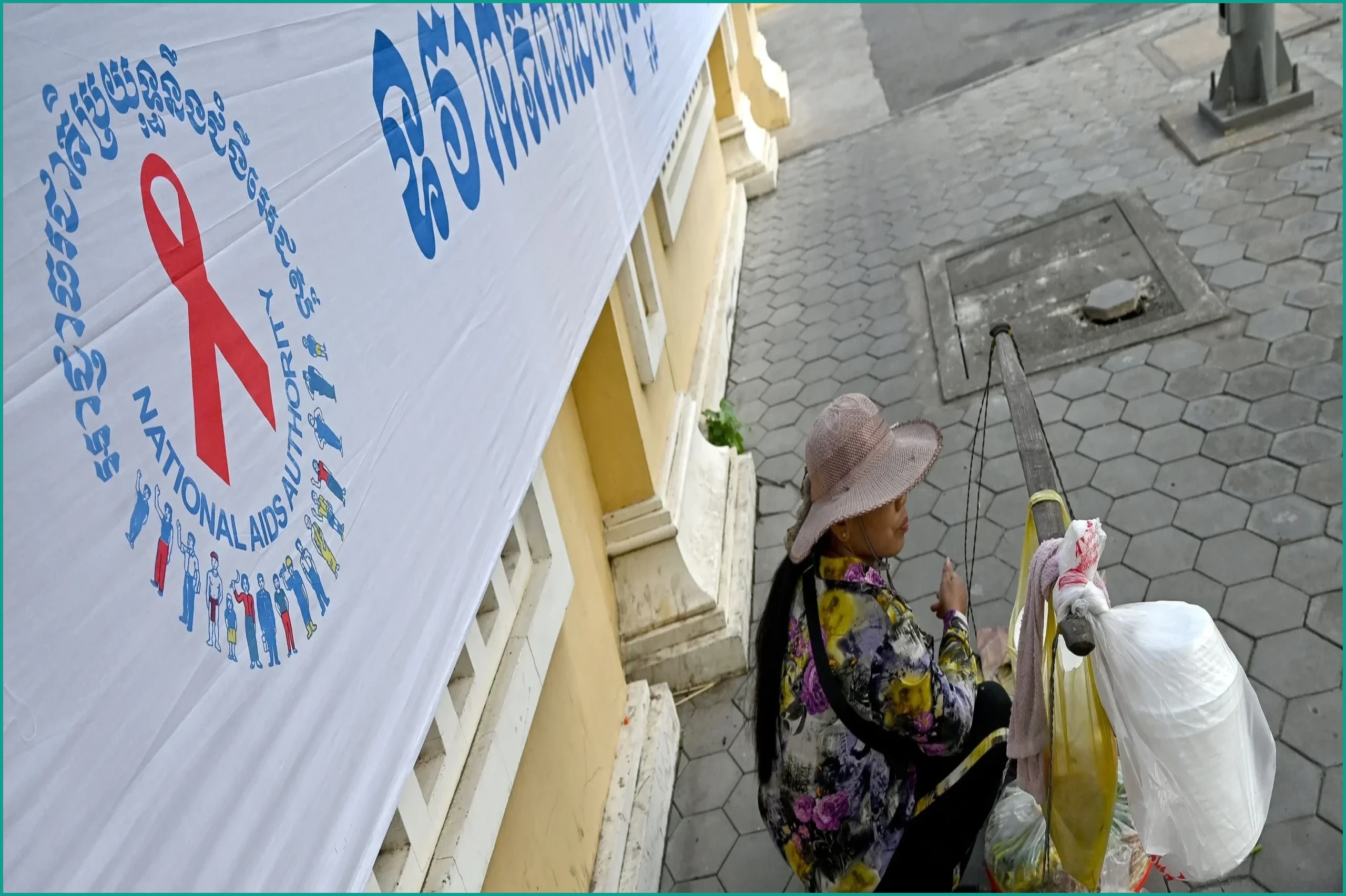
Cambodia has made history by becoming the first country in the Asia-Pacific region to achieve the United Nations' ambitious targets for controlling HIV. In June, the Southeast Asian nation reached the milestone known as the 95-95-95 targets, which the U.N. has set as a goal for every country to achieve by the year 2030. When UNAIDS established these benchmarks in 2020, they were widely regarded as ambitious and daunting. Today, Cambodia is one of only 11 countries in the world to have met them, joining a list dominated by African nations, with Denmark standing as the sole European representative.
To hit these targets, a country must meet three strict criteria. First, ninety-five percent of people living there who are HIV positive know their status. Second, ninety-five percent of HIV-positive people are taking medication that lowers the amount of the virus in their body. Finally, 95% of people on HIV medication must have a viral load so low that they are considered virally suppressed, meaning they have an almost zero risk of passing HIV on to their partners.
Many other Asian countries, including wealthy nations like Japan and South Korea, have struggled to make these gains. Dr. Annette Sohn, director of amfAR's TREAT Asia program—a network of clinics and researchers serving people with HIV—explains that the number one challenge continues to be stigma. This stigma can manifest as a feeling of shame that keeps a person from getting tested for HIV or from visiting a clinic for treatment. Furthermore, people living with HIV face discrimination, which can make navigating the healthcare system a struggle. Dr. Sohn notes that Cambodia succeeded because advocates recognized that people seek healthcare where they feel accepted, using this strategy to save lives.
The current success is a massive shift from the peak of Cambodia's AIDS crisis in the late 1990s and early 2000s, when as many as 15,000 people in the country were dying each year from a virus that had no cure and no vaccine. Before 1998, there was no medication to prevent HIV from destroying a patient's immune system, leaving them vulnerable to infections and rare cancers. Sophal Seum, an advocate for people living with HIV, recalls the terror of those early years. "We heard it was a strange, deadly virus," he says. "People were scared of HIV."
The virus tore through brothels and nightclubs but quickly reached the general public. By 1999, about 2% of adults between the ages of 15 and 49 had contracted HIV. At the time, Seum was a young hotel worker near Angkor Wat, an ancient Hindu temple that attracts millions of visitors each year. He says he lost his job after testing positive for HIV in 2000 and struggled to find a new one because many jobs at the time required blood tests. The practice was eventually banned in 2002. In 2006, Seum moved his wife and children to the countryside, expecting to die. Today, thanks to the rollout of free antiretroviral treatment, he survives. "It's not a full recovery, but I try to ride my bicycle to work," Seum says. "I can survive, because I have hope."
At its peak, Cambodia's HIV epidemic affected about 180,000 people. Today, the national rate has dipped from more than 2% to below 0.5%, and the vast majority of Cambodia's estimated 76,000 citizens living with HIV are on medication. Chamreun Chob Sok, the executive director of KHANA, Cambodia's largest network of nonprofits working to prevent HIV and support people living with the virus, has worked on HIV prevention for almost the entirety of his career. He attributes the country's success to three main factors.
First, Sok says, Cambodia had the political will to do this. As a constitutional monarchy in the '90s, both the king and the elected government prioritized HIV prevention efforts. In 1999, the country launched a public health campaign encouraging couples to use condoms 100% of the time, under the slogan "No condom, no sex." During those early years, more than 80% of sex workers reported using condoms. Second, in 2003, the Cambodian government made HIV medication free with an $11.2 million grant provided by the Global Fund, a Geneva-based international financing group for HIV, tuberculosis, and malaria relief, of which the United States is the largest donor.
Third, the country adapted its approach as the epidemic evolved. Early programs focused on groups of people who had heightened rates of HIV, such as the military, police, garment factory workers, and sex workers. As HIV rates shrank among the general population, the epidemic became more concentrated among high-risk groups who were harder to reach. "What we call it now, is that Cambodia is under a concentrated epidemic. This means HIV transmission is occurring among a key and vulnerable population," Sok says. To tackle this concentrated epidemic, Cambodian community health workers had to get creative.
Sok's perspective is that the best solutions are created by people with lived experience. Proudly, he lists off KHANA's programs: There is SmartGirl, an intervention organized by women who previously worked in nightclubs, bars, or other places where sex work is common. Sok prefers the term female entertainment worker in an effort to reduce stigma. Through KHANA, the women organized HIV finger-prick testing drives in their former workplaces, offered counseling, and helped women who were HIV positive get medical care and other support. "They became lay counselors. They became the people who go and conduct outreach," Sok says. "They're run by themselves, reaching their peers."
Men who sleep with men are another demographic with a high risk of HIV in Cambodia. Through KHANA, they created their own outreach, including community hubs with coffee shops and internet access. For a third project, transgender counselors created a program called Srey Sros, which means "Beautiful Woman" in the Khmer language, signaling acceptance and safety. "This is a way that can bring people to come to services early," Sok says. "And importantly, they're involved in ensuring the services are friendly."
This focus on key populations—demographic groups with the highest rates of HIV and the highest risk of contracting it—is considered a gold standard of epidemic control. However, after U.S. funding delays and cuts to global HIV prevention, these programs have been among the first on the chopping block in other countries. Cambodia's achievement also rests on the shoulders of people willing to tell their stories, such as Dalish Prum, a program manager and community health worker for CPN+, one of Cambodia's largest support networks for people living with HIV.
When she was 15 years old, Prum was abducted and trafficked to the Thai border. Although she was quickly rescued, she fell sick months later and tested positive for HIV in 2003 while still in high school. "I cried almost every day for three years," Prum recalls. "I thought I will die soon, I cannot learn, I cannot study, I cannot graduate or make a family." Prum drew strength from her supportive parents, finished her studies, and began working for HIV prevention programs, eventually speaking at international conferences and becoming a leader in the country's efforts. She fell in love, married, and had a little girl in 2018.
Today, Prum takes medication to keep her HIV to undetectable levels in her body, preventing health complications. She says people living with HIV in Cambodia still face challenges, especially in healthcare settings. But the 95-95-95 achievement signals that the work she and her colleagues are doing makes a difference. This is what she often tells the clients she counsels: "Life with HIV is possible. Honestly, please love yourself. You have dignity."